Why This Conversation Has Sharpened in Oregon
Wildfire used to be a Southern California problem. It isn't anymore. The 2020 Labor Day fires in the Cascades — Holiday Farm, Beachie Creek, Riverside, Archie Creek — were the first time Oregon had this conversation at scale, and the conversation has only sharpened since. Yamhill County, the Willamette Valley, the Coast Range foothills, and the Cascade foothills are all increasingly identified as wildland-urban interface zones. Insurers are tightening underwriting in these areas.
Counties are updating defensible-space requirements. The custom homes I'm being asked to build in 2026 carry resilience requirements that didn't exist on the homes I was building in 2018, and most of those requirements are good ones. This post is the practical guide to what wildfire-resilient construction actually means in Oregon, what it costs, and what it changes about how a custom home should be designed from the very first sketch.
The Six Principles of Wildfire-Resilient Construction
There are six principles that define every wildfire-resilient home, and they all have to be designed in together rather than bolted on after the fact. The first is defensible space — the layered landscape strategy that determines whether a fire can reach the structure at all. The second is non-combustible cladding — the exterior wall surfaces that face the fire and decide whether the building shell ignites. The third is ember-resistant venting — the small openings in attics, soffits, and crawl spaces that, on most homes, are the path of least resistance for embers driven by wind.
The fourth is Class A roofing — the roof assembly that resists ember-driven ignition from above. The fifth is hardened decks, eaves, and outdoor structures — the residential elements most likely to ignite on a typical home. The sixth is energy and water resilience — the systems that let the home keep functioning through evacuation, public-safety power shutoffs, and the days after an event. Every one of those principles is a design conversation. None of them are optional anymore in serious residential work in our region.
Defensible Space and the Three-Zone Framework
Defensible space is the framework most homeowners hear about first, and it's the most important. It's organized as three concentric zones around the home. Zone 0 is the area within the first five feet of any structure — the most consequential five feet on the entire property. In a fire-resilient design strategy, Zone 0 has no combustible plantings, no mulch, no woody shrubs, and no fences that abut the home. It's gravel, flagstone, native oaks at distance, and inert hardscape.
Zone 1 extends from five to thirty feet from the home and uses fire-resistant native plants spaced to prevent fire-ladder progression — typically drought-tolerant species like manzanita, ceanothus, and native grasses, with irrigation that can be quickly activated. Zone 2 extends from thirty to one hundred feet (or to the property line) and focuses on reducing fuel loads, removing dead vegetation, and breaking up continuous brush with hardscape. The zones are not optional code minimums; they are the design discipline that decides whether a home survives the day the conditions actually turn against it.
Non-Combustible Cladding That Works in PNW Climate
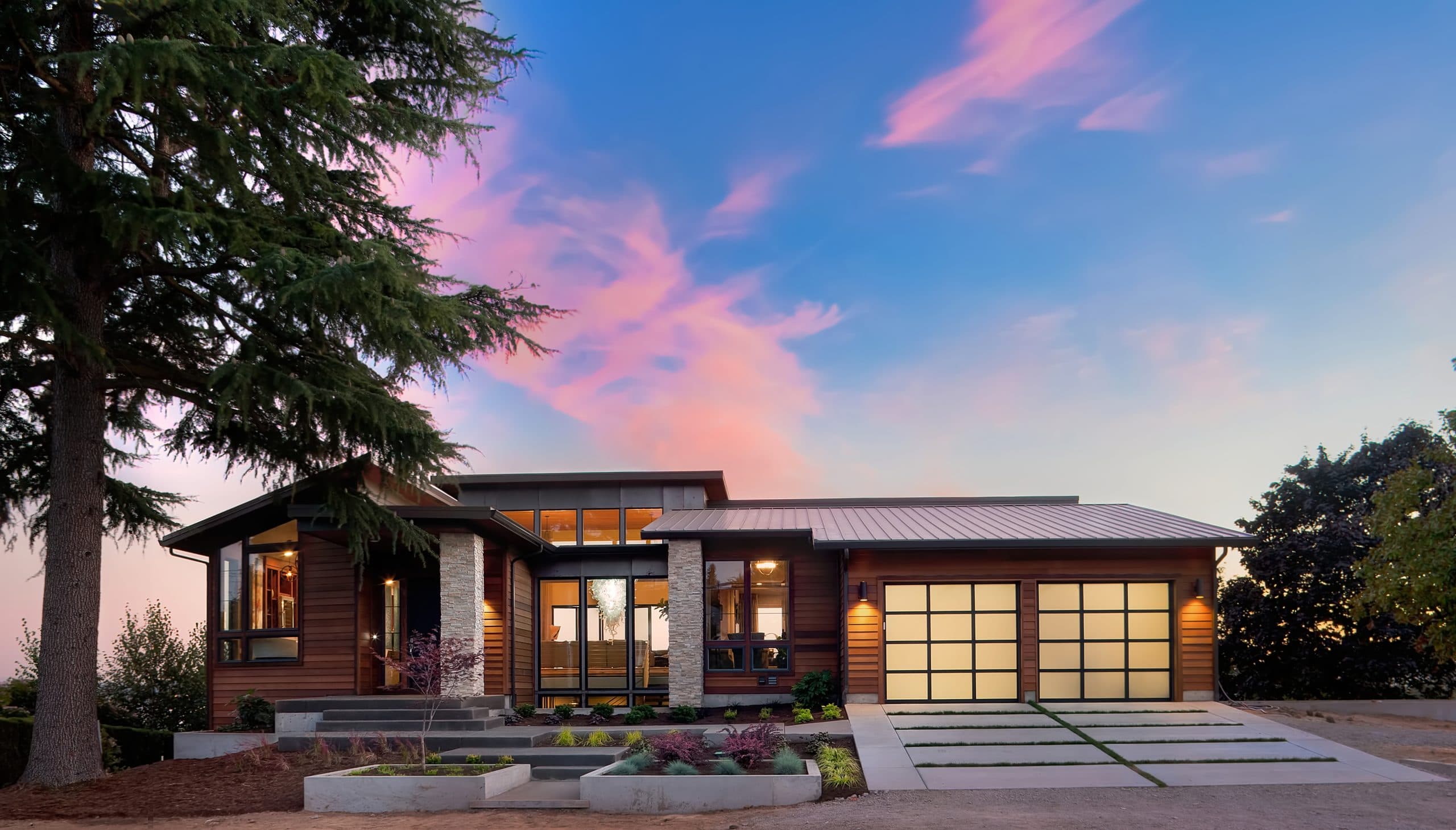
Non-combustible cladding is the second-line defense and increasingly the standard in Oregon custom homes. Fiber cement (Hardie, Allura, James Hardie) carries Class A fire ratings and is the most common siding choice in our region right now — it weathers well in Pacific Northwest rain, takes paint cleanly, and ages predictably. Stone, brick, concrete masonry units, and structural concrete are non-combustible by definition and work well as accent or full-clad systems. Metal cladding (standing-seam, corrugated) is fire-resistant and has a strong contemporary aesthetic.
Shou sugi ban — Japanese charred-wood siding — provides texture and depth while delivering significantly improved fire resistance over conventional wood cladding, though it's not Class A on its own. Conventional wood siding (cedar, redwood) is the cladding to avoid in any meaningful wildland-urban interface exposure. Substituting fiber cement for cedar siding on a typical 3,000-square-foot home in 2026 costs roughly $8,000 to $20,000 depending on the specific product chosen, and it's one of the highest-leverage resilience decisions in the entire build.
Ember-Resistant Venting: The Most Underrated Detail
Ember-resistant venting matters more than most homeowners realize. The way most residential fires actually start in a wildland-urban interface event is not radiant heat or direct flame contact — it's a wind-driven ember that enters the building envelope through an attic vent, a soffit vent, or a crawl-space vent, lands on combustible material inside, and ignites the structure from within. Conventional residential venting was never designed to filter embers.
Modern ember-resistant vents (typically with 1/8" mesh or specialized baffle designs) cost $40 to $200 per vent depending on type and size, and they are non-negotiable on any home built in or adjacent to a designated wildland-urban interface zone. Specifying them across a typical residential roof and crawl space adds a few thousand dollars to the build and is among the most consequential resilience decisions a builder will make.
Class A Roofing and Hardened Soffits
Class A roofing is the standard now and almost every reputable builder in our region defaults to it, but it's worth saying explicitly. Class A is the highest fire-resistance rating for residential roofing in the standard testing framework. Common Class A materials include standing-seam metal, concrete tile, clay tile, slate, and certain composite asphalt shingles rated to that class. The cost premium over a non-rated roof is often modest — sometimes $5,000 to $15,000 across an entire residence — and the performance difference during an event is dramatic. Pair the Class A roof with hardened soffits (closed plaster, fiber cement, or sealed metal rather than vented or louvered details) and the upper envelope of the home is in good shape.
Decks, Eaves, and Outdoor Structures
Hardened decks and eaves matter because they are the residential elements most likely to ignite on a typical home. A wood deck attached to the building, with combustible material stored under it, is an ideal ember catcher. Replacing a conventional pressure-treated deck with composite or fire-rated decking, sealing or screening the underside to prevent ember intrusion, and reducing eave depth to the minimum the architecture requires are all real upgrades.
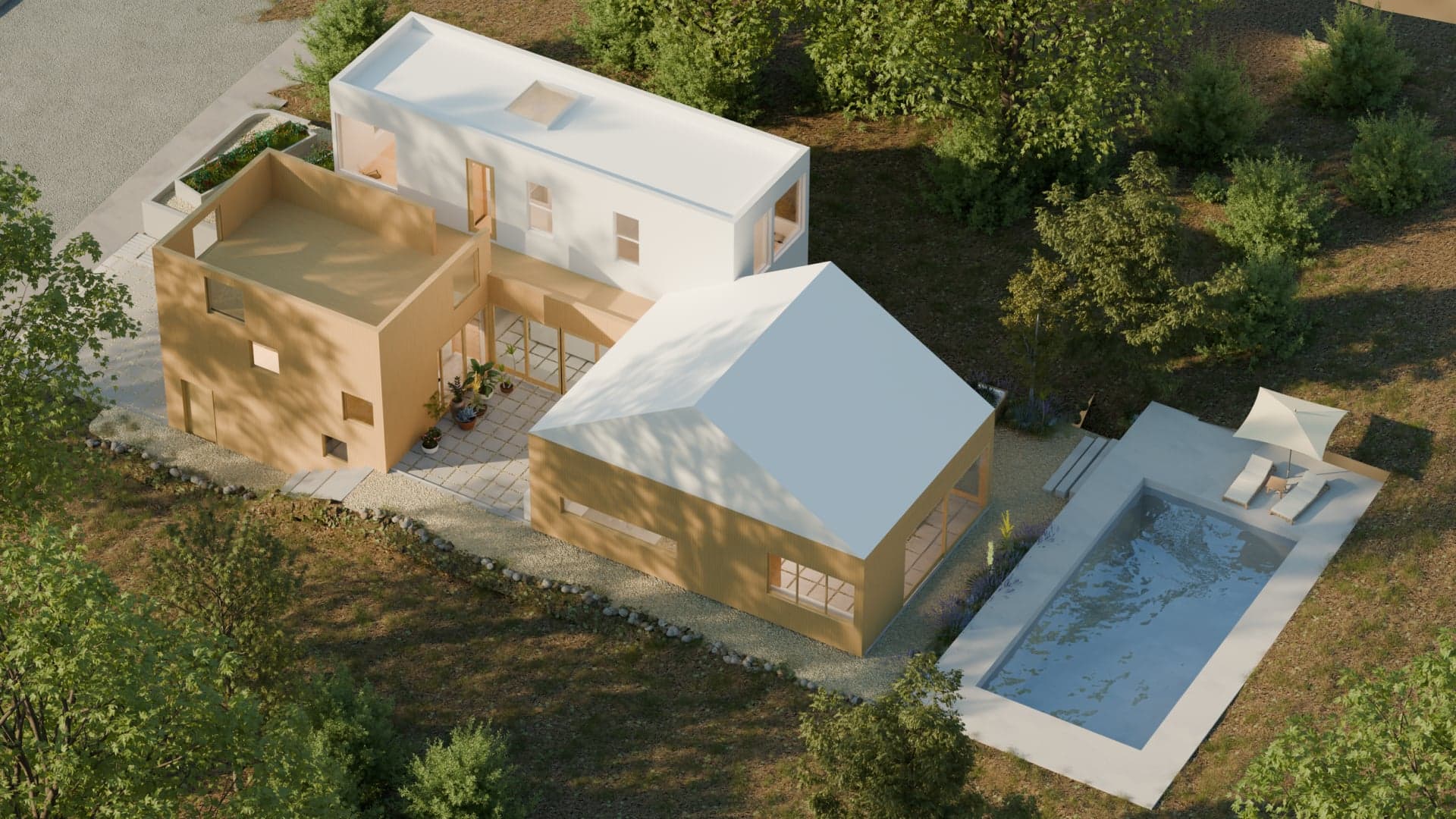
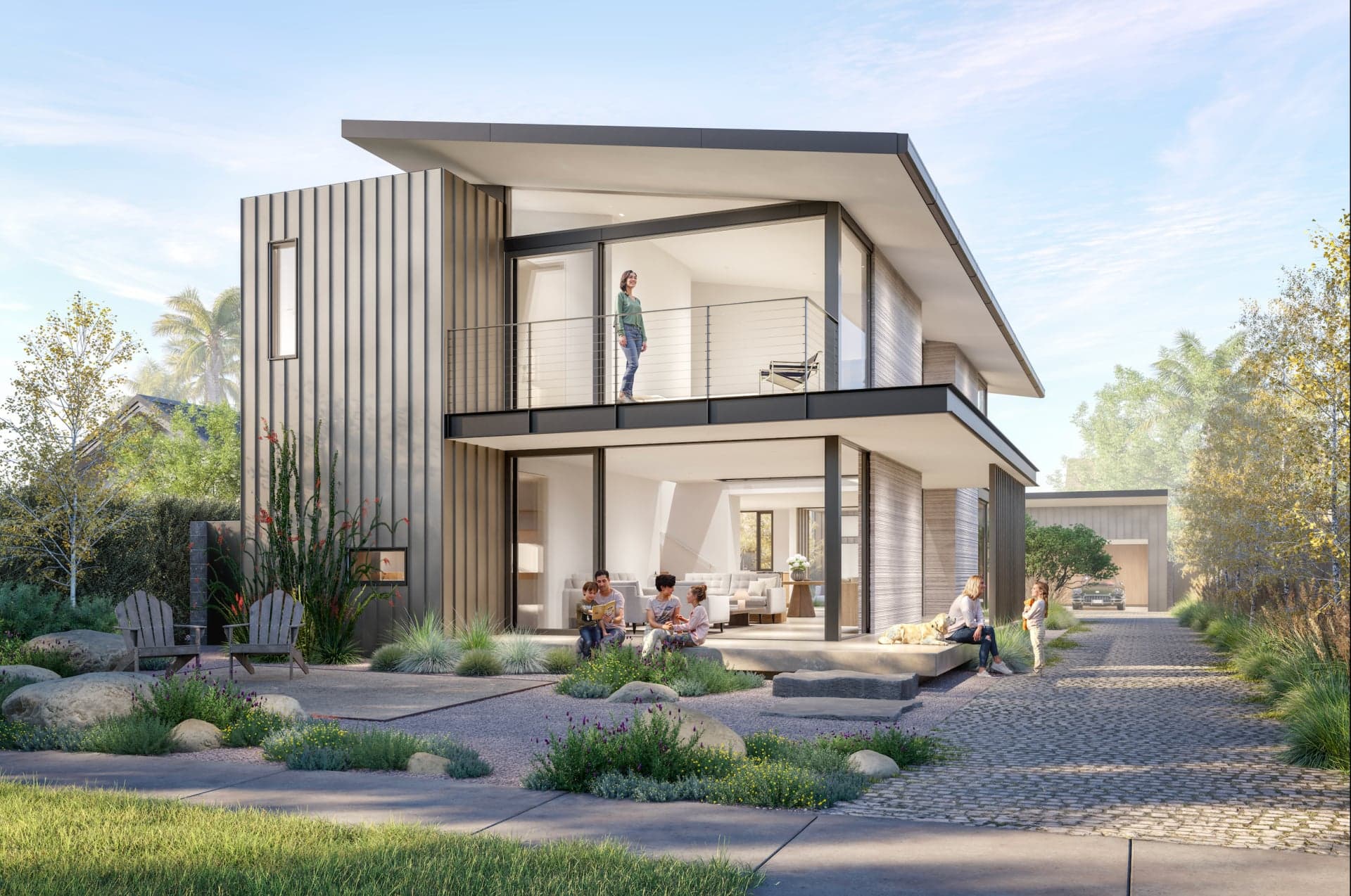
The Bramell House (Case Study Adapt #1) reduces eaves and decks to the minimum the design requires and is one of the cleaner demonstrations of this discipline in current residential architecture. The lesson generalizes: a beautiful home can have minimal eaves and a non-combustible outdoor living space without losing its character. The ones that don't pay attention to this detail are the ones that don't survive.
Energy and Water Resilience
Energy and water resilience is the principle most often skipped in early conversations and most often regretted later. A residential solar array paired with a battery storage system (Tesla Powerwall, Enphase IQ Battery, FranklinWH) lets the home keep functioning through public-safety power shutoffs and the multi-day grid disruptions that often follow major fires. A residential well with backup power is a meaningful asset during prolonged outages.
A swimming pool with a dedicated pump (often solar-powered) becomes an emergency water reserve for roof-mounted sprinklers. A graywater system reduces potable water demand and creates additional landscape resilience during extended drought. None of these are dramatic. All of them matter when the systems around the home stop working — which is exactly when wildfire-resilient design has to actually perform.
Lessons from the Case Study Adapt Program
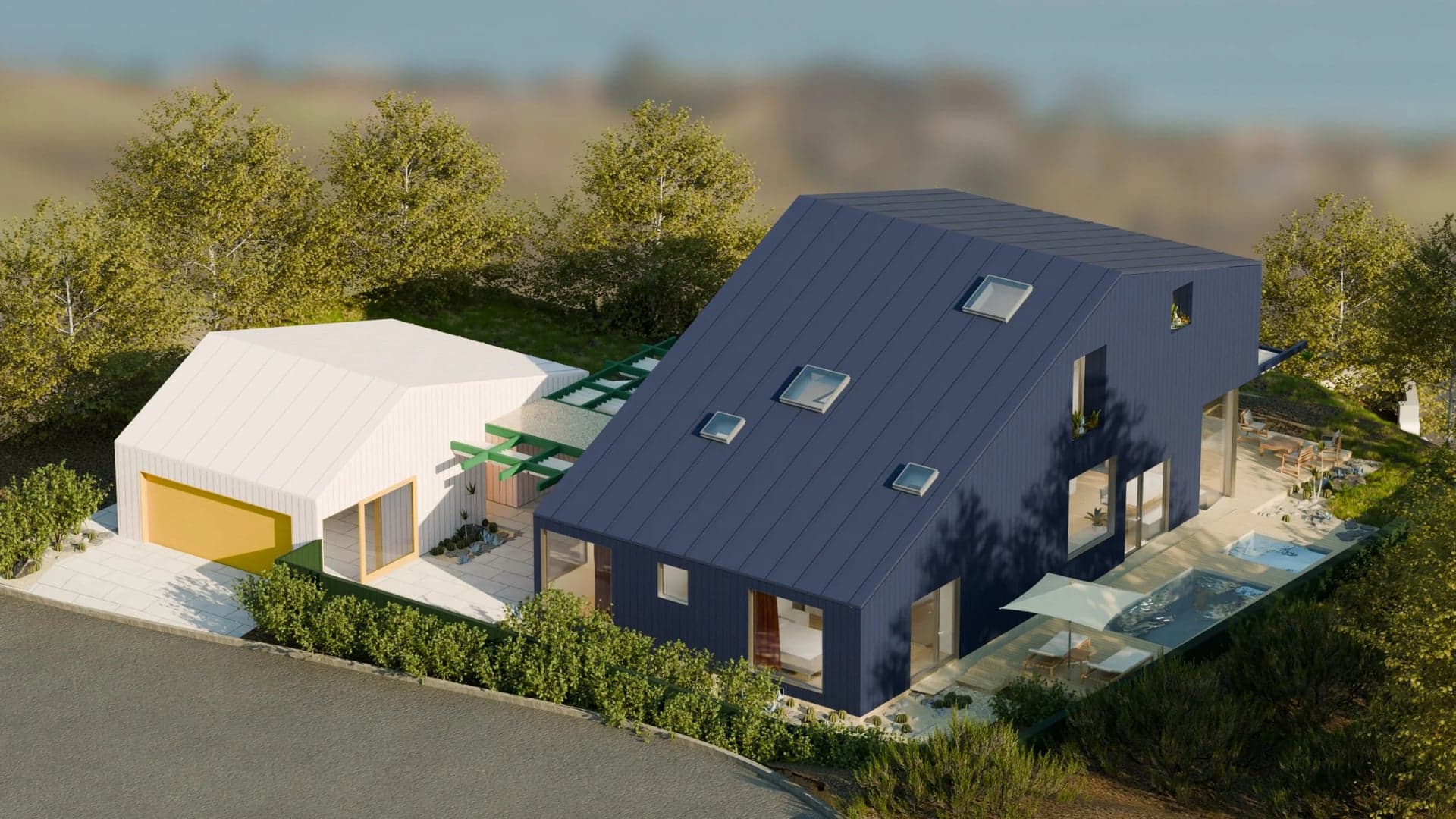
The Case Study Adapt program has been one of the most useful design references in this conversation. Sixteen California firms rebuilding homes for families who lost theirs in the January 2025 Palisades Fire have produced sixteen detailed demonstrations of how serious modern residential architecture can stand up to wildfire while staying beautiful, generous, and humane. The Bramell House by Woods + Dangaran shows what structural-grade resilience looks like when the design intent holds all the way through.
The Childers House by Bestor Architecture demonstrates a swimming pool integrated as a fire-suppression water reserve. The Schaffer-Balsley House by von Oeyen Architects brings trees inside the building envelope where they're sheltered from ember exposure. The Takeuchi House by Standard Architecture proves that two-hour-rated walls, metal-clad ceilings, and ember-shielded patios can sit inside a clean, modest residential design.
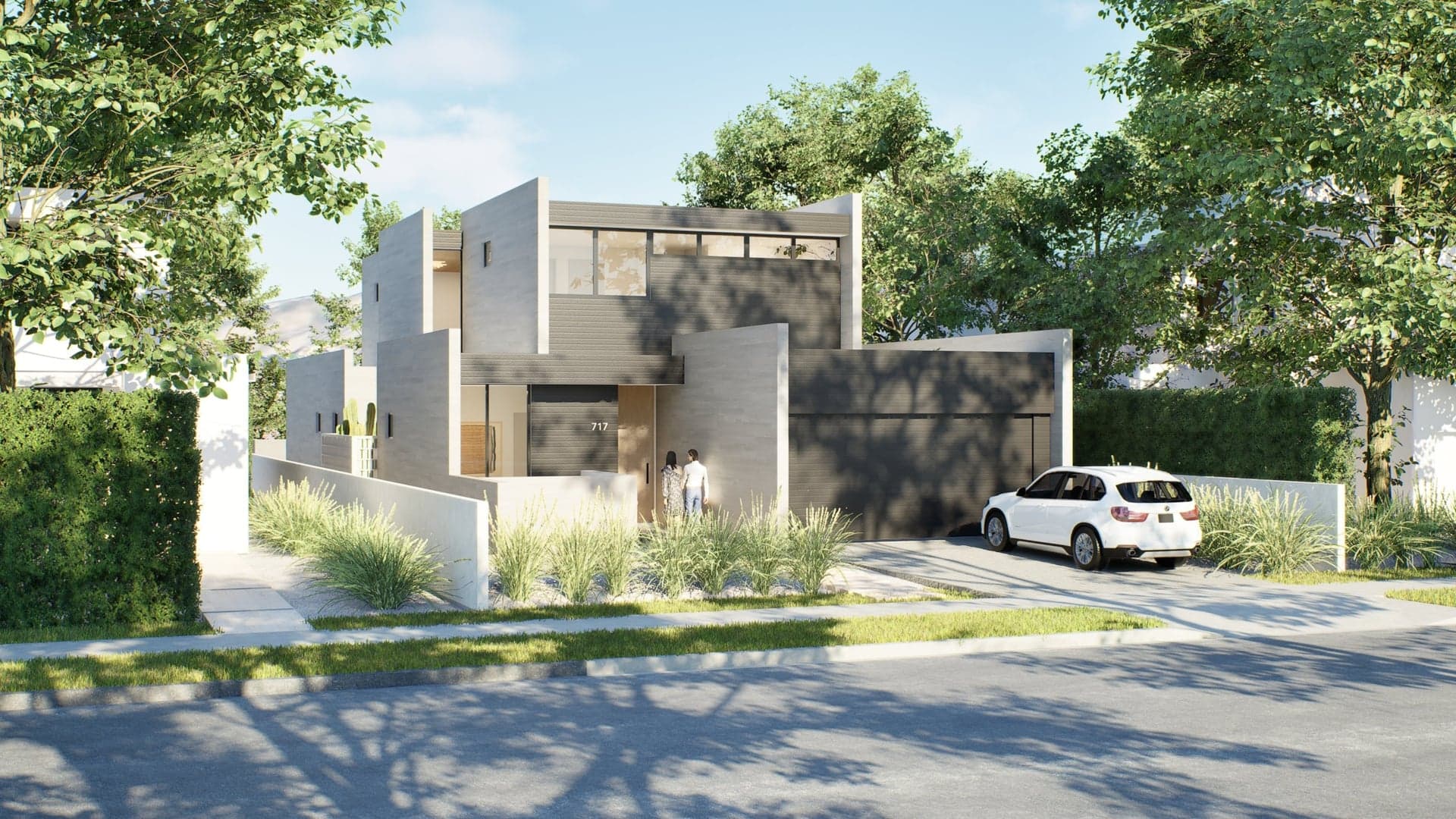
The Wallach Kleinman House — Standard Architecture's closing entry in the series, and the home shown at the top of this post — wraps that same discipline in fiber-cement siding and two-hour-rated walls that extend past the building envelope to shield its patios from wind-driven embers, showing that a fully fire-hardened shell can still read as an open, light-filled home. I've been writing about each project on the Creekside blog as the series rolls out, and the principles in those posts inform how we approach every project in our own region right now.
What Wildfire-Resilient Construction Actually Costs
The honest cost question is what most homeowners actually want answered. Going from baseline residential construction to genuinely wildfire-resilient construction in our region in 2026 typically adds $40,000 to $120,000 to a 3,000-square-foot custom home, depending on which decisions are made and how aggressively. Non-combustible cladding upgrade is $8,000 to $20,000. Ember-resistant venting is $2,000 to $5,000. Class A roofing premium over a non-rated alternative is $5,000 to $15,000. Hardened decks and outdoor structures are $5,000 to $20,000.
Energy resilience (solar plus a battery system) is $25,000 to $60,000 depending on system size. Defensible space landscaping is $5,000 to $25,000 depending on Zone 0 hardscape and Zone 1 plant palette. The total is real money — but it's a fraction of the cost of losing the home, and these days it's increasingly affecting insurance availability and rates regardless. The right answer for most rural Oregon homes in 2026 is to design the resilience strategy in from the very first sketch.
What Creekside Builds Into Every Project Now
What we've started doing on every Creekside project — including projects on lots that aren't in formally designated wildland-urban interface zones — is treat resilience as a baseline conversation rather than an upgrade. The five-foot defensible perimeter. Class A roofing. Fiber cement or stone cladding instead of cedar siding. Ember-resistant venting throughout. Hardened soffits and minimized eaves. Solar plus battery as a standard offering.
Native, drought-tolerant landscaping integrated with hardscape. Most of these decisions don't change how the architecture reads. All of them change how the home performs when it matters. The Case Study Adapt projects make the case visually that fire-resilient detailing belongs in beautiful, generous, materially honest design — and that conviction is the right one to carry forward.
Getting a Real Assessment for Your Lot
If you own land in a wildland-urban interface area, in the foothills of the Coast Range, in the Cascade foothills, on rural Yamhill or Polk or Tillamook County acreage, or anywhere in greater Portland where the wildfire conversation now applies — and you're thinking about a custom home — the resilience conversation should happen at the very first design meeting, not the last. We have it with every prospective client.
The cheapest, fastest version of getting a real read on your specific situation is a paid site evaluation that includes a fire-exposure assessment, a defensible-space review, and a resilience-strategy framework specific to your lot. Most of our Yamhill County and rural Polk County clients in the last two years have started with one. If you want to talk through your project, the contact form on this site or a direct call to (503) 461-7046 is the easiest way to start.
Frequently Asked Questions
Is Oregon really at risk for wildfire?
Yes, and the risk has increased meaningfully in the last decade. The 2020 Labor Day fires (Holiday Farm, Beachie Creek, Riverside, Archie Creek) burned over a million acres in the Cascades and changed how the state thinks about residential fire risk. The Coast Range, Cascade foothills, foothill regions of Yamhill, Polk, and Tillamook counties, and parts of greater Portland are increasingly identified as wildland-urban interface zones. Insurers are adjusting underwriting and counties are updating defensible-space requirements accordingly.
What is defensible space and what does it require in Oregon?
Defensible space is the layered landscape strategy around a home designed to slow or stop a wildfire from reaching the structure. It is organized as three zones: Zone 0 (zero to five feet from the home, no combustible material at all), Zone 1 (five to thirty feet, fire-resistant native plants well-spaced), and Zone 2 (thirty feet to one hundred feet or property line, reduced fuel loads). Specific requirements vary by jurisdiction. Yamhill, Tillamook, Lincoln, and Lane counties have updated their codes recently and are increasingly enforcing them.
How much does fire-resistant construction add to a custom home in Oregon?
Going from baseline residential construction to genuinely wildfire-resilient construction in our region in 2026 typically adds $40,000 to $120,000 to a 3,000-square-foot custom home. The major line items are non-combustible cladding upgrade ($8,000–$20,000), ember-resistant venting ($2,000–$5,000), Class A roofing premium ($5,000–$15,000), hardened decks ($5,000–$20,000), energy resilience including solar and battery ($25,000–$60,000), and defensible-space landscaping ($5,000–$25,000).
What is the best siding for fire resistance in the Pacific Northwest?
Fiber cement (Hardie, Allura, James Hardie) carries Class A fire ratings, weathers well in PNW rain, and is the most common high-end siding choice in our region in 2026. Stone, brick, concrete masonry, and metal cladding are also non-combustible and appropriate for fire-resilient design. Shou sugi ban offers improved fire resistance with significant aesthetic character. Conventional wood siding (cedar, redwood) should be avoided in any meaningful wildland-urban interface exposure.
What is Class A roofing and do I need it?
Class A is the highest fire-resistance rating for residential roofing in the standard testing framework. Materials with Class A ratings include standing-seam metal, concrete tile, clay tile, slate, and certain composite asphalt shingles. In wildfire-prone areas of Oregon — which now includes most rural Yamhill, Polk, Tillamook, and Lincoln County properties and significant portions of the Cascade and Coast Range foothills — Class A roofing should be considered the baseline. The cost premium over non-rated alternatives is usually $5,000 to $15,000 across an entire residence.
Are ember-resistant vents required in Oregon?
Requirements vary by jurisdiction, but they're increasingly mandated in designated wildland-urban interface zones in Yamhill, Tillamook, Lincoln, Lane, and Jackson counties. Even where not formally required, ember-resistant venting is non-negotiable on any serious wildfire-resilient home — embers entering through conventional vents are how most residential fires actually start during a wildland-urban interface event. Ember-resistant vents typically cost $40 to $200 each and add a few thousand dollars total to a typical residence.
Do I need a fire sprinkler system in my Oregon home?
Interior residential sprinkler systems are not generally required in Oregon for single-family homes, though some jurisdictions now require them in newly platted subdivisions. Exterior or roof-mounted sprinkler systems for wildfire defense — typically fed from a residential pool or dedicated water tank — are not required but are increasingly common in serious wildfire-resilient designs on rural acreage. The right answer depends on the lot's exposure, available water source, and the homeowner's risk tolerance.
What is wildland-urban interface (WUI) and how do I know if my property is in one?
Wildland-urban interface is the area where residential development meets undeveloped wildland vegetation, creating elevated wildfire risk. Most Oregon counties have published WUI maps based on fuel loads, slope, and historical fire behavior. Yamhill County, Polk County, Tillamook County, and Lincoln County all have public WUI designations. Your county planning department can confirm whether a specific lot falls within a designated WUI zone, which affects building code requirements, defensible-space obligations, and increasingly insurance rates.
Can the principles in the Case Study Adapt program apply to Oregon homes?
Yes — almost directly. The Case Study Adapt program addresses the same fundamental question Oregon now faces: how does serious modern residential architecture stand up to wildfire? The specific fire behavior is different here than in coastal Southern California — wind-driven embers from forest fires rather than chaparral burns — but the design principles travel directly. Defensible space, non-combustible cladding, ember-resistant venting, hardened envelopes, energy resilience, and integrated water management are all applicable to rural Oregon custom homes. The full series of project writeups is on the Creekside blog.
How do I get a wildfire risk assessment for my Oregon property?
Several ways. Oregon Department of Forestry maintains regional fire risk mapping. Your county planning department can confirm wildland-urban interface designation. Your insurer (or a prospective insurer) can provide a property-specific underwriting assessment. For a builder's read on what fire-resilient construction would specifically look like on your lot, a paid site evaluation from a builder experienced in WUI construction — typically $3,000 to $8,000 — gives you a comprehensive answer specific to your property and the home you want to build.
The Building Journey
See how we design and build your home, step by step.
Floor Plans
Browse 15 customizable designs from 1,635 to 5,628 sq ft.
Service Area
We build across Yamhill County, Sherwood, Hillsboro, and wine country.
Ready to Talk About Your Project?
Get expert guidance from Oregon's trusted custom home builder.