Six Houses In, Same Firm, Different Form
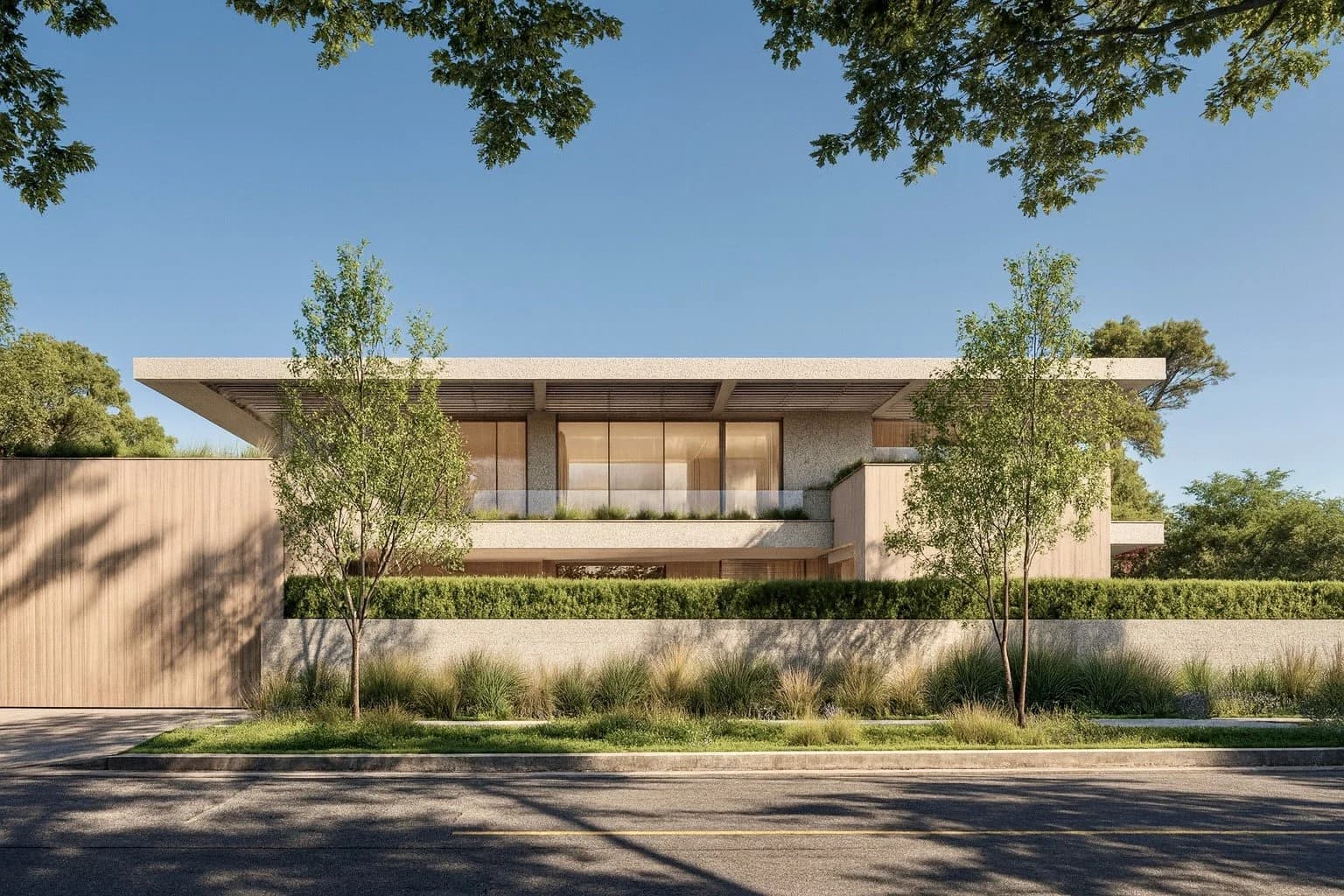
Six houses in. One of the more interesting things about the Case Study Adapt program is that several of the firms have been given two projects, and the comparisons are genuinely illuminating. Montalba Architects returns with CSA #6 — the Conte House — and the project reads as a confident counterpoint to the firm's Rafferty House. Designed for Mark and Anne Conte, this residence unfolds as a sequence of layered courtyards and framed views that shift between privacy and openness depending on where you stand. The choreography is the architecture, and the firm's voice is unmistakably the same as it was in CSA #5 — but the formal answer is completely different. That is what mature design looks like.
A Linear Coastal Composition
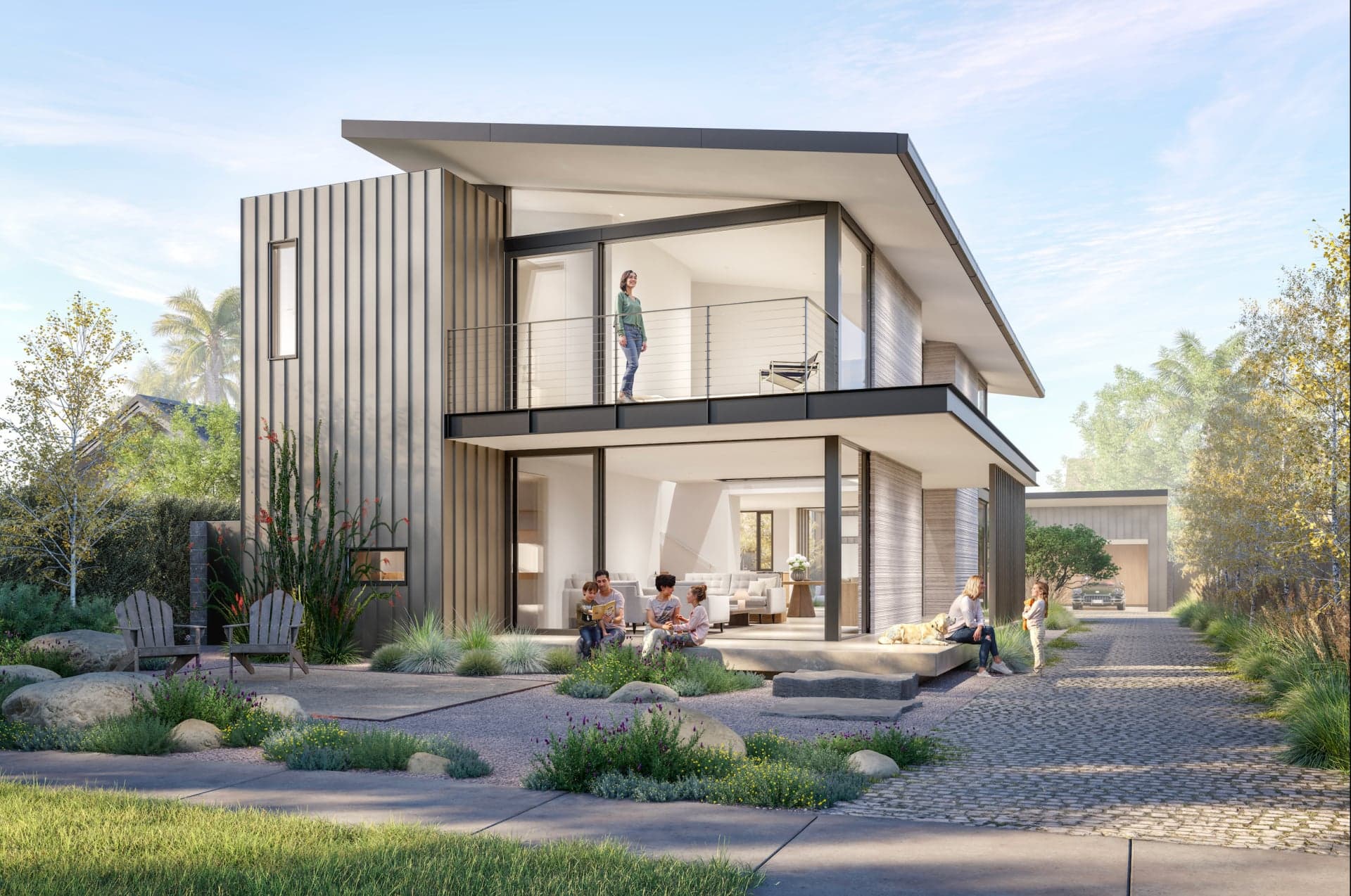
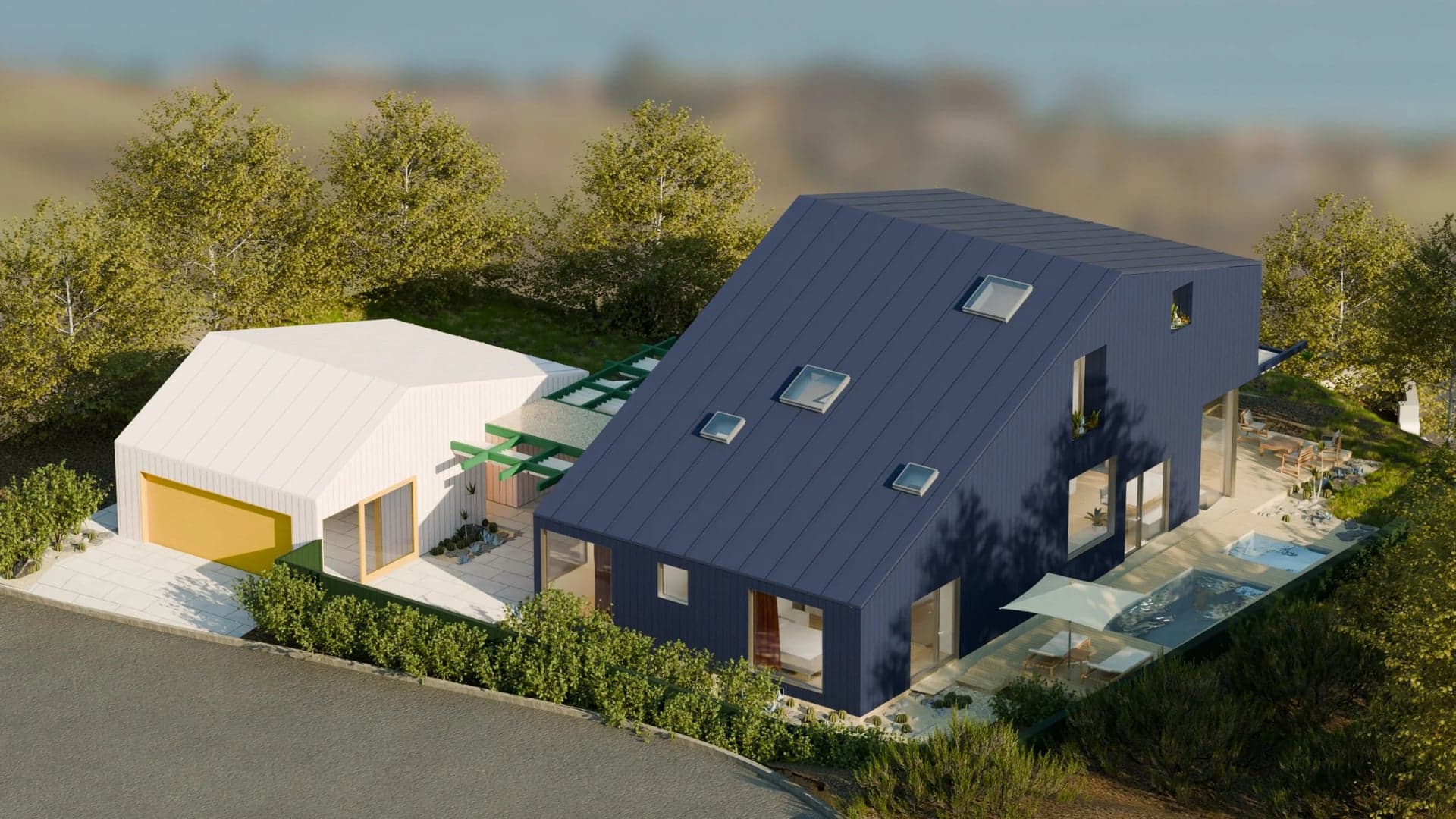
The home is organized linearly, with a central pool courtyard acting as the spatial anchor. From there, interior spaces unspool toward ocean and mountain views, with a deep roof canopy that relates the home to its coastal setting and gives the elevations the kind of horizontal calm this stretch of California has always done well. The palette is warm and restrained — exactly the design DNA Montalba has spent two decades refining. The horizontality of the composition reads almost classically, but the proportions are unmistakably contemporary. Both readings are correct, which is part of the project's quiet pleasure.
A Hardened Shell, Done Quietly
Underneath the calm sits a serious resilience strategy. The exterior is a hardened shell: non-combustible cladding, Class A fire-rated roofing, and tempered glazing across the major openings. Low-flame native plantings and gravel paving replace the kind of fuel-rich landscaping that makes a wildfire's job easy. The deep overhangs that shade the elevations also support natural cooling, reducing how hard the mechanical systems work during the hottest months. This is the recurring theme of the Case Study Adapt program, and the part of it I find most useful as a builder: every design move is doing more than one job.
Resilience That Goes Past the Walls
Solar with battery storage and graywater systems extend the resilience thinking past the structure itself. A home in a coastal canyon needs to be able to function when the grid goes down and water becomes scarce. The Conte House is built to do that, and the redundancy is integrated into the design rather than tacked on as an aftermarket layer.
There is a real conversation in our own region right now about how much resilience to build into a custom home — backup power, water storage, off-grid capability. The Conte House is a useful reference for what serious resilience looks like when it is designed in rather than added on. The cost of doing it right at design time is almost always lower than the cost of bolting it on later, and the result performs much better.
Two Approaches, One Conviction
What makes this project worth studying alongside Montalba's Rafferty House is how differently the same resilience principles can resolve into architecture. One is inward-focused and sculptural. The other is linear and panoramic. Both are calm. Both are hardened. Both demonstrate that protection and openness are not in tension when the design intelligence is real. I find this kind of paired demonstration genuinely instructive — it is one of the better ways to learn how a serious design vocabulary actually works in practice.
A Vocabulary, Not a Style
Six houses in, what the Conte House underscores is that the principles the program is exploring are not a single style. They are a way of thinking that can produce many different homes, all serving their families well. That is what good design language has always been able to do, and it is what makes the Case Study Adapt program — like the original Case Study program before it — worth the close attention I am giving it. Read the full Conte House project on Case Study Adapt: https://www.casestudyadapt.org/houses-in-development/project-six-sz8wl-d64c9-gb95m-ndyde-rmlbl-zh6t4.
Frequently Asked Questions
What is the Conte House?
The Conte House is the sixth project in the Case Study Adapt series — a linear coastal residence designed by Montalba Architects for Mark and Anne Conte. The home unfolds as a sequence of layered courtyards with a central pool courtyard as the spatial anchor, framed by a deep horizontal roof canopy. It pairs a hardened, non-combustible exterior shell with deep overhangs that drive natural cooling and a graywater system that supports landscape resilience.
Why does Montalba Architects have two homes in the Case Study Adapt program?
Several Case Study Adapt firms have been given two projects, which lets the program demonstrate range within a single mature design vocabulary. Montalba's two homes — the inward, sculptural Rafferty House and the linear, panoramic Conte House — illustrate how the same set of resilience principles can resolve into very different architecture depending on site, brief, and family.
What is a graywater system?
A graywater system captures lightly used water from sinks, showers, and washing machines and routes it to landscape irrigation rather than down the sewer. In a wildfire-resilient home it does double duty: it reduces potable water demand for landscape and provides additional water capacity that can be drawn on during extended drought conditions. Graywater systems are increasingly common in custom homes on rural Oregon parcels for the same reasons.
What is a Class A fire-rated roof?
Class A is the highest fire-resistance rating for residential roofing in the standard U.S. testing framework. A Class A roof assembly resists severe exposure to embers and flame for an extended period without ignition. Common Class A materials include metal roofing, concrete or clay tile, and composite asphalt shingles rated to that class. Class A roofing is now standard practice for any serious residential build in a wildfire-prone landscape.
Should an Oregon custom home have backup power and water storage?
Increasingly, yes — particularly on rural acreage where a power outage or wildfire-driven evacuation can affect the family for days. The right level of resilience depends on the site, the family's priorities, and the home's location relative to grid reliability and water sources. The cost of designing it in from the beginning is almost always lower than the cost of retrofitting it later, which is why we have the conversation early.
The Building Journey
See how we design and build your home, step by step.
Floor Plans
Browse 15 customizable designs from 1,635 to 5,628 sq ft.
Service Area
We build across Yamhill County, Sherwood, Hillsboro, and wine country.
Ready to Talk About Your Project?
Get expert guidance from Oregon's trusted custom home builder.