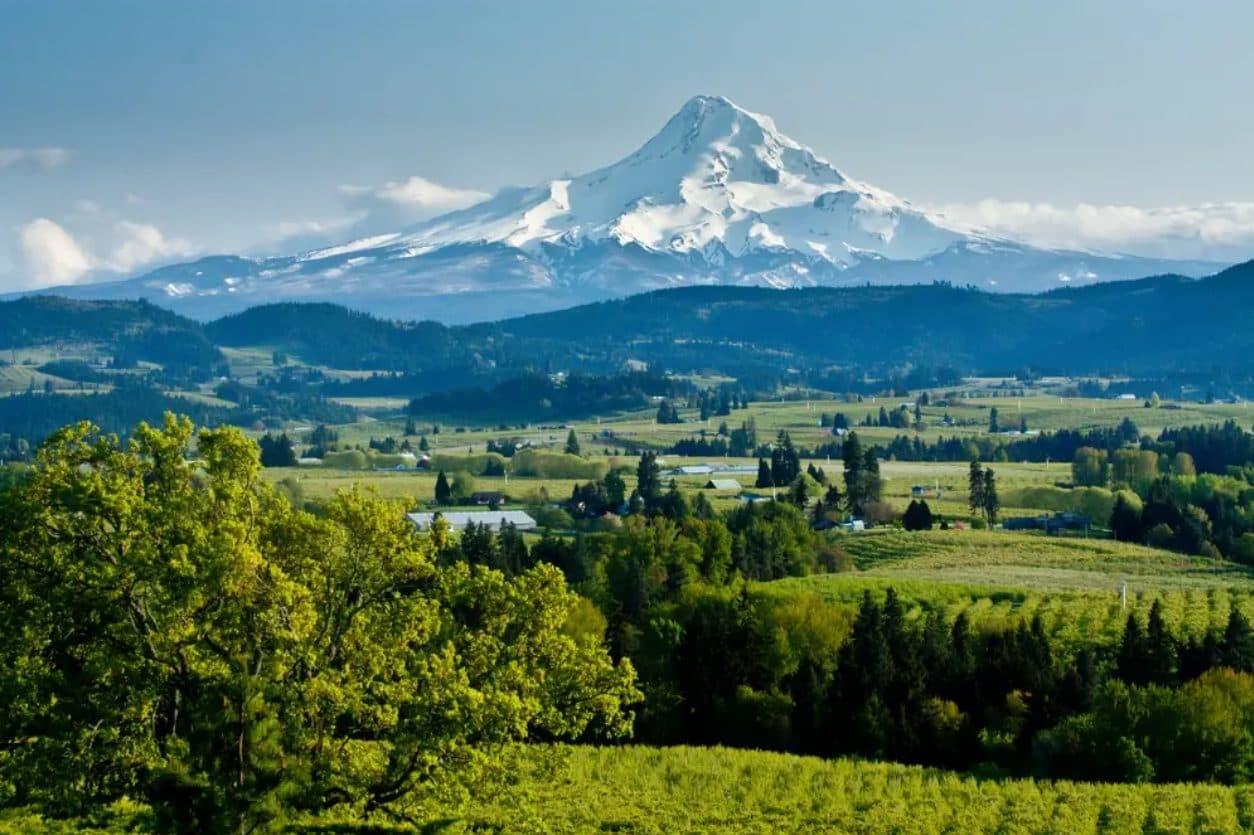
Why Buying Land to Build Is Different
Buying land to build a home is a fundamentally different exercise from buying land to hold or to develop later. The questions that matter, the diligence required before close, and the costs of getting it wrong all change. I see prospective custom-home clients make the same handful of mistakes on land purchases over and over, and most of them are knowable in advance — if you know what to look for before signing the purchase agreement. This is the practical, builder's-eye guide to evaluating buildable land in the Willamette Valley, written for anyone who's thinking about a custom home and trying to decide whether a specific parcel is the right place to build it.
The Four Non-Negotiables of a Buildable Lot
There are four non-negotiables that determine whether a lot is genuinely buildable in our region. First, the soils have to support a standard or engineered foundation — not all soils do, and some require expensive workarounds that change the project economics. Second, the slope and drainage have to be developable without prohibitive grading or structural cost. Third, water and septic must be achievable on rural lots (or municipal services available on city lots).
Fourth, zoning has to permit the home you want at the size you want. Any one of these failing can kill a project or push the cost beyond what the family is willing to spend. All four are knowable before you close, and the diligence to confirm them is dramatically cheaper than the cost of being surprised after purchase.
Soil Testing and Geotechnical Investigation
Soil testing and geotechnical investigation is the first thing I order on any rural lot a client is seriously considering. A licensed geotechnical engineer drills test borings and analyzes the soil's bearing capacity, drainage characteristics, and seismic behavior. The report tells you whether the lot supports a standard slab or stem-wall foundation, whether it requires an engineered foundation (more expensive — drilled piers, helical piles, or deep footings), or whether it has issues that make construction prohibitively expensive (expansive clay, unstable fill, high groundwater table).
On rural land, also order a septic feasibility study at the same time — the perc test that confirms whether a residential septic system is viable. Together these two studies cost $1,500 to $5,000 in most jurisdictions and are the cheapest insurance available against a six-figure mistake.
Power, Utilities, and What "Buildable" Actually Means
Power, utilities, and what "buildable" actually means matters more than most homeowners realize. A parcel marketed as "buildable" can still have power lines stopping at the road far from where the house should sit, requiring an extension that runs $10,000 to $50,000 or more. It can have a well that's been abandoned or that produces insufficient yield. It can have access easements that aren't fully recorded.
It can have surface water rights that don't include indoor potable use. We've seen all of these become deal-killers after closing. Before you commit to a lot, walk it with a builder, get the power company to flag where service can actually be brought, confirm the well's yield and water rights, and verify access easements are documented. None of this is exotic — it's just diligence that most prospective buyers haven't done before.
Zoning and What the County Will Let You Build
Zoning and what the county will let you build is the most underrated land-purchase question in the Willamette Valley. Yamhill County, Polk County, Washington County, and Clackamas County all have rural-zoning frameworks that constrain what can be built on a given parcel. Setbacks, lot coverage limits, height restrictions, and dwelling-unit limits all vary. Conservation easements, mineral rights reservations, and active development restrictions can further constrain the home.
Some lots that look generous on paper turn out to permit only a 1,500-square-foot home because of buildable-area constraints. Some lots that look small turn out to allow a 4,500-square-foot home plus an ADU. The county planning department can tell you what's permitted on any specific parcel; we routinely make this call for prospective clients before they make an offer.
The Geographic Landscape of the Willamette Valley
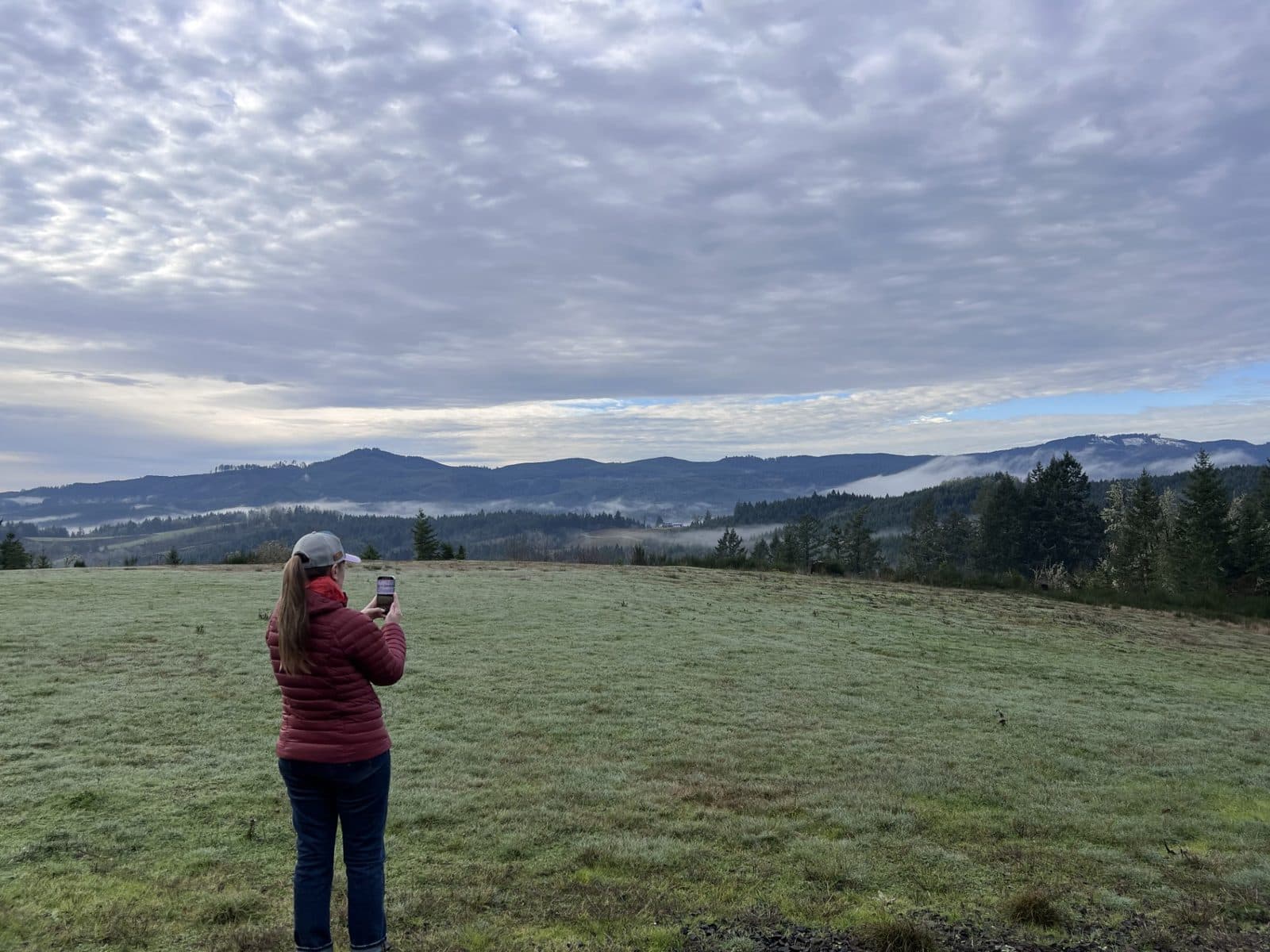
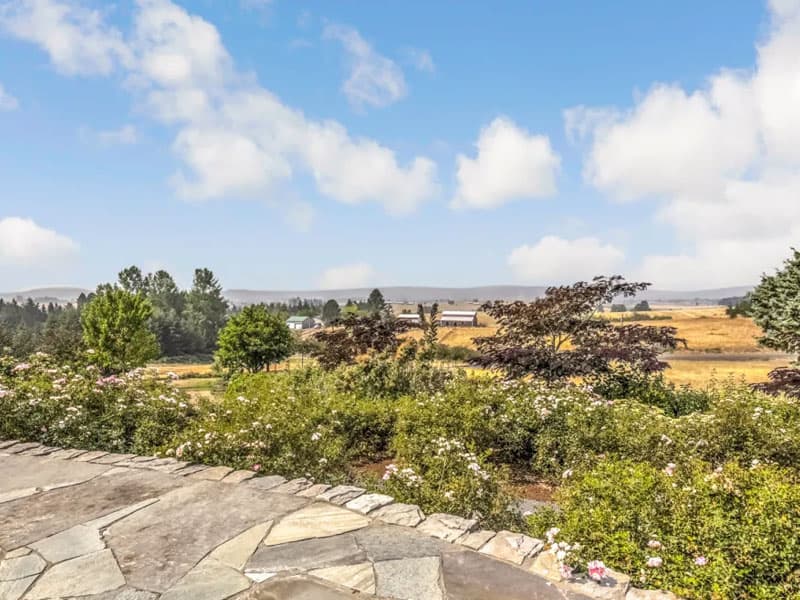
The geographic landscape of the Willamette Valley deserves its own conversation because the regions vary significantly in what they offer. Yamhill County is the heart of Oregon wine country and where most of our custom work lands — McMinnville as the cultural hub, Newberg and Dundee as wine country gateways, Carlton and Dayton as smaller wine-tradition towns, Sheridan and Amity as quieter rural communities. The Dundee Hills, Eola-Amity Hills, Yamhill-Carlton AVA, Chehalem Mountains, and Ribbon Ridge are all producing extraordinary view-oriented residential architecture right now.
Polk County offers similar wine-country character with somewhat larger parcels and lower price points, particularly in the Salem-adjacent and Falls City regions. Washington County provides proximity to the tech corridor and Portland metro, with more rural-residential zoning options between Hillsboro, Forest Grove, and the Coast Range. Clackamas County is more developed but offers select rural acreage in the Stafford-Lake Oswego region and east toward Sandy. Each region has its own permitting culture, market price tier, and design language. We work across all of them and can speak to what each is like to actually build in.
Red Flags That Should Kill a Lot Purchase
Red flags that should kill a lot purchase: failed perc tests on rural land. Geotech reports that show expansive clay, unstable fill, or shallow bedrock requiring blasting. Excessive slope without engineering options. Required power extension that exceeds the home's reasonable budget — sometimes the cost of bringing power half a mile is more than the lot itself. Wetland or floodplain designations that severely limit footprint. Conservation easements or zoning restrictions that prohibit the home you want.
Title issues, undocumented access rights, or active boundary disputes with neighbors. Any of these can be deal-killers — and all of them are knowable before you sign. The number of times we've seen a client make a six-figure mistake on a piece of land they were excited about, after skipping diligence that would have cost a few thousand dollars, is the single most preventable failure pattern in this business.
What to Do Before You Sign a Purchase Agreement
What to do before you sign a purchase agreement on land you intend to build on: order a geotechnical investigation as a contingency. Order a septic feasibility study (perc test) as a contingency on rural land. Walk the lot with a builder who can flag issues you wouldn't see yourself. Confirm the zoning permits the home you want, by calling the county planning department directly.
Verify utility access — power, water, fiber, gas — at the location where the house should sit, not just at the road. Review title for easements, conservation restrictions, and any unrecorded encumbrances. Check the wildland-urban interface designation and what it means for your insurance and your build code requirements. None of this is overkill on a piece of land where you're going to spend $1.5M to $3M building a custom home. All of it is cheap relative to the cost of being wrong.
How to Get a Builder's Read on a Specific Lot
If you're seriously evaluating a piece of land in the Willamette Valley and you want a builder's perspective on whether it's the right place to build the home you have in mind, we do paid lot evaluations for prospective clients regularly. Typical cost is $2,000 to $5,000 depending on the lot's complexity, and we credit it back against the design fee if you move forward with us. The evaluation answers buildability, gives you a realistic site-development cost range, flags any issues we can identify from a thorough walk and the county records, and tells you honestly whether the home you're imagining can fit the lot you're considering.
If the answer is no, we'll tell you that. If the answer is yes with significant constraints, we'll tell you what those are. The earlier in the process you get this read, the better. The contact form on this site or a direct call to (503) 461-7046 is the easiest way to start. This is exactly the work we want to be doing — helping the right families end up on the right lots.
Frequently Asked Questions
What should I look for when buying land to build a custom home in Oregon?
Four things determine whether a lot is genuinely buildable: soils that support a standard or engineered foundation, slope and drainage you can develop without excessive grading, achievable water and septic on rural lots (or available municipal services on city lots), and zoning that permits the home you want at the size you want. Beyond those non-negotiables, look at views, access, fire risk, neighborhood trajectory, and whether the parcel has the right relationship to the road and to neighboring properties for the home you want to build.
How do I know if a lot has good soil for building?
Order a geotechnical investigation. A licensed geotechnical engineer drills test borings and analyzes the soil's bearing capacity, drainage characteristics, and seismic behavior. The report tells you whether the lot supports a standard foundation, requires an engineered foundation, or has issues that make construction prohibitively expensive. The investigation typically costs $1,500 to $5,000 and is the single best dollar a custom home buyer spends before purchase.
What is a perc test and do I need one in Oregon?
A perc test (more accurately a septic feasibility study or soil evaluation for an on-site sewage disposal system) determines whether the soils on a rural property can absorb wastewater at a rate sufficient for a residential septic system. Every rural Oregon lot without municipal sewer requires this evaluation before a septic permit will be issued. If you're considering buying rural land, get a feasibility study as a contingency before close. The test costs $400 to $1,500 in most jurisdictions and is the cheapest insurance available against an unbuildable lot.
Where are the best areas to build a custom home in the Willamette Valley?
It depends on the lifestyle you want. Yamhill County (McMinnville, Newberg, Dundee, Carlton, Dayton) offers wine country, rural acreage, and a strong custom-home tradition within forty minutes of Portland. The Dundee Hills, Eola-Amity Hills, Yamhill-Carlton AVA, and Chehalem Mountains are producing some of the most extraordinary view lots in the region. Polk County offers similar character with lower price points. Washington County gives you tech-corridor proximity. Each region has its own permitting culture, market tier, and design language.
How much should I budget for buying land in Oregon wine country?
Land prices vary widely by region, lot size, view quality, and buildability. Buildable rural acreage in Yamhill County in 2026 typically runs $200,000 to $800,000+ for parcels in the 3-to-20-acre range, with view lots in the Dundee Hills, Eola Hills, and Chehalem Mountains often well into the upper end. City lots in McMinnville, Newberg, and Sherwood typically run $200,000 to $500,000 depending on size and location. Larger acreage and premium-view properties go higher. Plan to spend additional money on diligence (geotech, perc test, surveys) before close.
What red flags should kill a lot purchase?
Failed perc tests on rural land. Geotech reports showing expansive clay, unstable fill, or shallow bedrock. Excessive slope without engineering options. Power extension cost that exceeds reasonable budget. Wetland or floodplain designations that severely limit footprint. Conservation easements or zoning restrictions that prohibit the home you want. Title issues or undocumented access rights. Any of these can be deal-killers — and all of them are knowable before you sign.
Can a builder help me evaluate land before I buy it?
Yes, and they should. Engage a builder before you make an offer, not after. We do paid lot evaluations for prospective clients regularly — typical cost $2,000 to $5,000 — that walk the lot, review county records, flag issues we can identify, and give you a realistic site development cost range. We credit the evaluation against the design fee when clients move forward. The earliest conversations save the most money.
What's the difference between a 'buildable' lot and a lot that's actually buildable?
Real estate listings sometimes use 'buildable' loosely. A genuinely buildable lot has confirmed septic feasibility (where applicable), available utilities at reasonable extension cost, soils that support a residential foundation, zoning that permits the home you want, no major easement or title issues, and slope that can be developed economically. Confirming all of these requires actual diligence — geotech, perc test, county zoning review, utility verification, title review. "Buildable" in a listing means "someone could probably build something here." Buildable for your specific home is a different question.
How long does it take to find the right lot in the Willamette Valley?
Realistically, three months to two years. Custom-buildable lots in good areas of greater Portland and wine country are not in oversupply, and the right combination of view, buildability, and price often takes patience. We've worked with clients who bought in three weeks and others who searched eighteen months for the right parcel. The earlier you start the conversation with us — even before you've decided exactly where to look — the better the eventual outcome.
What's a wildland-urban interface designation and why does it matter for my lot?
Wildland-urban interface (WUI) is the area where residential development meets undeveloped wildland vegetation, creating elevated wildfire risk. Most rural Oregon parcels in foothill and forested regions have some WUI designation, which affects building code requirements (defensible space, fire-resistant materials, ember-resistant venting), insurance underwriting, and increasingly insurance availability. Your county planning department can confirm WUI status for any specific parcel. If you're buying in or near a WUI zone, design the resilience strategy in from day one — see our wildfire-resilient construction post for detail.
The Building Journey
See how we design and build your home, step by step.
Floor Plans
Browse 15 customizable designs from 1,635 to 5,628 sq ft.
Service Area
We build across Yamhill County, Sherwood, Hillsboro, and wine country.
Ready to Talk About Your Project?
Get expert guidance from Oregon's trusted custom home builder.