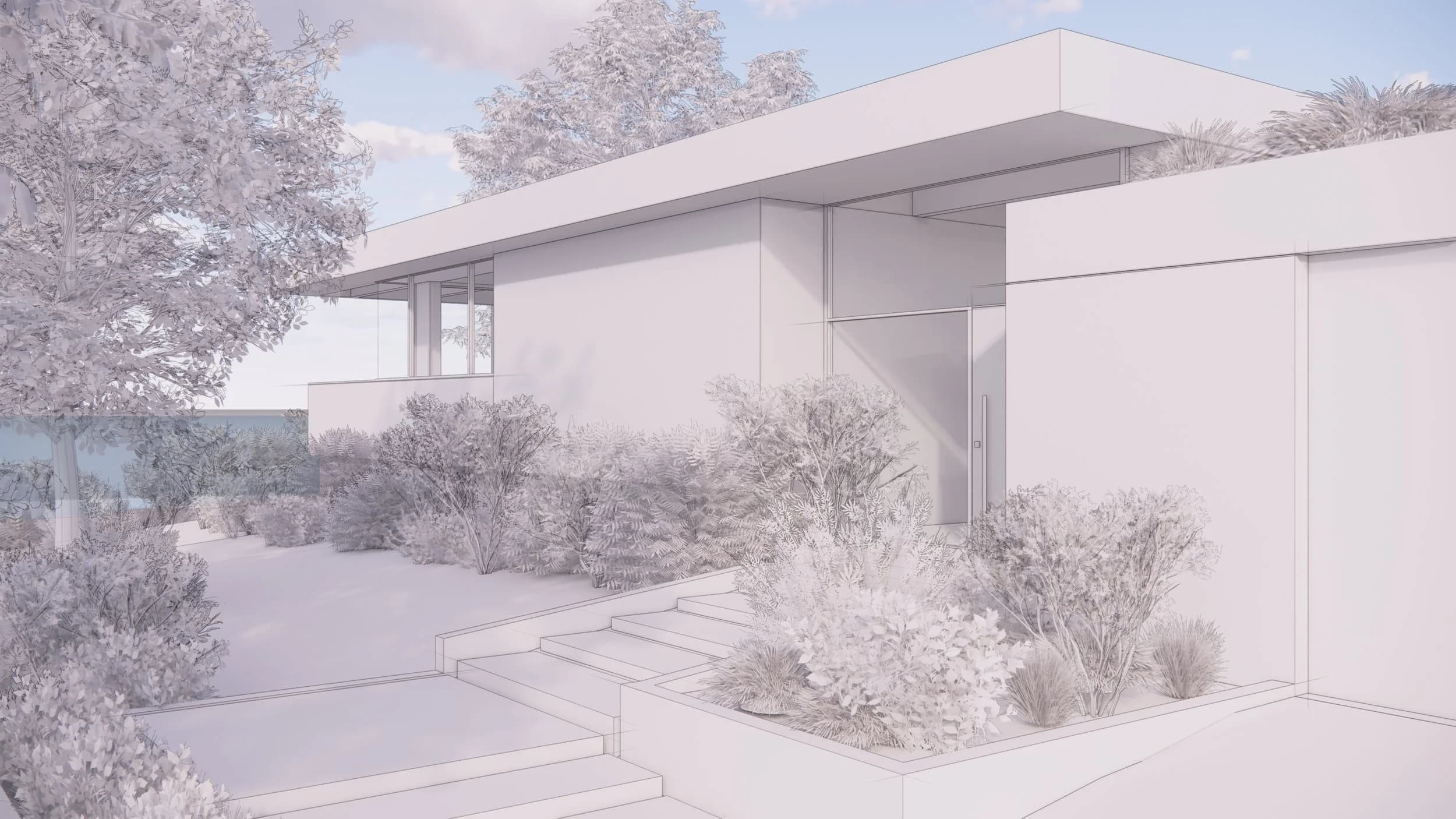
Four Houses In, A Stewardship Question Keeps Returning
Four houses in. What keeps coming up across the Case Study Adapt projects is that the architects are not just being asked to build new homes — they are being asked to honor the homes and the places that came before, while answering an entirely new set of questions about what survives in this landscape.
That dual obligation reaches an interesting peak in CSA #4, the Longbine Ayeroff House by Assembledge+. The home sits where the original 1948 Freedman Residence once stood — a piece of midcentury California architectural history — and after the Palisades Fire claimed the home, owners Marty Longbine and Jeff Ayeroff brought in Assembledge+ to design what comes next. The firm's response is a careful, contemporary act of stewardship.
A Courtyard That Does the Heavy Lifting
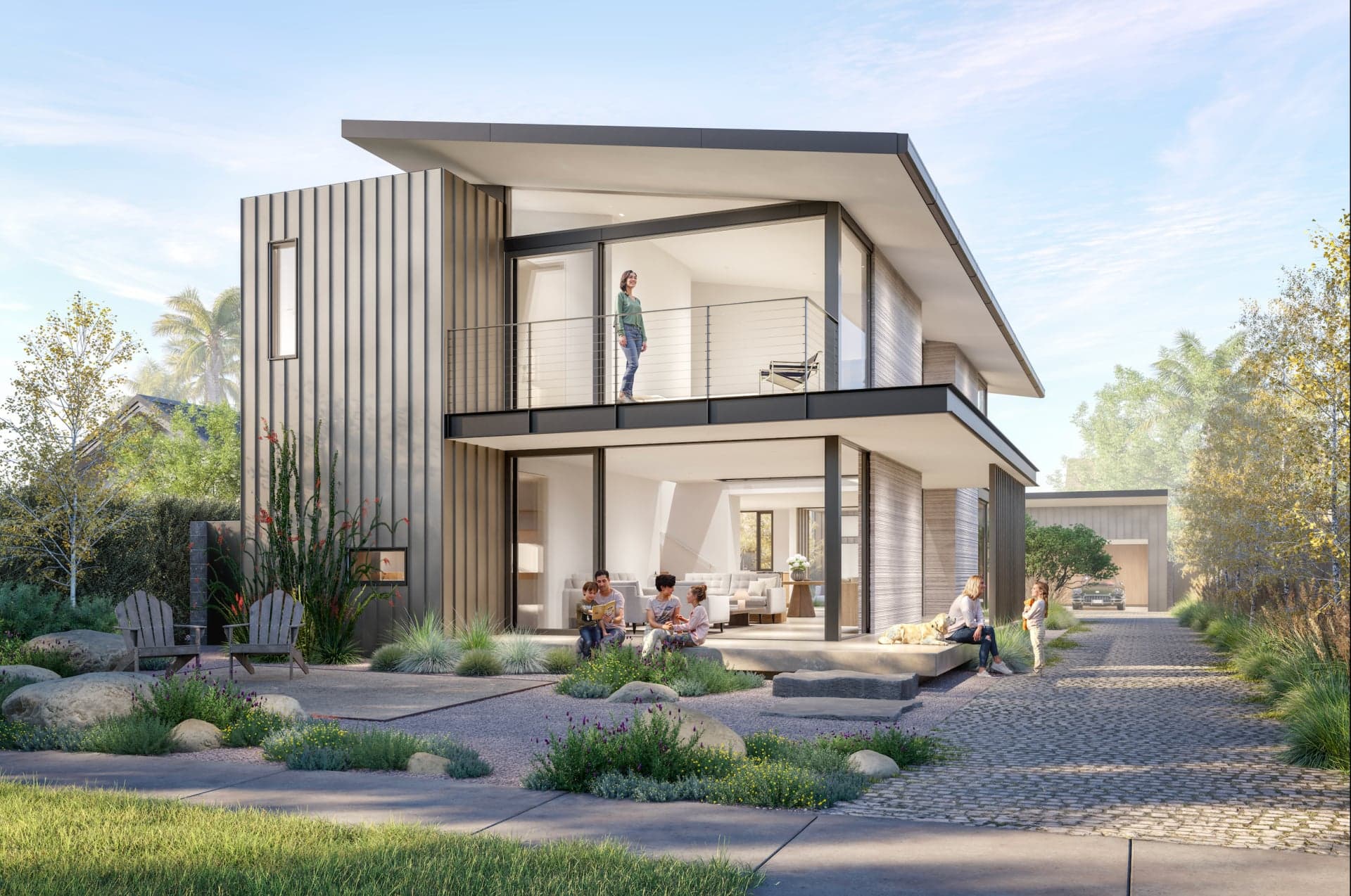
The residence is organized around a central courtyard, with a main house and a detached ADU framing the open ground between them. The architectural ambition is unmistakable: dissolve the boundary between indoor and outdoor living, let the home open generously toward the Pacific, and carry the Case Study Houses sensibility forward without leaning on nostalgia for it. Sliding walls, deep overhangs, and a restrained palette of natural materials do the work, and the proportions read as confident rather than reverent. The original Freedman Residence is honored — but it is not imitated, which is the harder and more honest move.
Steel and Mass Timber, Where Their Strengths Meet
The structural strategy is what makes this project particularly interesting to me as a builder. A steel frame provides the fire resistance and seismic strength a coastal Southern California rebuild now demands. Mass timber adds the warmth, exposed grain, and material craft that have always defined the best modern California homes. Pairing the two systems is harder than either approach on its own — the connections where steel meets timber require careful detailing, and getting that detailing right takes coordination that most builds do not budget for.
When it does come together, though, the combination is doing exactly what the project asks of it: rigorous performance held inside an interior that feels like it belongs in a home. That kind of integration is what I think of when I talk about design intent surviving the build, and it is the standard our team holds itself to on the projects we are most proud of.
The Lineage, Lived In
Assembledge+ has a long-running interest in midcentury modernism reinterpreted for today, and that DNA shows in the way the home reads. The proportions are calm. The transitions are deliberate. The materials are honest. None of it is shouting, and that restraint is what allows the home's relationship to the site — and to the previous home that stood here — to come through clearly. The lineage matters. So does the willingness to let the lineage live inside a contemporary home rather than a museum piece. That is a delicate balance, and the Longbine Ayeroff House holds it.
The ADU as a Long-Term Family Strategy
The detached ADU is also worth noticing. It signals a real understanding of how families actually use the parcel they own. Multi-generational living, a guest suite for adult children visiting from out of town, a separate workspace, future rental flexibility — all of these become possible when the ADU is designed in from the beginning rather than retrofitted later.
We are having that conversation more and more on our own projects, especially with clients buying acreage in the Willamette Valley who are thinking ten and twenty years out about how the property will serve them. A well-designed ADU is one of the highest-return decisions a custom home owner can make, and it is encouraging to see it treated here as part of the original brief rather than as an afterthought.
Honoring What Was, Building for What's Next
The Longbine Ayeroff House is a useful answer to a hard question facing many homeowners after a wildfire: how do you rebuild in a way that respects what was lost without pretending the world has not changed? Assembledge+ has shown one credible path. The home honors the lineage of the original 1948 residence while delivering the structural and material performance the next generation of California homes needs. Four houses in, this is a strong contribution to the program. Read the full project on Case Study Adapt: https://www.casestudyadapt.org/houses-in-development/project-six-sz8wl-d64c9-gb95m-ndyde-kft6a.
Frequently Asked Questions
What is the Longbine Ayeroff House?
The Longbine Ayeroff House is the fourth project in the Case Study Adapt series — a contemporary residence designed by Los Angeles firm Assembledge+ for owners Marty Longbine and Jeff Ayeroff. The home sits on the lot of the original 1948 Freedman Residence, a midcentury California design lost in the Palisades Fire. The new home is organized around a central courtyard, with a main house and detached ADU framing the open ground between them.
What is a hybrid steel and mass timber building system?
A hybrid steel and mass timber system uses a steel frame for fire resistance, seismic strength, and long structural spans, paired with mass timber elements — exposed wood beams, columns, or floor panels — to bring the warmth and craft of a traditional residential interior. The combination is technically demanding because the connection details where steel meets timber require careful design, but it allows architects to deliver rigorous structural performance without giving up the material honesty of a residential home.
What is an ADU and why is it part of this design?
ADU stands for Accessory Dwelling Unit — a smaller, secondary residence on the same parcel as the primary home. The Longbine Ayeroff House includes a detached ADU framing the courtyard, which signals an understanding of how families actually use a parcel over time: multi-generational living, guest accommodations, a separate workspace, or future rental flexibility. ADUs are increasingly common on rural Oregon parcels for the same reasons.
Who are Assembledge+?
Assembledge+ is a Los Angeles architecture firm with a long-running interest in midcentury modernism reinterpreted for contemporary residential work. Their portfolio combines new construction, restoration, and additions to historic California homes, with a calm, materially honest design language. The Longbine Ayeroff House lets the firm honor the lineage of the original 1948 Freedman Residence without imitating it.
Should I design an ADU into a custom home from the beginning?
Almost always, yes — even if you do not plan to build it on day one. Designing the parcel with a future ADU footprint, utility stub-outs, and a thoughtful relationship to the main house is dramatically less expensive than retrofitting one later. We routinely have this conversation with clients buying acreage in Yamhill County, Sherwood, Hillsboro, and Newberg, especially those thinking ten or twenty years out about how the property will serve their family.
The Building Journey
See how we design and build your home, step by step.
Floor Plans
Browse 15 customizable designs from 1,635 to 5,628 sq ft.
Service Area
We build across Yamhill County, Sherwood, Hillsboro, and wine country.
Ready to Talk About Your Project?
Get expert guidance from Oregon's trusted custom home builder.