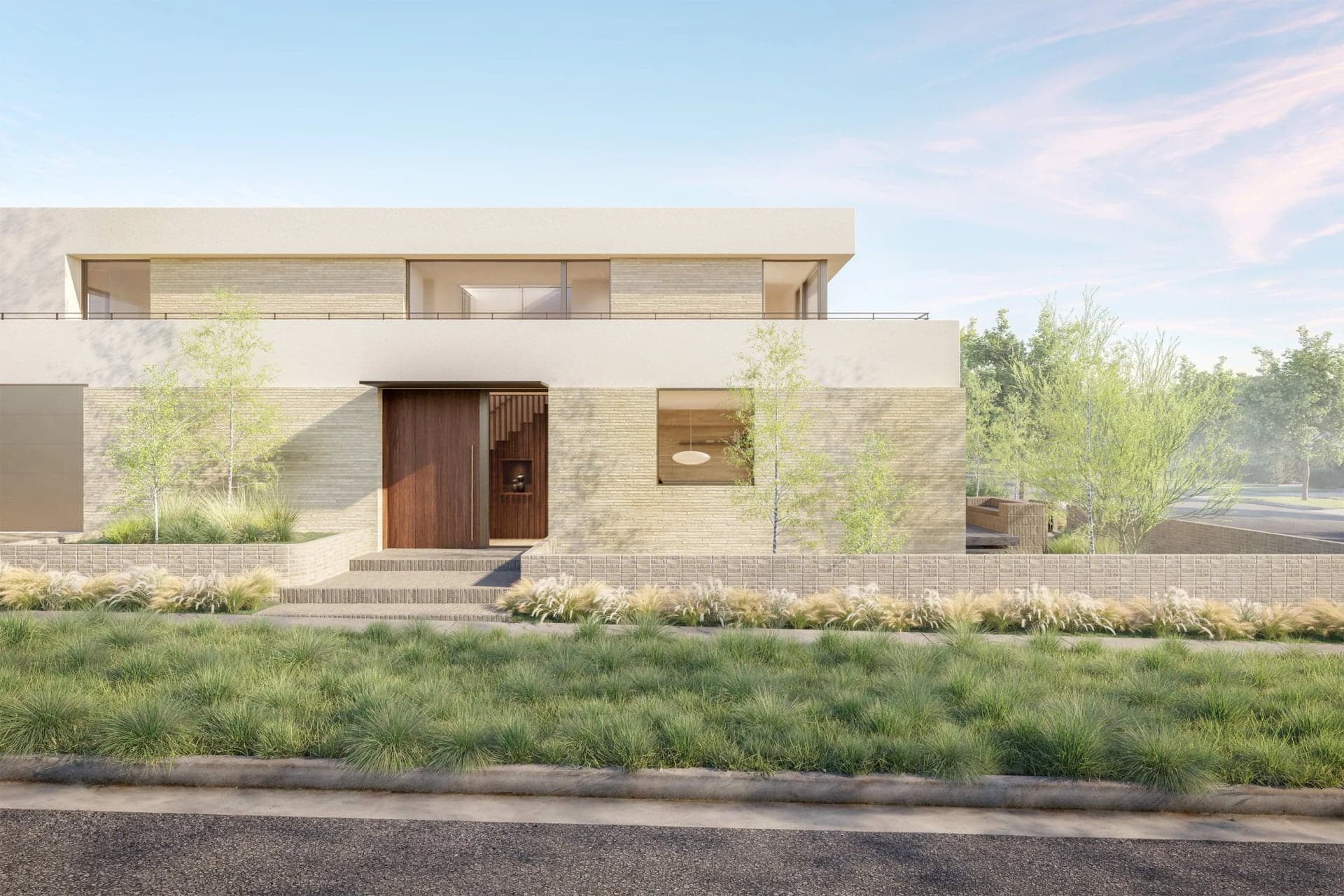
Halfway Through, the Most Moving Entry Yet
Eight houses in. We are halfway. Of all the Case Study Adapt projects so far, the Laurence House — CSA #8 — may be the most quietly moving. After a pair of writers lost their Palisades home in the fire, what they spoke about most was not the building itself, but the front porch — a social heart, a place for conversation and connection, the part of the property that had always belonged to more than just the family. EYRC Architects was given the job of rebuilding it, and they took the question seriously. That is what serious residential design looks like to me — listening for what the brief really is, underneath the program list.
A Porch as a Pavilion
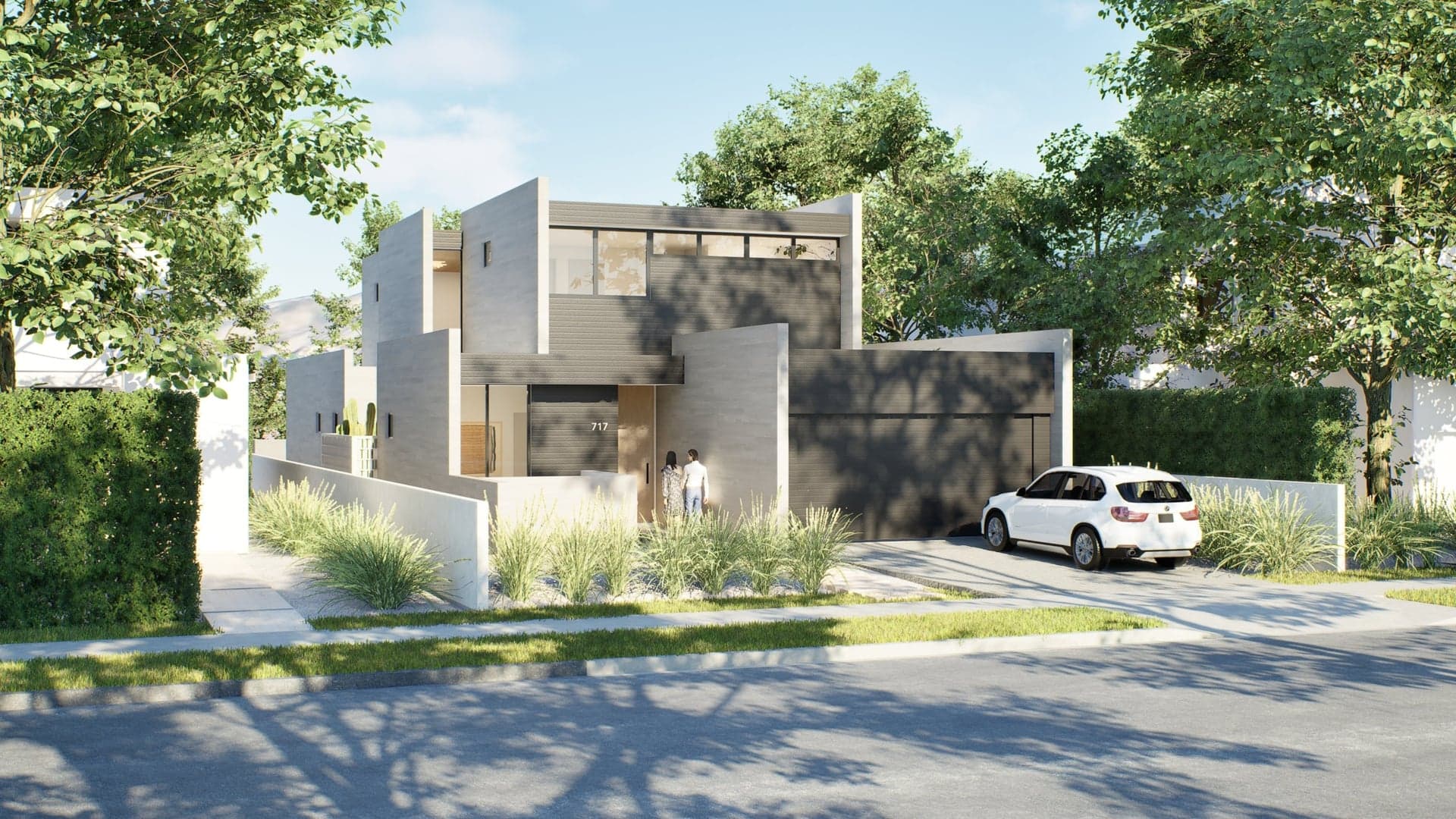
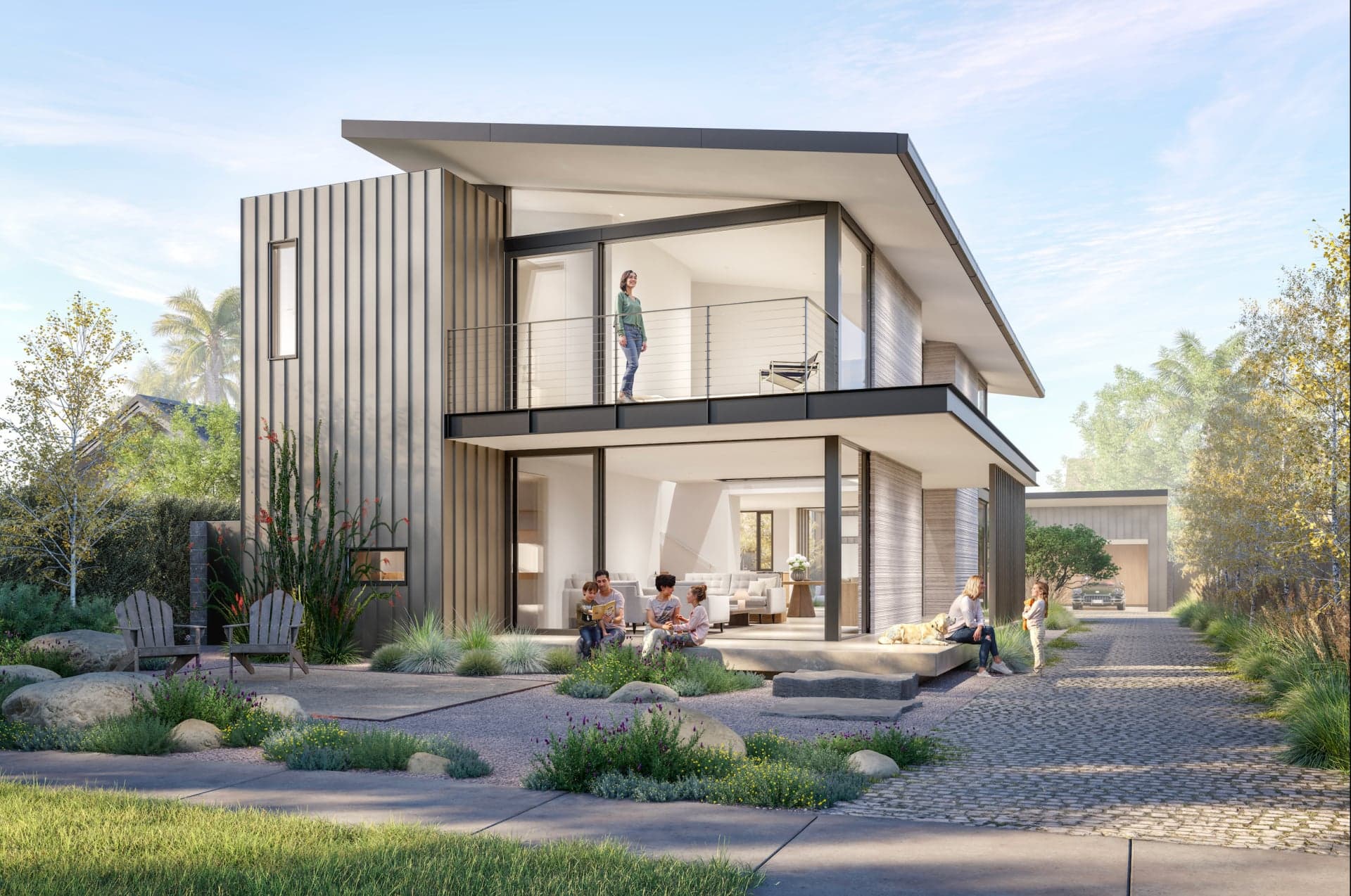
The design centers on the porch — but as a sheltered pavilion that bridges public and private life rather than a surface ornament. Large glass sliders dissolve the boundary between indoor and outdoor space, linking a community-facing front terrace to a private rear courtyard. A generous overhang shades and protects the entry sequence. The plan around the porch is modest and symmetrical, oriented toward a central sky garden that provides daylight without giving up enclosure. The architecture has to function as a sanctuary and a social threshold simultaneously, and the design holds both — which is harder than it sounds.
The Quiet Detailing That Saves Homes
The fire-resilience strategy is exactly what experience would demand. Stone, stucco, and closed plaster soffits create a fire-resilient enclosure with fewer seams for embers to find. Strategic planting establishes defensible space using native, low-flame species. None of this is dramatic detailing. It is the careful, learned work of a firm that has spent decades building in California and understands what survives. I find this kind of unglamorous expertise especially valuable to point out, because it is the work that homeowners cannot evaluate themselves and have to trust the team to handle. That is exactly the kind of trust we are constantly working to earn in our own client relationships.
The Brief Underneath the Program
What makes the project resonate, though, is the emotional brief EYRC was working from. Rebuilding the porch was not a styling decision — it was a commitment to continuity, to the social life that the previous home had supported, and to the optimism the family wanted to bring forward into the next chapter. That is the part of the work that I think gets undervalued in residential architecture writing. The technical work is necessary. The technical work is not sufficient. The home has to also know what it is for. When the brief gets that personal and the team takes it that seriously, the result feels inevitable rather than designed.
A Home That Knows What It's For
EYRC Architects is one of the more accomplished residential and civic firms working in Los Angeles, and the Laurence House is the kind of project that shows what real experience produces under real constraints. The fire-resilience credentials are obvious. The harder thing — the thing that makes this design worth honoring — is how much it cares about what a home is for. There is a long-running tradition in California modernism of treating the home as a social instrument, not just a private retreat, and the Laurence House sits squarely inside that tradition while updating it for a new century.
Why I'm Slowing Down on This One
Halfway through the series, this is the project that has reminded me most clearly why I am writing about it at all. Architecture this honest, designed for a family carrying this much loss, is worth slowing down to notice. Read the full project on Case Study Adapt: https://www.casestudyadapt.org/houses-in-development/project-six-sz8wl-d64c9-gb95m-ndyde-rmlbl-zh6t4-n4bst-wphdx.
Frequently Asked Questions
What is the Laurence House?
The Laurence House is the eighth project in the Case Study Adapt series — a residence designed by Los Angeles firm EYRC Architects for two writers who lost their Palisades home in the January 2025 fire. The design is organized around a sheltered front porch that functions as a social bridge between street and home, with stone, stucco, and closed plaster soffits providing a fire-resilient enclosure and a central sky garden bringing daylight into the plan.
Who are EYRC Architects?
EYRC (Ehrlich Yanai Rhee Chaney) is one of the more accomplished residential and civic architecture firms in Los Angeles, with a portfolio spanning custom homes, museums, libraries, and university buildings. They have two contributions to the Case Study Adapt program — the Laurence House and the Zweig House — both of which show the firm's particular attention to the social life of the home.
What is a sky garden?
A sky garden is a small protected outdoor space integrated into the upper levels or core of a home, typically open to the sky and bringing daylight, planting, and fresh air into the center of the plan without relying on perimeter windows alone. In a fire-resilient design it can serve as a private outdoor refuge while the building envelope holds against ember-driven conditions on the exterior.
Why is the front porch such a central design element in this project?
Because it was the part of the previous home the family missed most. The Laurence House design treats the porch not as ornament but as a sheltered social pavilion — a true threshold between public street life and private interior — and rebuilds it with the same fire-resilient material strategy as the rest of the envelope. It is a strong example of architecture starting with what a home is actually for, then designing the technical performance around that.
What does fire-resilient detailing look like in a residential exterior?
Fire-resilient detailing in residential exteriors typically includes non-combustible cladding (stone, stucco, fiber cement, metal), closed plaster or sealed soffits to eliminate ember entry points, ember-resistant venting, Class A roofing, tempered glazing on larger openings, and a five-foot defensible-space perimeter without combustible plantings, mulch, or fencing. None of these are dramatic individually — together, they are what determines whether a beautiful home actually survives an event.
The Building Journey
See how we design and build your home, step by step.
Floor Plans
Browse 15 customizable designs from 1,635 to 5,628 sq ft.
Service Area
We build across Yamhill County, Sherwood, Hillsboro, and wine country.
Ready to Talk About Your Project?
Get expert guidance from Oregon's trusted custom home builder.