Three Houses In, the Courtyard Pattern Is Earning Its Place
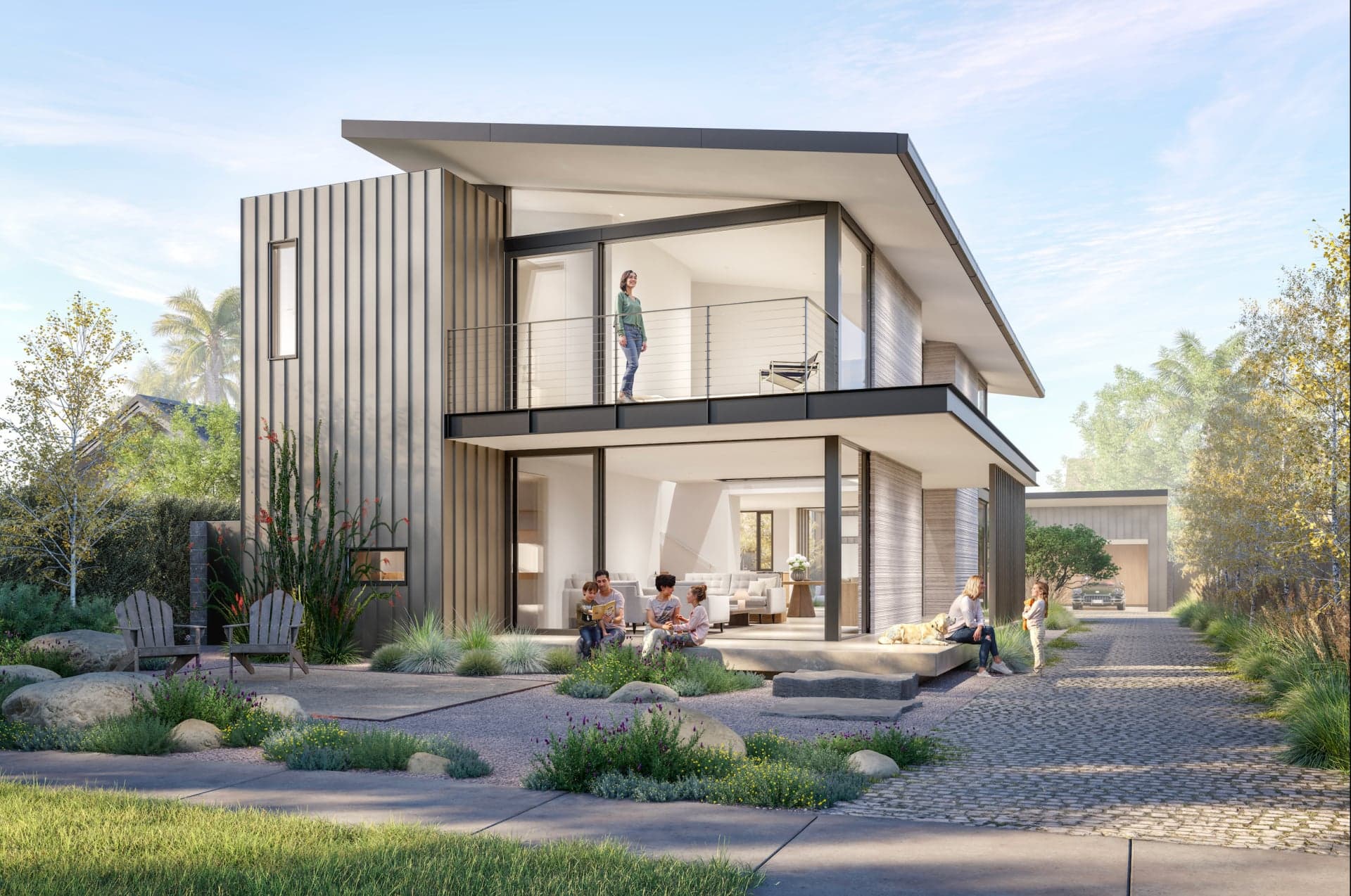
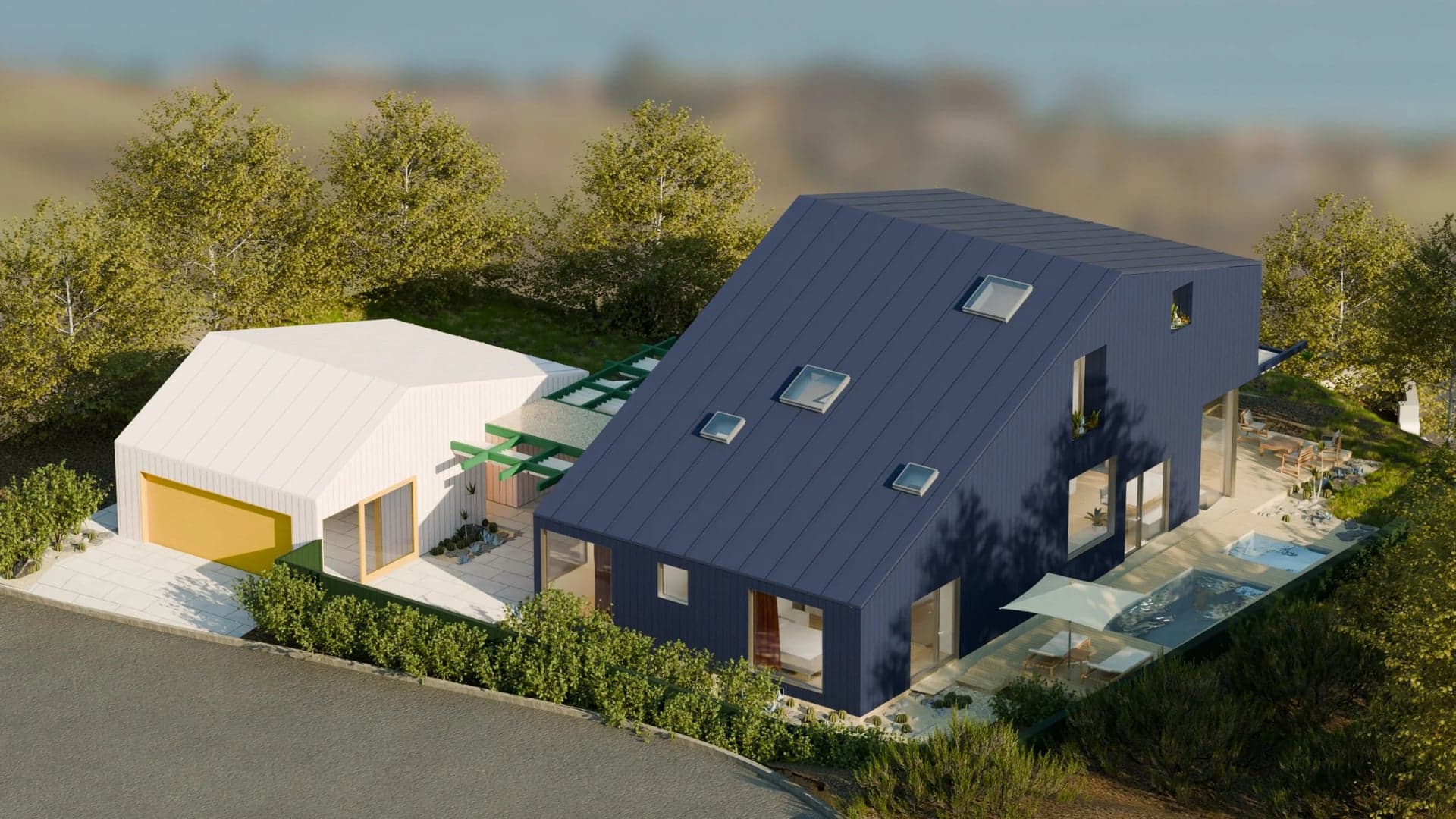
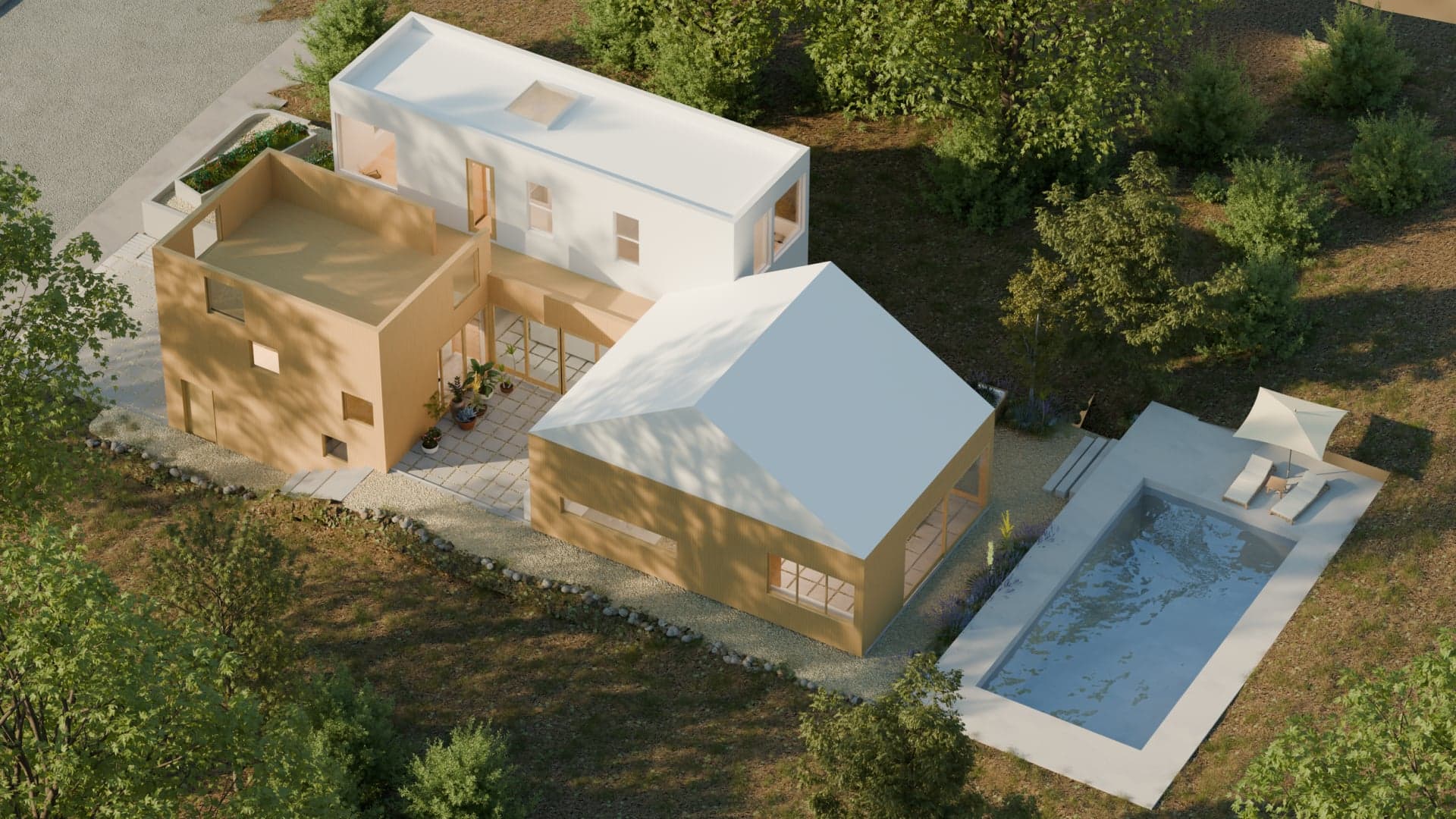
Three houses in. What I am noticing in real time is that the courtyard has emerged as the single most consistent move across the Case Study Adapt program, and there are good reasons for it. CSA #3 — the Childers House by Bestor Architecture — makes the most of the typology and pushes it further than the first two homes did. The home is organized as three single-story pavilions arranged around a shared courtyard, and the result reads like a thoughtful update to the original Case Study tradition for a climate that has changed since the program's first run in the 1940s.
Three Pavilions, One Garden
The pavilion strategy does a lot of work at once. It keeps the footprint compact. It breaks the massing into legible pieces that read as one composition without ever becoming heavy. It gives every interior room a relationship to the courtyard. Varied rooflines and sectional shifts create lighting effects that shift across the day and through the seasons.
There is a generosity to the plan even though the home is not enormous, and that is one of the harder things to pull off in modern residential design. Restraint and generosity are not opposites — but the work it takes to make them coexist almost always shows up in the plan first, and the Childers House plan is doing that work cleanly.
Less Mechanical Work, More Resilience
Sustainability and resilience are not afterthoughts here. They shape the entire building. The roof is solar-integrated and finished in cool roofing materials to push back against heat gain. Dual-pane low-E glazing and operable skylights work with the central courtyard to drive natural ventilation, reducing how hard the mechanical systems ever have to run. Fewer demands on HVAC, fewer demands on the grid, fewer failure points during a long power outage. When we are designing in our own region, the same logic increasingly applies — the homes that need the least mechanical intervention to stay comfortable are the ones that perform best in extreme weather and the ones that age into low-cost ownership.
When the Pool Becomes a System
What makes the Childers House especially worth studying is the landscape strategy. Defensible space, native vegetation, and permeable surfaces handle fire and water management as a single integrated system rather than two separate ones. The pool is not just a pool — it is a fire-suppression resource, with sprinkler systems drawing directly from it during an event.
That is a design move that quietly reframes how we think about the role of water on a residential property in any fire-prone landscape, and it is exactly the kind of detail I file away when our team is talking through systems for a client building on rural Oregon land. A swimming pool that earns its existence twice over is the kind of design move that says a lot about the team that made it.
Optimism as a Form of Rigor
Bestor Architecture has long been one of Los Angeles' most thoughtful firms, with a portfolio that spans residential, civic, and cultural work. Bringing that range to a rebuild project produces something the design industry needs more of right now: an optimistic vision for post-fire architecture that is functional, restorative, and deeply attuned to its landscape. Optimism, in this context, is a form of rigor — and it is a form of leadership the rest of the residential industry should pay attention to. The willingness to imagine homes that are warm, generous, and beautiful in spite of the difficulty of the moment is the kind of cultural work we should all be doing more of.
The Original Case Study Spirit, Translated Forward
Three homes into the series and what is striking is how naturally the Case Study Adapt projects sit within the lineage of the original Case Study program. The principles that animated the Eames-era homes — economy of means, clarity of plan, generous indoor-outdoor relationships, materials chosen with conviction — are all present here, just translated into a climate that demands more from the architecture. That is exactly what the program promised it would do, and three houses in, it is delivering. Read the full Childers House project on Case Study Adapt: https://www.casestudyadapt.org/houses-in-development/project-six-sz8wl-d64c9-gb95m-ndyde.
Frequently Asked Questions
What is the Childers House by Bestor Architecture?
The Childers House is the third project in the Case Study Adapt series — a single-story residence by Los Angeles firm Bestor Architecture, organized as three pavilions arranged around a shared courtyard. It pairs a solar-integrated cool roof, low-E glazing, and natural ventilation with a defensible-space landscape strategy and a swimming pool that doubles as a fire-suppression water reserve for roof-mounted sprinklers.
Can a swimming pool actually be used to fight a wildfire?
Yes, when it is designed in from the beginning. Roof-mounted sprinkler systems can draw directly from a residential pool, with a dedicated pump powered by solar or backup energy storage. The pool effectively becomes an on-site water reserve sized for an emergency event. This is exactly the kind of integrated thinking the Case Study Adapt program is making more visible in residential design.
What is a courtyard house plan and why does it matter for wildfire?
A courtyard plan organizes the home around a protected interior outdoor space rather than stretching the building across the lot. From a fire-resilience standpoint, a courtyard plan is unusually effective — the most exposed outdoor living spaces are pulled inward, away from neighboring properties or wildland edges, which dramatically reduces ember-driven risk while preserving indoor-outdoor flow.
Is the Case Study Adapt program connected to the original Case Study House Program?
Yes, it is a deliberate continuation of that lineage. The original Case Study House Program ran from the 1940s through the 1960s under the editorship of John Entenza at Arts & Architecture magazine, and produced now-iconic homes by the Eames brothers, Pierre Koenig, Richard Neutra, and others. Case Study Adapt asks the same kind of question — how should serious modern residential architecture be made widely available? — but updated to address wildfire and a changed climate.
What lessons from the Childers House translate to homes in Oregon wine country?
Several. Compact pavilion plans, solar-integrated cool roofs, low-E glazing for thermal performance, native-plant defensible-space landscaping, and a single integrated approach to water management for both fire and rain are all directly applicable to rural homes in the Willamette Valley, the Dundee Hills, and the Eola Hills. The combined fire and water management strategy is especially relevant in our region as summers continue to dry.
The Building Journey
See how we design and build your home, step by step.
Floor Plans
Browse 15 customizable designs from 1,635 to 5,628 sq ft.
Service Area
We build across Yamhill County, Sherwood, Hillsboro, and wine country.
Ready to Talk About Your Project?
Get expert guidance from Oregon's trusted custom home builder.