Twelve Houses In, Modest Architecture and Serious Performance
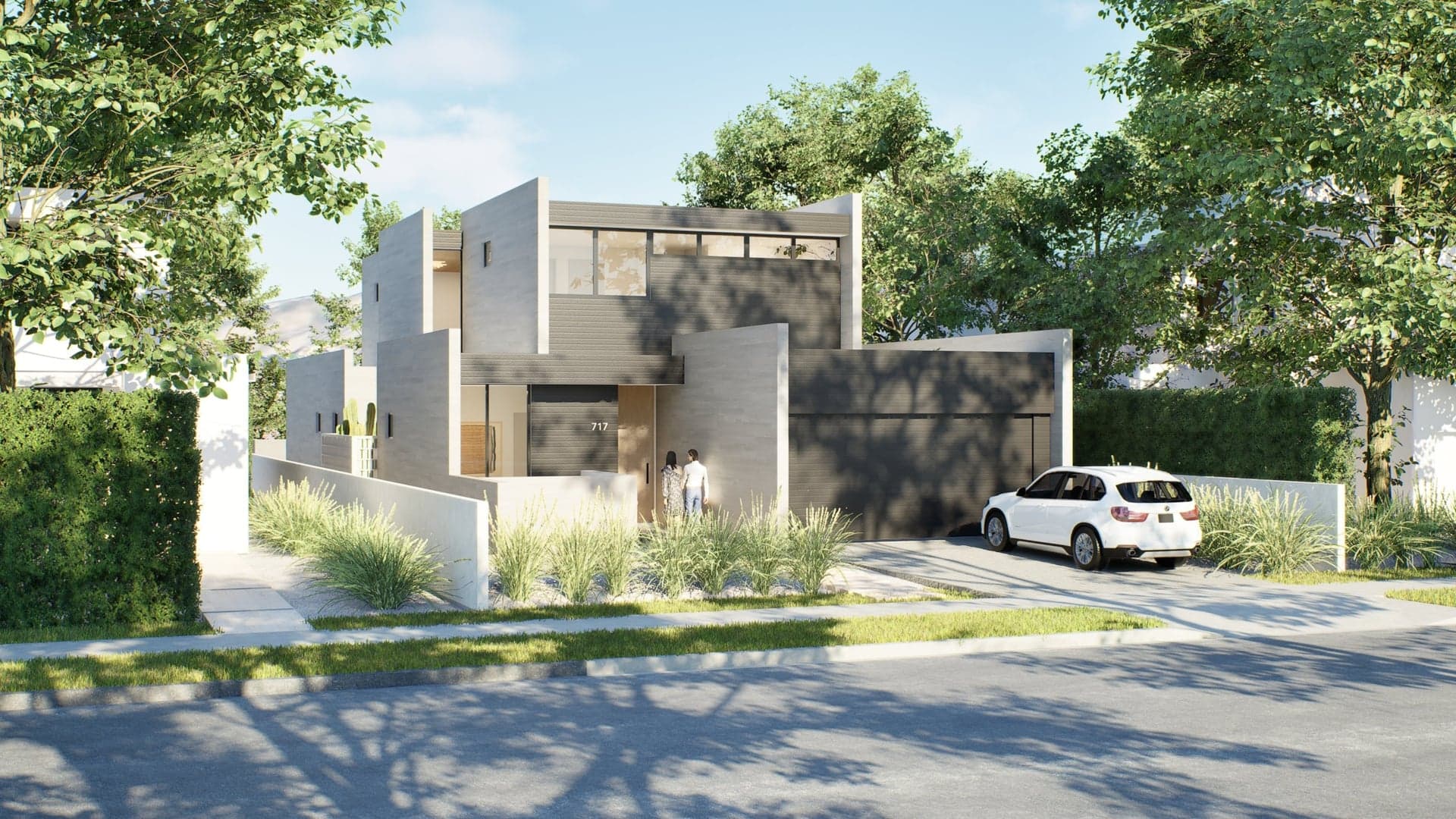
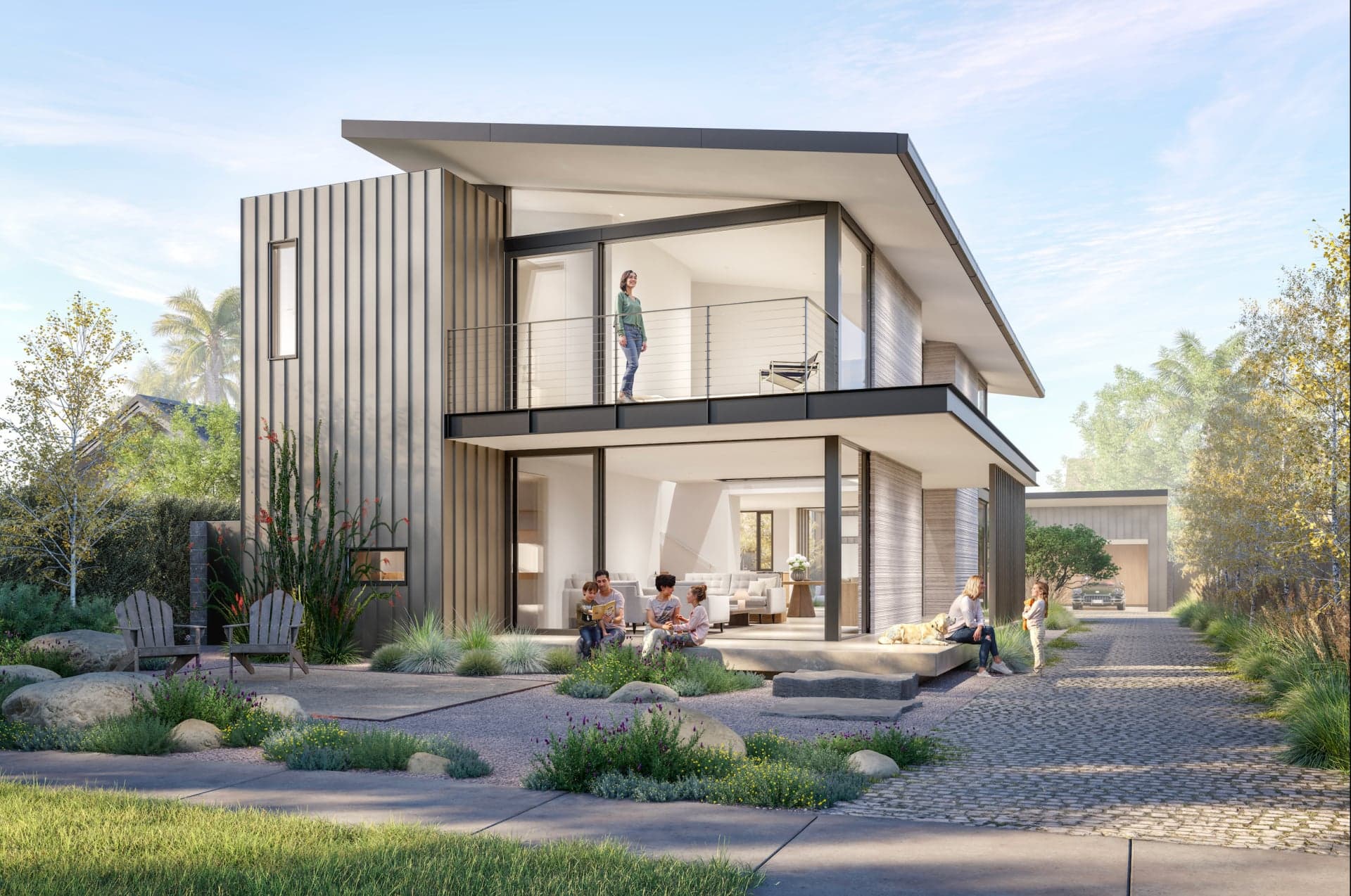
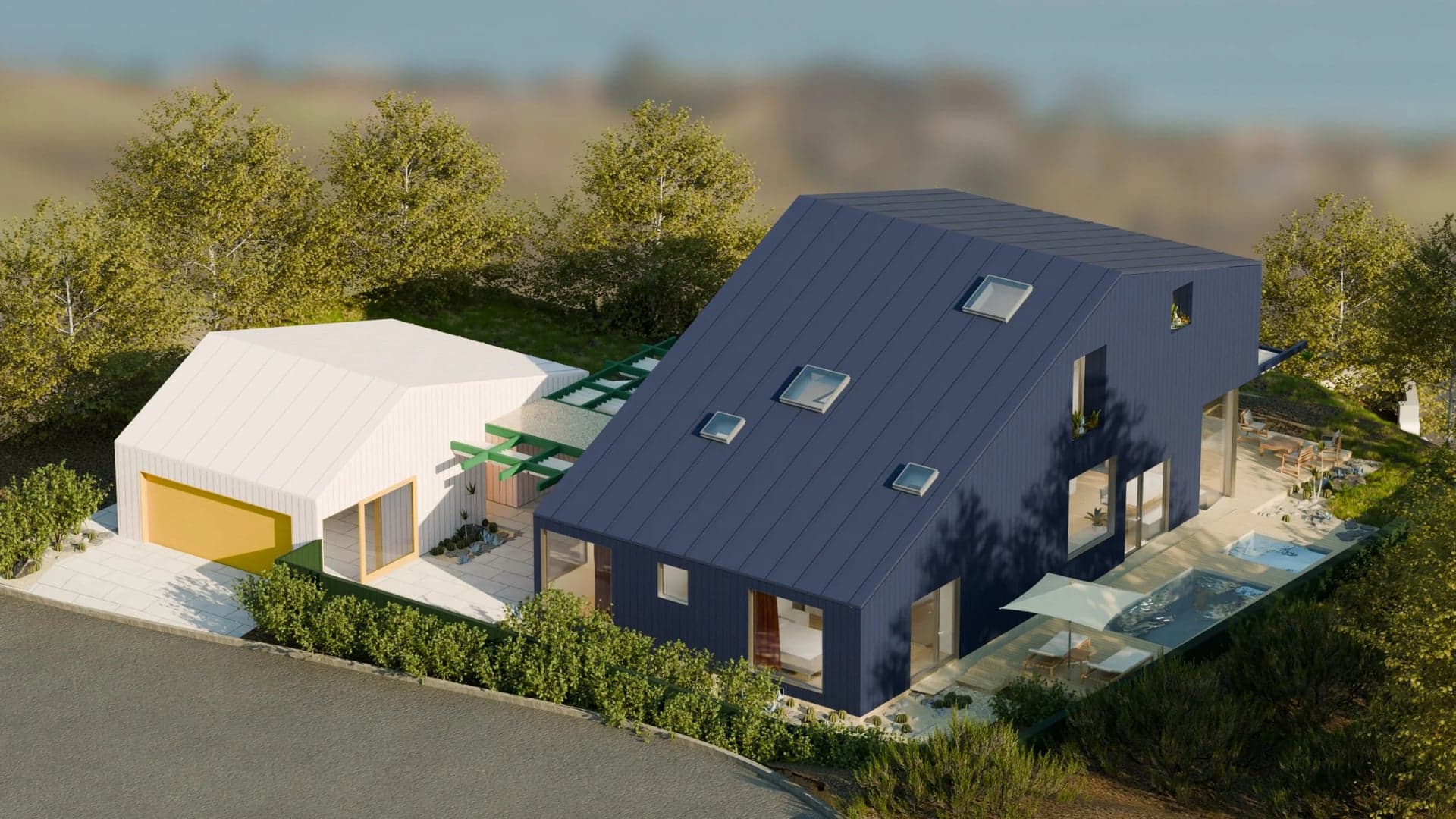
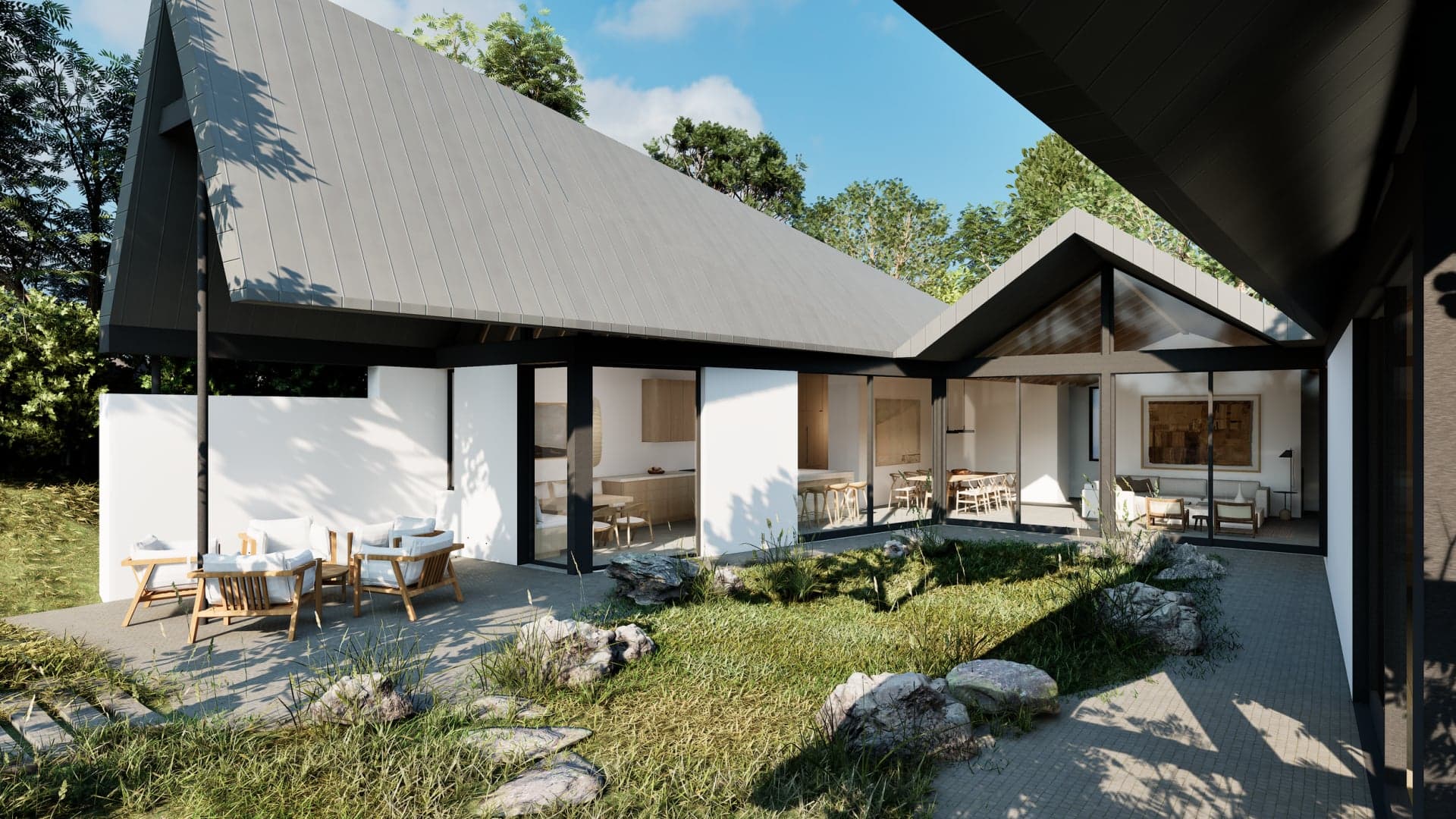
Twelve houses in. The Case Study Adapt program keeps demonstrating that fire-resilient detailing belongs in modest, clean residential design — not just in heroic statement houses. CSA #12 — the Takeuchi House by Standard Architecture — is the cleanest version of that lesson so far. The home sits on a 62-foot-wide sloping property in Altadena with mountain views, and the project is a strong example of how technically rigorous residential architecture can carry serious performance demands without compromising either the technical work or the architecture. The home centers around a courtyard sheltered by a folded gable roof — a single decisive geometric move that organizes the entire plan.
A Single Decisive Roof Move
Inside, the spaces wrap the courtyard. The kitchen, great room, and primary bedroom all face the protected outdoor heart of the home, with glazed post-and-beam walls framing distant views beyond. Exposed roof framing brings warmth and material legibility to the interior. The exterior finishes — stucco and fiber cement panels — speak the same plain-spoken architectural language without overworking it. There is a confidence to a small house that does not pretend to be a large one. The Takeuchi House has it, and that confidence is part of what I respond to in the project.
The Detailing That Should Be Invisible
The fire-resilience detailing is where Standard Architecture's discipline really shows up. The side walls are rated to two hours and extend beyond the building envelope to shield the outdoor patios from wind-driven embers. Window openings on the side elevations are deliberately limited. Metal cladding covers the roof and ceilings, set over a noncombustible gypsum substrate. None of this is loud, and all of it is doing the work of keeping the home standing through a wind-driven event. This is exactly the kind of detail that should be invisible to the homeowner — they should never have to think about it after the build closes — but absolutely critical to the way the home performs over decades.
When the Plan and the Resilience Reinforce Each Other
What is especially worth noticing is how the courtyard plan and the resilience strategy reinforce each other. By turning the home inward, the most vulnerable outdoor living spaces are also the ones most protected from wind-borne embers. The architecture and the fire performance are not separate conversations — they are the same conversation, and they were resolved together. That is what integrated resilience looks like in practice, and it is the version I want to see more of in residential design generally. The protection is not added on. The protection is the form of the home.
Refusing the Trade-Off
Standard Architecture has built a reputation in Los Angeles for carefully proportioned, materially honest residential work, and the Takeuchi House is the firm operating in its strongest register. The project balances resilience, beauty, and landscape connection — three things that often get traded against one another in fire-zone residential design — and refuses to give up any of them. That refusal is the architecture. It is also exactly what we are aiming for on the more ambitious resilience-focused projects we are taking on at home.
Discipline That Scales
Twelve houses in, what the Takeuchi House confirms is that the principles being explored in this program scale all the way down. They do not require dramatic gestures or oversized budgets. They require discipline, integration, and an architect who will not give up the design intent at the first sign of difficulty. Read the full project on Case Study Adapt: https://www.casestudyadapt.org/houses-in-development/project-six-sz8wl-d64c9-gb95m-ndyde-rmlbl-zh6t4-n4bst-wphdx-mepn5-4f7az-je5hs-ay946.
Frequently Asked Questions
What is the Takeuchi House?
The Takeuchi House is the twelfth project in the Case Study Adapt series — a 2,000-square-foot single-story residence by Los Angeles firm Standard Architecture, sited on a 62-foot-wide sloping property in Altadena with mountain views. The home centers on a courtyard sheltered by a folded gable roof, with the kitchen, great room, and primary bedroom all wrapping the protected outdoor heart and two-hour-rated side walls extending beyond the building envelope to shield the patio from wind-driven embers.
What is a two-hour fire-rated wall?
A two-hour fire-rated wall is a wall assembly tested to resist the passage of fire and the rise of temperature on the unexposed face for two hours under standard fire conditions. Two-hour ratings are common in commercial building codes for separation between occupancies and increasingly used in residential work for side walls in close proximity to neighboring structures or wildland exposure. They are a meaningful upgrade over the more common one-hour rating used in much residential construction.
Who are Standard Architecture?
Standard Architecture is a Los Angeles–based firm known for carefully proportioned, materially honest residential and mixed-use work. They have two contributions to the Case Study Adapt program — the Takeuchi House and the Wallach Kleinman House — which together demonstrate that fire-resilient detailing belongs in clean, modest residential design as much as in heroic statement houses.
Can serious fire-resilient detailing work in a small or modest home?
Absolutely — and the Takeuchi House is one of the cleaner demonstrations of this in the Case Study Adapt program. The principles do not require dramatic gestures or oversized budgets. They require discipline, integration, and a team that will not give up the design intent when the project hits its first hard decision. The same is true for thoughtful custom homes on smaller Oregon parcels.
What does "the protection is the form of the home" mean?
It is shorthand for the recurring discipline across the Case Study Adapt program: the home's resilience strategy and its architectural form are the same set of decisions, designed together from the beginning. A courtyard plan turns the most vulnerable outdoor spaces inward where they are also most protected. A two-hour-rated side wall is also a privacy wall. A defensible perimeter is also the landscape strategy. The building's geometry and the building's protection are one thing, not two.
The Building Journey
See how we design and build your home, step by step.
Floor Plans
Browse 15 customizable designs from 1,635 to 5,628 sq ft.
Service Area
We build across Yamhill County, Sherwood, Hillsboro, and wine country.
Ready to Talk About Your Project?
Get expert guidance from Oregon's trusted custom home builder.