Thirteen Houses In, Building System as Argument
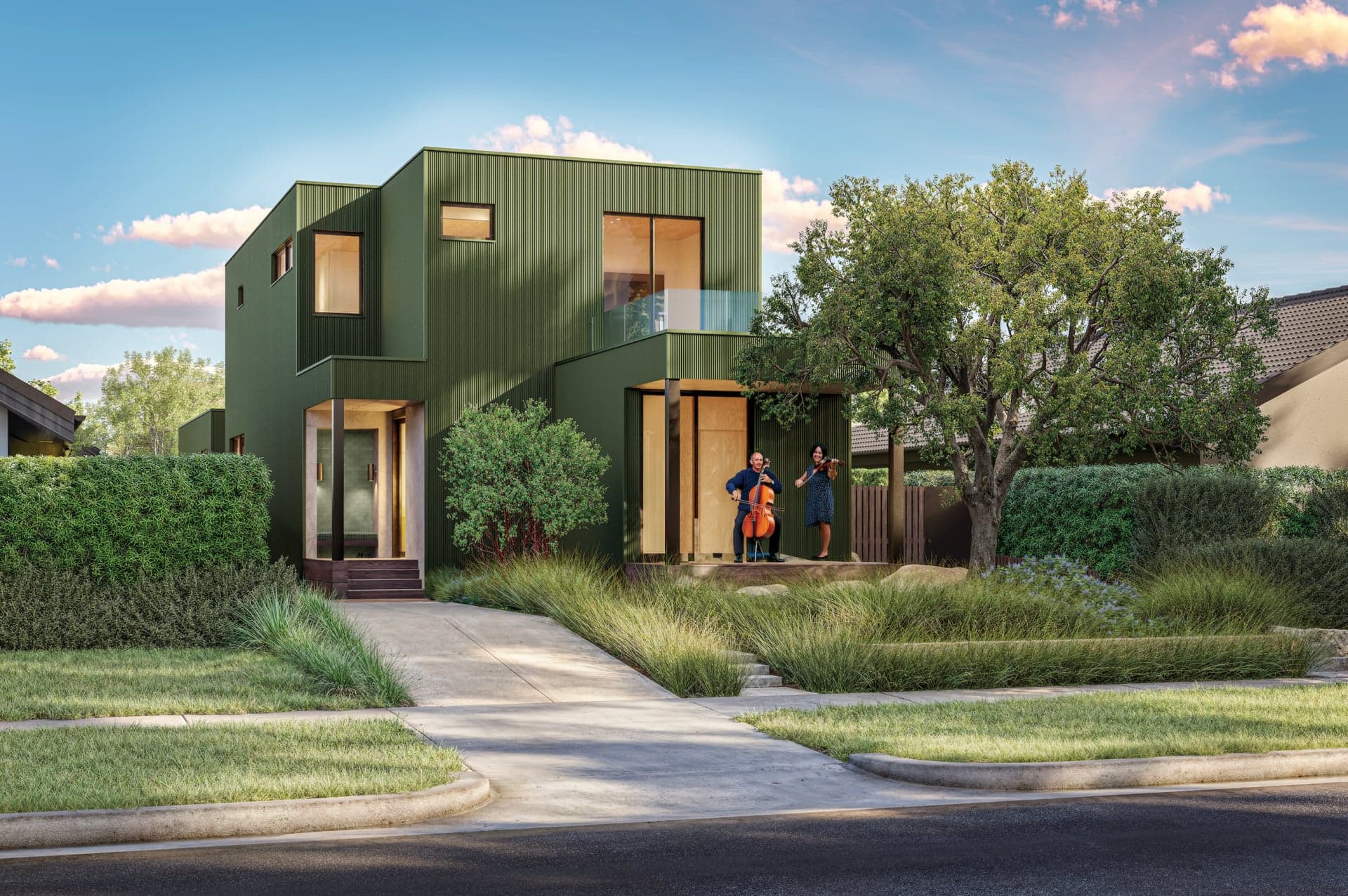
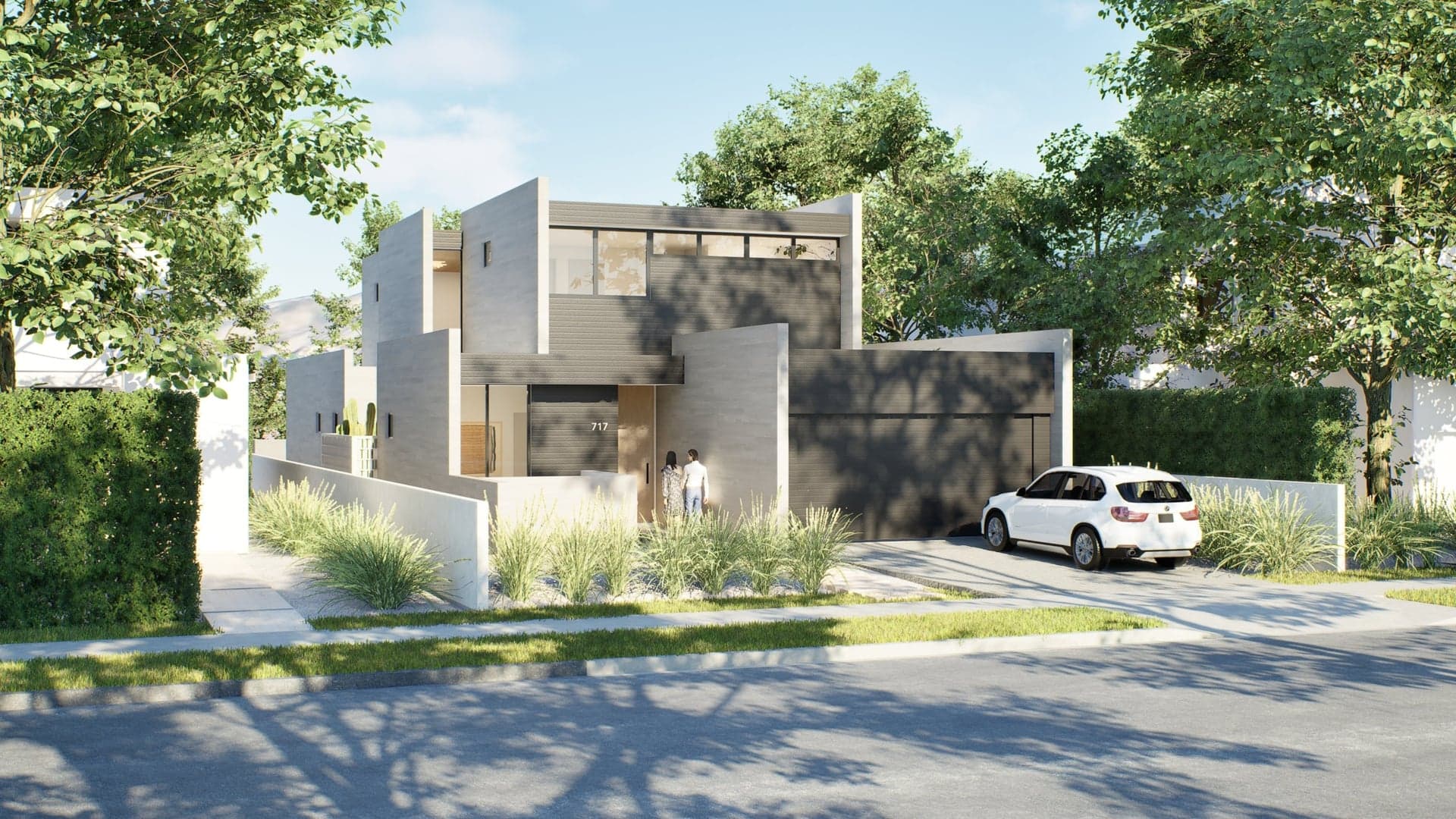
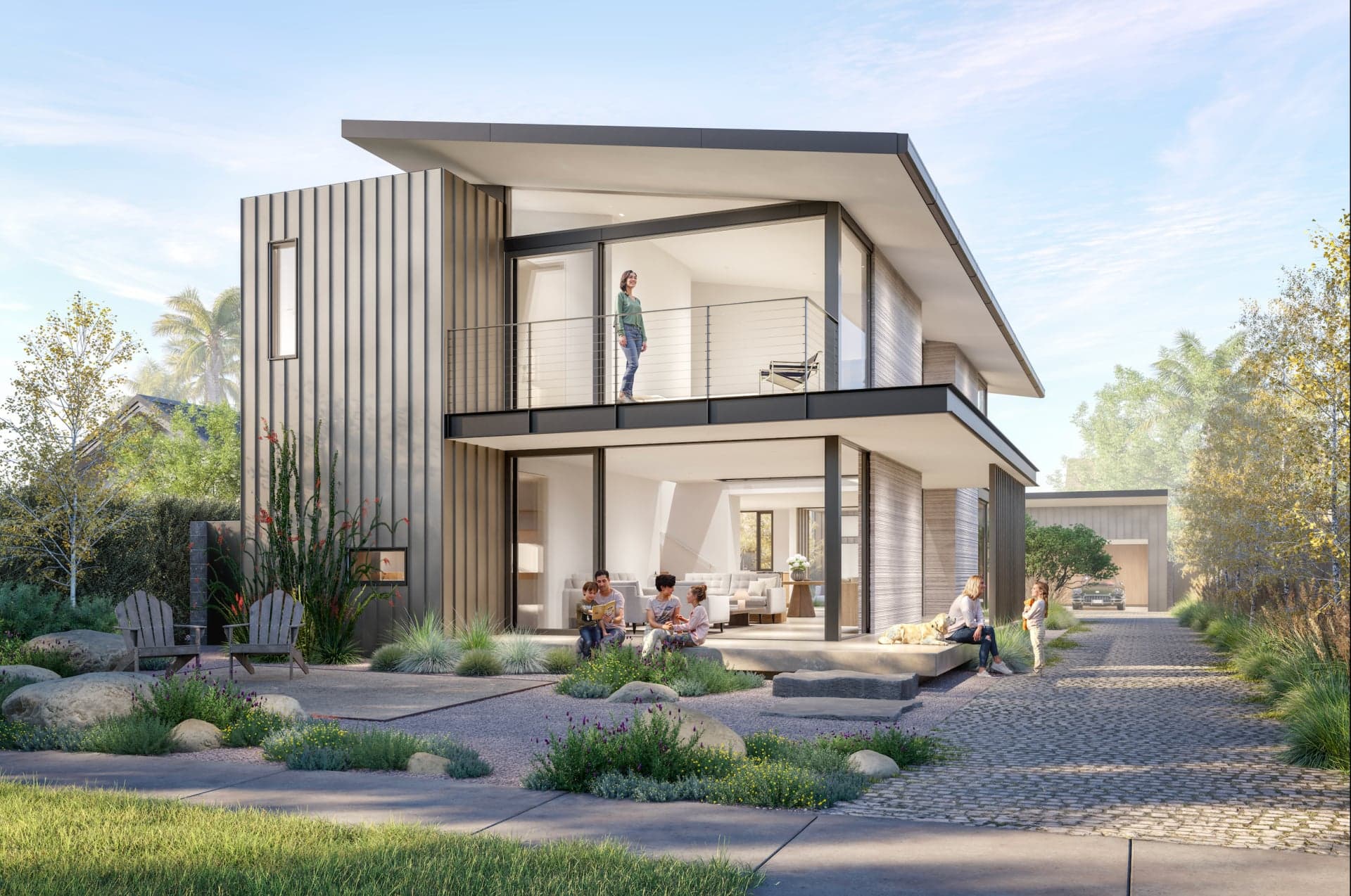
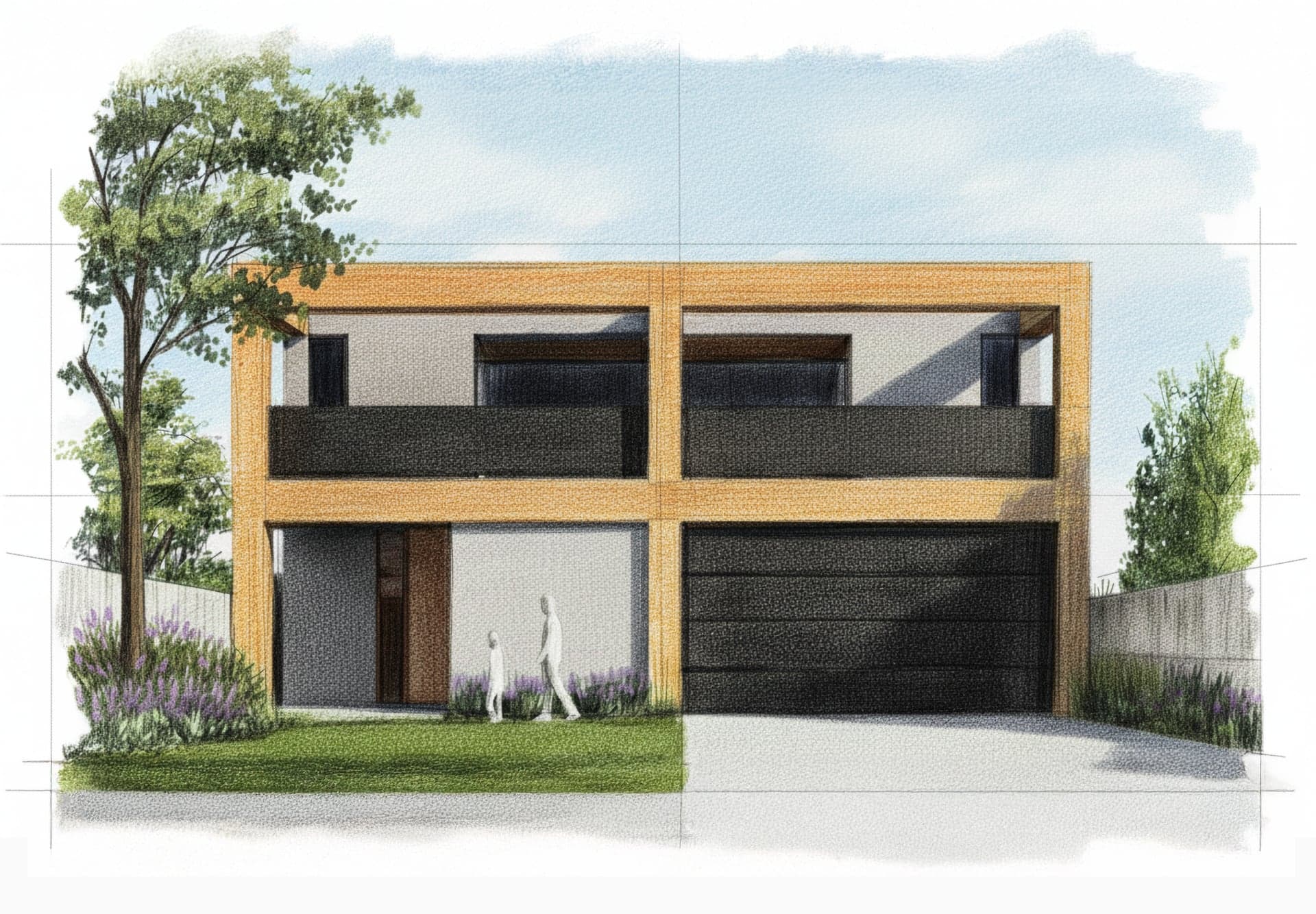
Thirteen houses in. Walker Workshop returns to the Case Study Adapt series with CSA #13 — the Dahlberg House — and the project is an explicit study in how to rebuild quickly, beautifully, and resiliently in California's fire-prone landscapes. Where the firm's earlier Miller House emphasized material warmth, the Dahlberg House makes the structural and constructional system the design's most visible argument. Two contributions from the same firm, two different conversations about what serious residential design can be — that pairing alone is worth the price of admission.
An L-Shape That Works Twice
The plan is L-shaped, with deep setbacks chosen to admit daylight, maximize landscape relationships, and establish defensible space between structures. The geometry is doing two jobs at once: improving the residential experience and reducing the building's exposure to a fire event. That kind of dual-purpose decision-making is the recurring discipline of the Case Study Adapt projects, and it shows up especially clearly here. The plan is not asked to choose between residential quality and resilience. It is asked to deliver both, and it does.
Heavy Timber Meets Fire-Resistant Panels
The structural choice — a heavy timber frame paired with prefabricated, fire-resistant infill panels — is the part of the design worth studying most carefully. The timber frame provides the warmth, the spans, and the material honesty that define the best modern residential interiors. The panels deliver the speed, the precision, and the fire performance that the rebuild context demands.
Together they form a rationalized grid system that supports efficient fabrication and long-term durability. As a builder, I am paying special attention to this kind of system because it points at how the next generation of high-end residential construction is going to evolve: a marriage of factory-built precision with on-site craftsmanship that lets us deliver custom homes with fewer schedule risks and tighter quality control.
A Single Integrated Answer
Outside, the resilience strategy continues. Native, drought-tolerant plantings create a protective perimeter around the residence. A pool anchors the yard as both a social gathering space and an emergency water reservoir for fire response. The combination of architectural geometry, structural system, and landscape design forms a single integrated answer to the rebuild question, rather than three separate ones. Walking through the project description, I find myself nodding at decisions that almost everyone in serious residential practice has been moving toward for years now. The Dahlberg House gets there with unusual clarity.
Practical Radicalism
Walker Workshop's two contributions to this series read as paired experiments — different formal vocabularies pointing at the same underlying conviction. The Dahlberg House is the more constructionally radical of the two, but the radicalism is in service of practicality: this is a home that can be built precisely, built quickly, and built to last. That combination is what the next decade of California residential rebuilding is going to require — and frankly, what high-end residential work in our own region is going to demand as well, as labor markets tighten and weather windows shorten.
Constructionally Important
Thirteen houses in, the Case Study Adapt program continues to show me a residential design conversation reaching for serious answers. The Dahlberg House is one of its most constructionally important contributions. Read the full project on Case Study Adapt: https://www.casestudyadapt.org/houses-in-development/project-six-sz8wl-d64c9-gb95m-ndyde-rmlbl-zh6t4-n4bst-wphdx-mepn5-4f7az-je5hs-ay946-h5c6b.
Frequently Asked Questions
What is the Dahlberg House?
The Dahlberg House is the thirteenth project in the Case Study Adapt series — an L-shaped residence by Walker Workshop that uses a heavy timber frame paired with prefabricated, fire-resistant infill panels as its primary structural system. The plan's deep setbacks establish defensible space between structures, native drought-tolerant landscaping forms a protective perimeter, and a pool serves as both a social gathering space and an emergency water reserve.
What is a heavy timber frame?
A heavy timber frame is a structural system built from large solid-wood members — typically glue-laminated beams and columns or solid-sawn timbers — that carry loads through a small number of large elements rather than a large number of small ones. Heavy timber spans well, exposes its structure honestly in the interior, and offers significantly better fire performance than light wood framing because of how slowly large timber elements char.
What are prefabricated fire-resistant infill panels?
Prefabricated infill panels are wall sections built off-site under controlled conditions, then delivered and installed within the structural frame. When designed for fire resistance, they typically pair non-combustible exterior facings with mineral-wool insulation cores and rigorous detailing at joints and penetrations. The combination of factory-built precision and serious fire performance is one of the more promising directions for the next generation of high-end residential construction.
Why does Walker Workshop have two homes in the Case Study Adapt program?
The Miller House and the Dahlberg House are paired experiments in different formal and constructional vocabularies pointing at the same underlying conviction: that residential architecture in California's fire-prone landscapes can and should be beautiful, durable, and built to last. Seeing a single firm explore the same brief two ways is one of the more useful study exercises the Case Study Adapt program offers.
Could a heavy-timber-and-prefab-panel system work for a high-end Oregon custom home?
Yes — and it points at where the Pacific Northwest market is likely heading. As regional labor markets tighten and weather windows shorten, the combination of factory-built precision panels with on-site heavy timber craftsmanship offers shorter on-site construction time, better quality control, and meaningful fire and seismic performance. We are watching this space closely on the projects we take on.
The Building Journey
See how we design and build your home, step by step.
Floor Plans
Browse 15 customizable designs from 1,635 to 5,628 sq ft.
Service Area
We build across Yamhill County, Sherwood, Hillsboro, and wine country.
Ready to Talk About Your Project?
Get expert guidance from Oregon's trusted custom home builder.