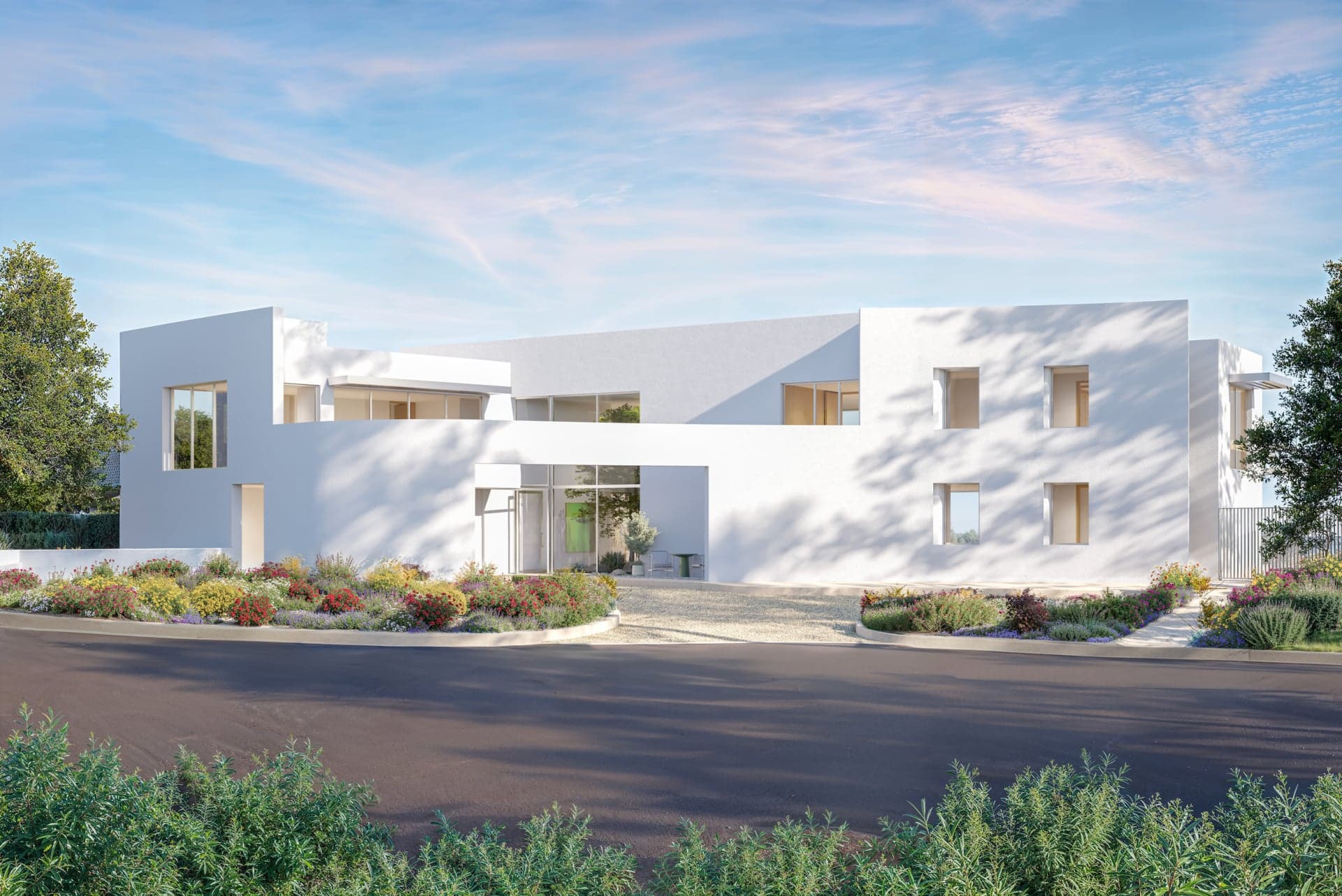
Eleven Houses In, A Refuge for a Specific Family
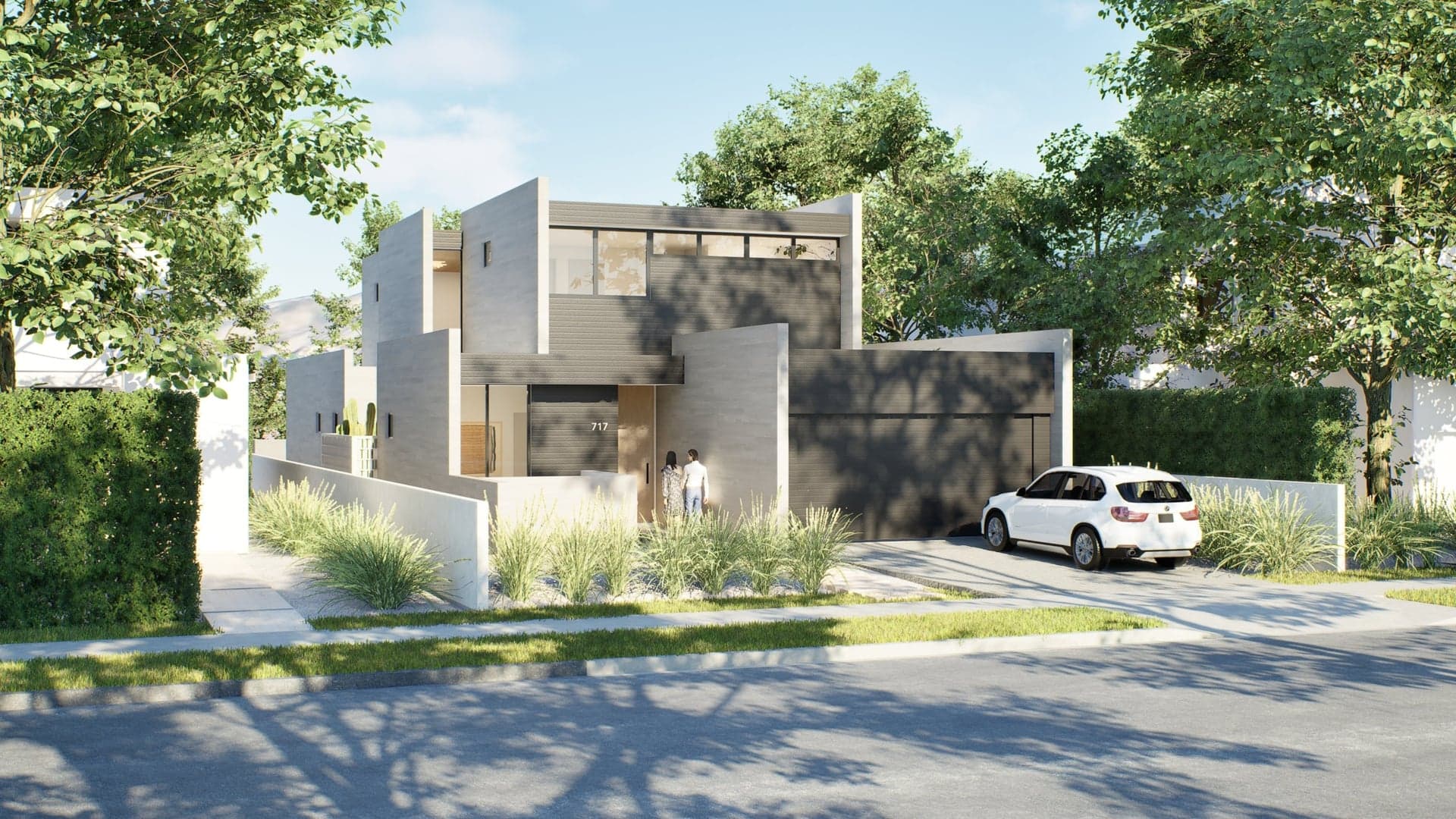
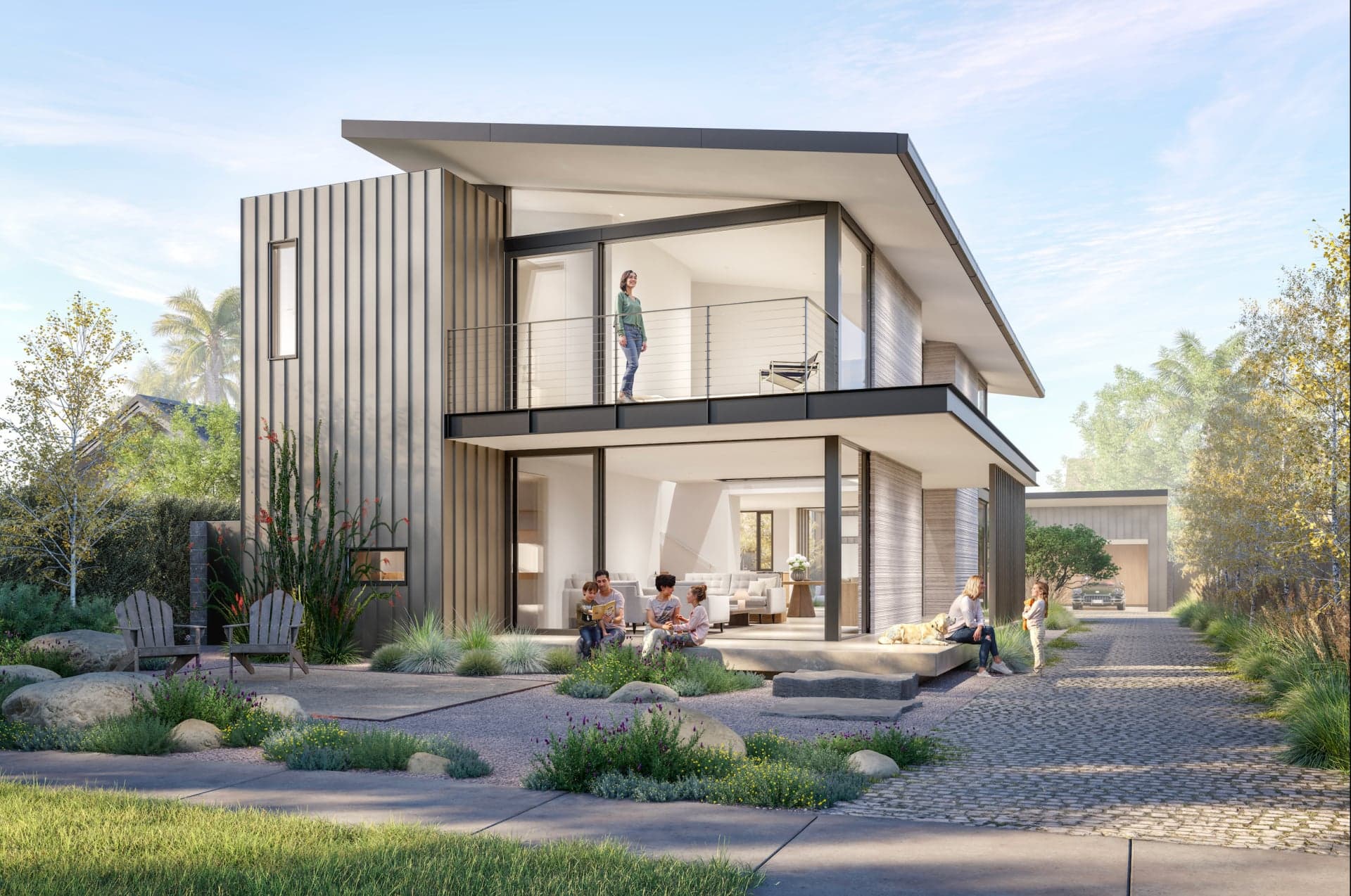
Eleven houses in. CSA #11 — the Fairbairn-Ratsch House by von Oeyen Architects — is the firm's second contribution to the Case Study Adapt series, and as with Montalba's two homes earlier in the program, the comparison between this project and the firm's earlier Schaffer-Balsley House is genuinely instructive. The home was designed for a couple whose lives carry a specific texture: a painter and a mathematician, both triathletes, both back at zero after a wildfire took their Rustic Canyon home. The brief asked for a refuge that balances endurance, artistry, and movement, and Geoffrey von Oeyen's response is one of the more compositionally ambitious projects in the series.
An L-Shaped Composition Calibrated to a Steep Site
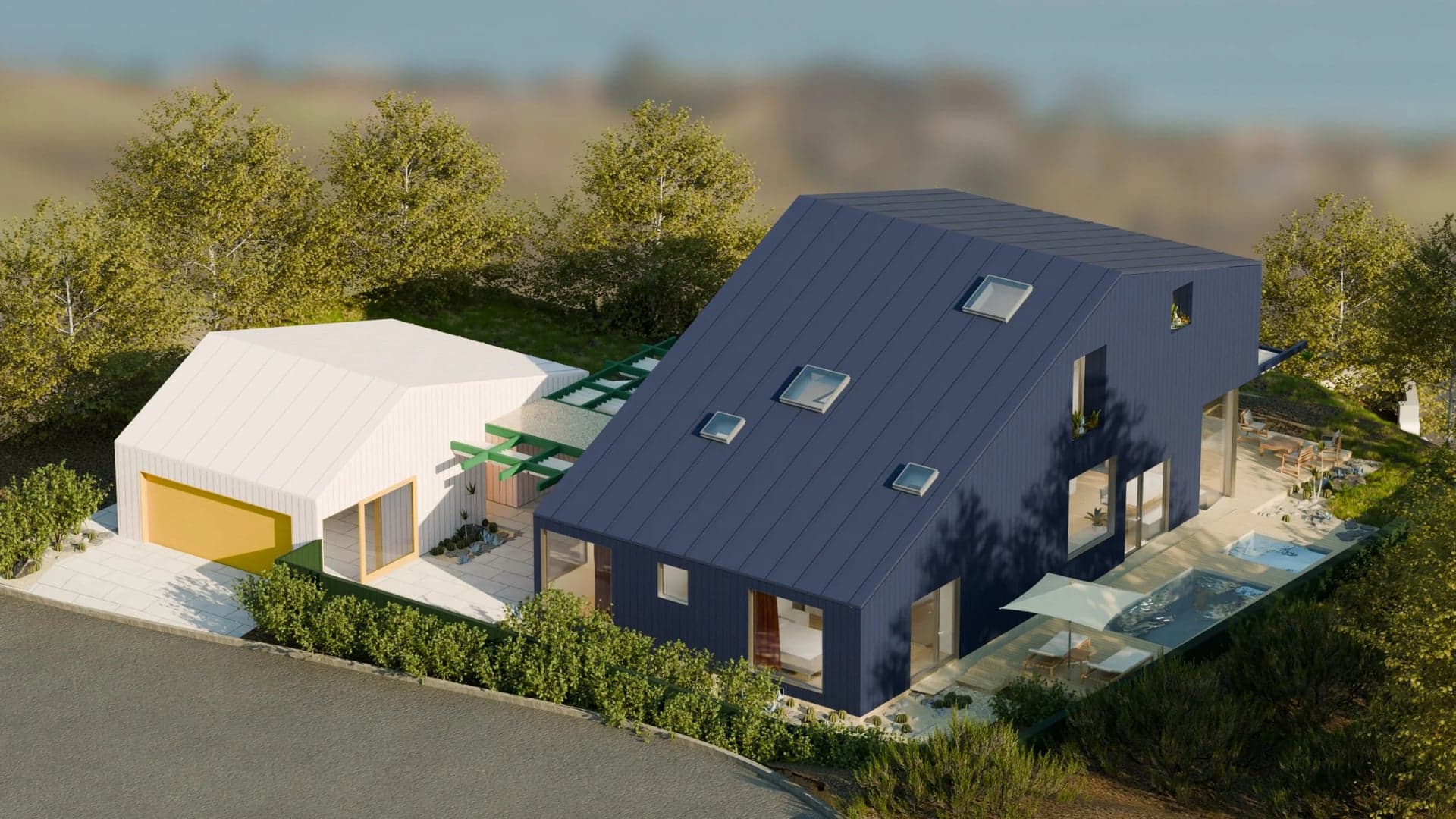
The home is organized as an L around a sunlit courtyard, calibrated to the site's views, setbacks, and steep canyon terrain. The west wing frames a Pacific view. The north wing terraces toward an exterior lap pool perched along the slope's edge. A bridge through the tree canopy connects both wings, and a rooftop terrace captures sweeping mountain and ocean views. The plan is unapologetically athletic — a building with the same disciplined economy of movement its owners cultivate. Every move the architecture makes is doing more than one job, which by now is the recurring discipline of the entire Case Study Adapt program.
A Tree-Canopy Atrium That Earns Its Existence
The atrium is where the fire-resilience strategy gets most interesting. As in von Oeyen's earlier CSA entry, trees are brought inside the home, sheltered within a naturally ventilated interior space that draws sea breezes through the living areas while filtering embers out of the airflow. The same gesture handles environmental performance and fire safety simultaneously, and the architecture earns the move twice. Watching a firm carry a successful design idea forward into a second project — refining it, applying it to a different site — is the kind of architectural development I find especially valuable to study.
A Pivoting Wall That Justifies the Custom-Home Premium
The painter's studio sits next to the open living area, and a pivoting glass wall transforms the interior into a gallery when the homeowner wants it to. That detail — a single rotating element that reconfigures the home's program — is the kind of design move that justifies the cost of a custom home. Function and ceremony, in the same hardware.
As a builder, I always notice details like this because they require an unusually high degree of coordination across disciplines: the structural engineer, the architect, the cabinetmaker, and the hardware specialist all have to be aligned before the wall can pivot reliably for thirty years. That is the kind of detailing where the design intent has to survive every shop drawing, and the only way to make that happen is to have a team that owns the execution end-to-end.
Resilience Designed from the Ground Up
The rest of the resilience strategy is what experience demands: non-combustible materials, deep overhangs, and the kind of careful siting that only really happens when an architect spends real time on a site. Von Oeyen has done that work, and the result is a serene, athletic composition in dialogue with the elements. The Fairbairn-Ratsch House is what designed-from-the-ground-up resilience looks like when the brief is personal — and most of the best residential work, I would argue, starts with a brief that personal.
Two Vocabularies, One Conviction
Eleven houses in, the Case Study Adapt program is consistently producing the kind of layered, principled residential architecture that rewards close reading. von Oeyen's two contributions — paired demonstrations of the same convictions in two formal vocabularies — are an especially strong illustration of what mature residential practice looks like. Read the full project on Case Study Adapt: https://www.casestudyadapt.org/houses-in-development/project-six-sz8wl-d64c9-gb95m-ndyde-rmlbl-zh6t4-n4bst-wphdx-mepn5-4f7az-je5hs.
Frequently Asked Questions
What is the Fairbairn-Ratsch House?
The Fairbairn-Ratsch House is the eleventh project in the Case Study Adapt series — an L-shaped residence by von Oeyen Architects designed for a couple — a painter and a mathematician, both triathletes — who lost their Rustic Canyon home in the January 2025 fire. The home wraps a sunlit courtyard, includes an exterior lap pool perched along the slope, and features a tree-canopy bridge connecting two wings plus a pivoting glass studio wall that converts the interior into a gallery.
Why is von Oeyen Architects' interior atrium move different here than in the Schaffer-Balsley House?
The atrium concept — bringing trees inside a fire-protected naturally ventilated space — first appeared at large scale in the Schaffer-Balsley House. In the Fairbairn-Ratsch House, the same idea is calibrated to a steep canyon site and a different family brief, with the atrium working alongside an L-shaped plan, a tree-canopy bridge, and a rooftop terrace. Watching a firm refine and reapply a design idea across two projects is one of the more instructive parts of the Case Study Adapt program.
What is a pivoting glass wall and how is it built?
A pivoting glass wall is a large glazed panel mounted on a vertical or horizontal pivot hinge, allowing it to rotate in place to open or close a space. Engineering one to operate reliably for decades requires careful coordination among the structural engineer, architect, hardware specialist, and cabinetmaker — the kind of detail where the design intent has to survive every shop drawing. It is the kind of feature that justifies the cost of a custom home.
What are non-combustible building materials?
Non-combustible materials, in the residential construction context, are materials that do not contribute fuel to a fire — concrete, stone, brick, fiber cement, metal cladding and roofing, and certain glazing systems. A non-combustible exterior envelope is the single most consequential decision for a home in a wildfire-prone landscape, and it is a design question first before it is a procurement question.
Can the Fairbairn-Ratsch House plan work on a steep Oregon hillside?
Yes, with adaptation. The L-shaped plan calibrated to a steep site, a defensible perimeter, non-combustible cladding, deep overhangs, and an interior naturally ventilated atrium are all moves that translate well to hillside builds in the Oregon Coast Range, the Cascade foothills, or the Eola and Chehalem ranges. The execution has to be specific to the site, but the principles travel directly.
The Building Journey
See how we design and build your home, step by step.
Floor Plans
Browse 15 customizable designs from 1,635 to 5,628 sq ft.
Service Area
We build across Yamhill County, Sherwood, Hillsboro, and wine country.
Ready to Talk About Your Project?
Get expert guidance from Oregon's trusted custom home builder.