Why I'm Writing This Series
I've been waiting to write this series for a while. The original Case Study House Program — the homes the Eameses, the Eichlers, and a remarkable group of postwar architects produced under John Entenza's editorship at Arts & Architecture — has shaped how I think about residential design for as long as I've been doing this work. Others on our design team have studied that program just as closely. So when the Case Study Adapt initiative was announced — sixteen homes from a remarkable lineup of California firms, all rebuilding in the wake of the January 2025 Palisades Fire — I knew immediately that I'd be reading every project carefully, and I wanted our readers in on it.
Over the next two months I'm going to walk through all sixteen homes, one at a time, and share what I'm noticing. Some of it will be admiration. Some will be principles I think travel — to Oregon, to wine country, to the kind of land my clients tend to own. The point isn't to grade these projects. The point is to study them out loud, the way serious residential design deserves to be studied.
A Disciplined Opening to the Program
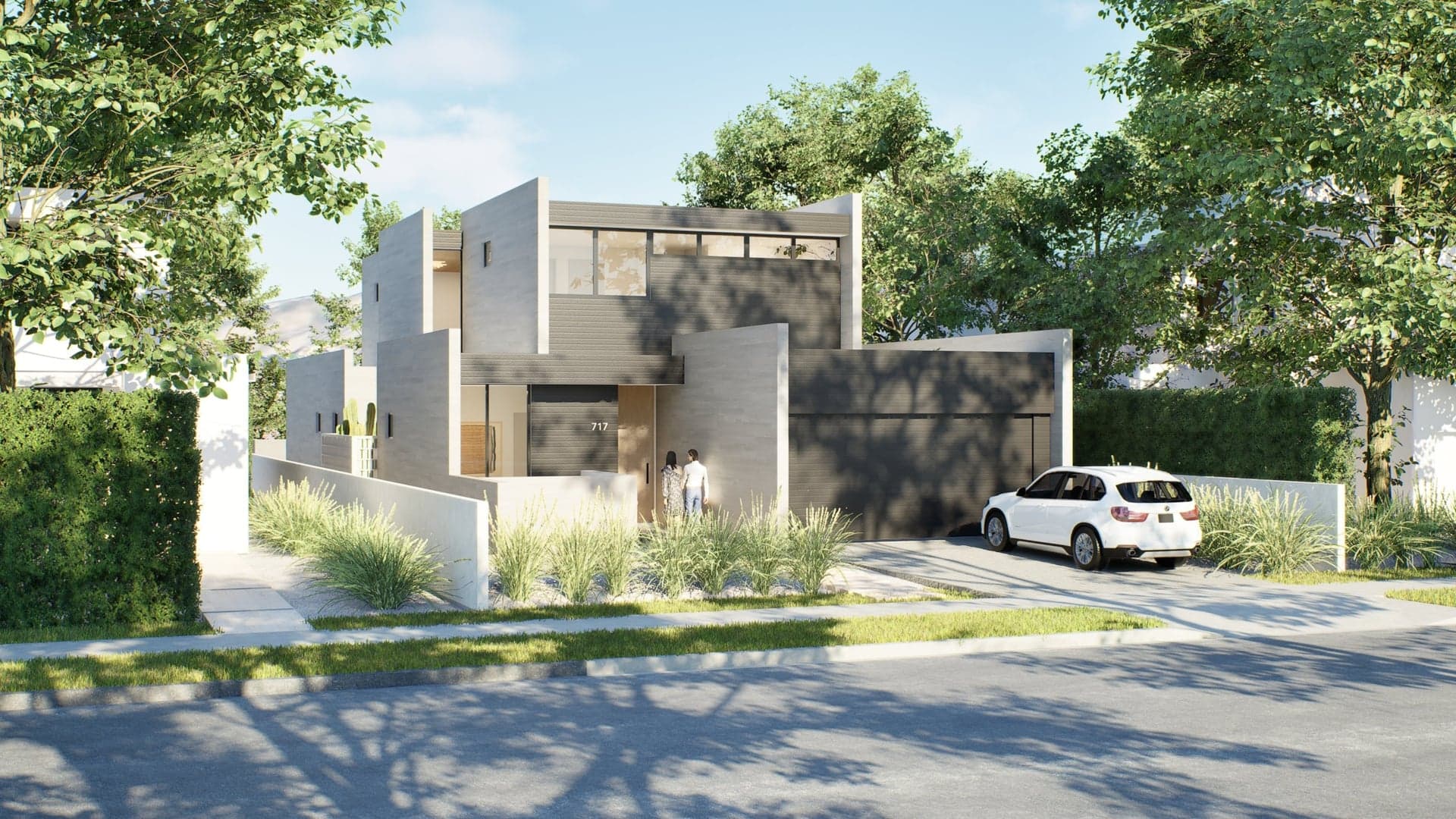
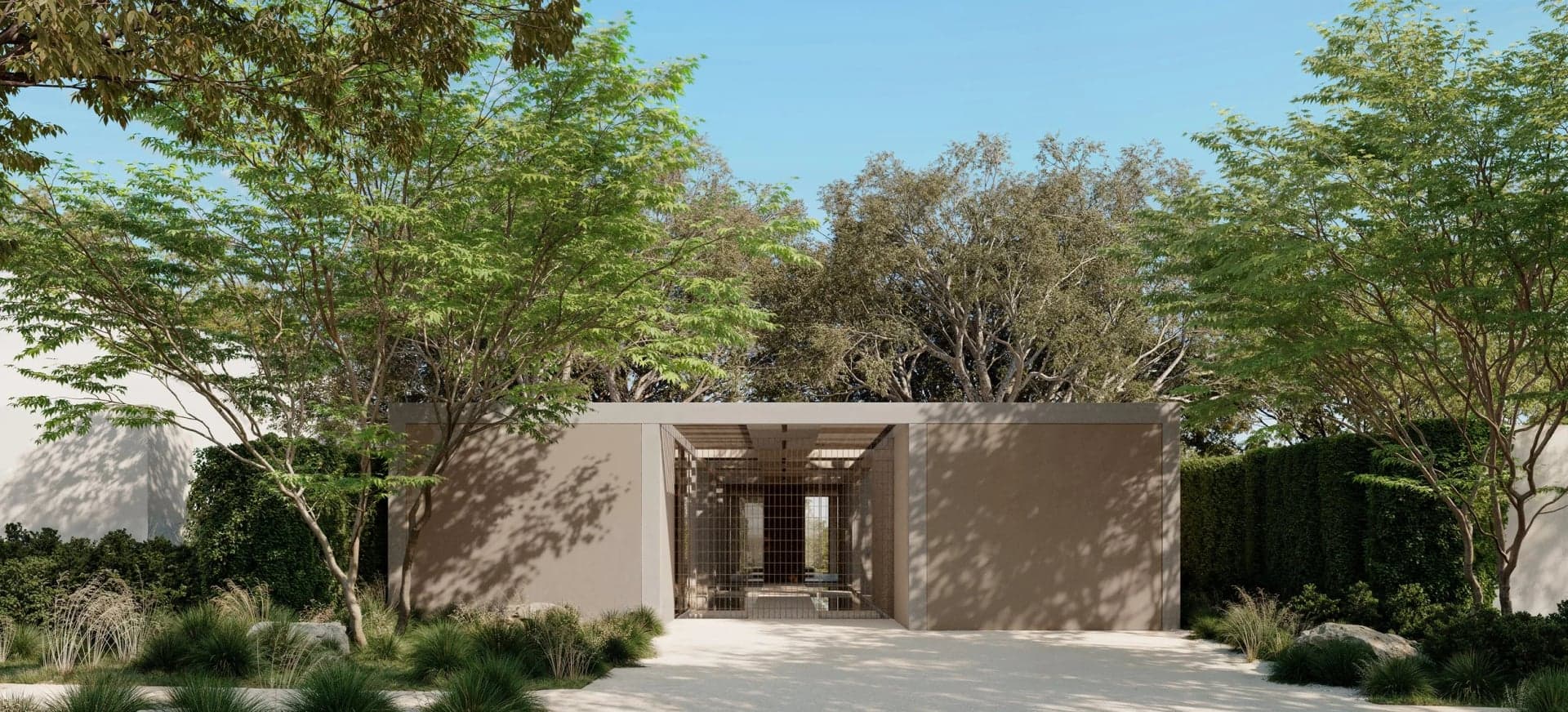
The series opens strong. The Bramell House — designed by Los Angeles firm Woods + Dangaran for Dustin Bramell and his family after they lost their home in the Palisades Fire — is a 2,900-square-foot residence that I find quietly remarkable. It's the kind of project where the longer I look at it, the more I find. The brief was as hard as residential briefs get: rebuild on the same lot, in the same fire-prone landscape, but do it in a way that actually answers the question the fire asked. The firm's response is disciplined, calm, and committed — three qualities I look for first in any design, and three qualities you cannot really fake.
A Plan Where Every Move Earns Its Keep
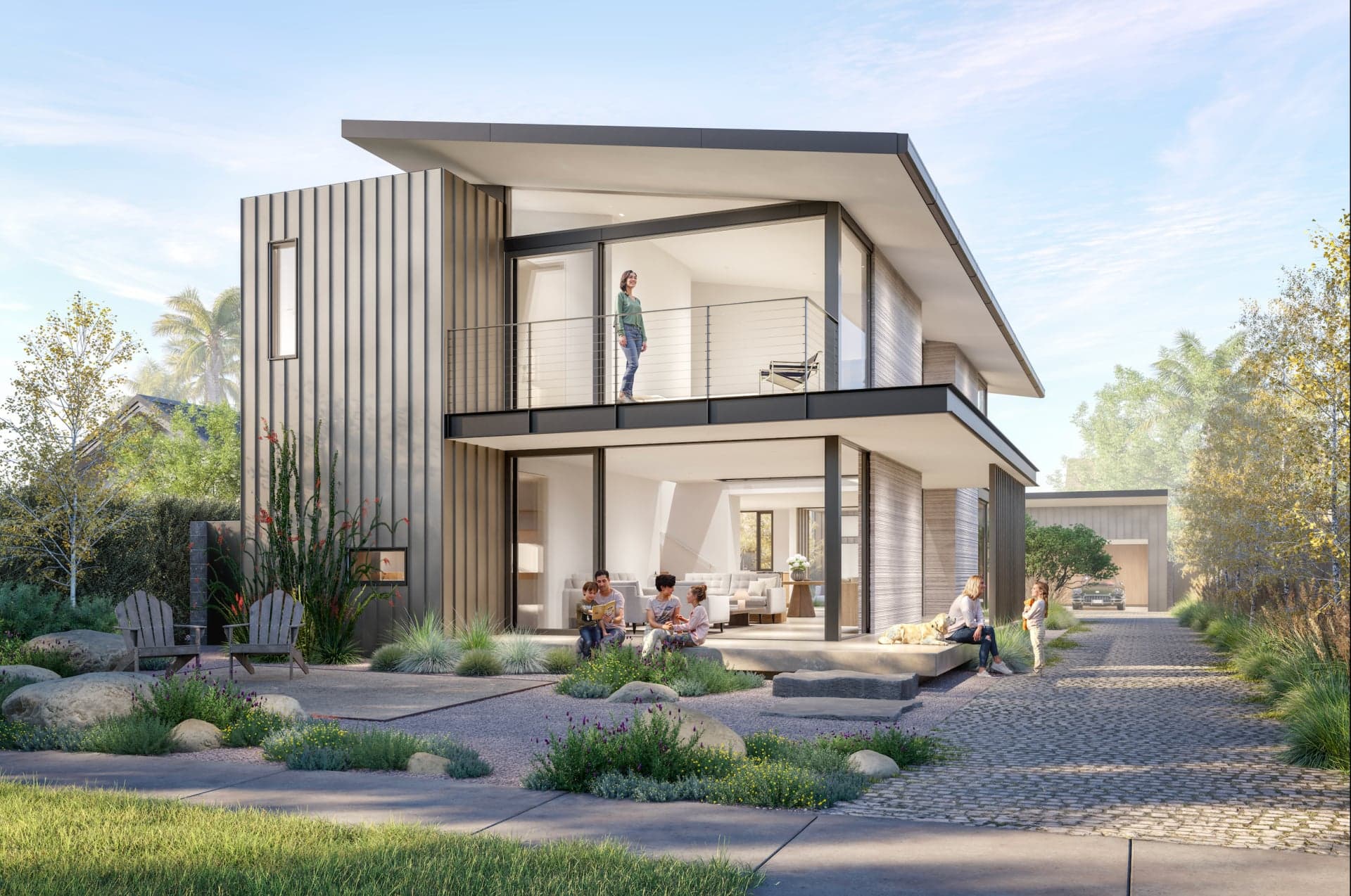
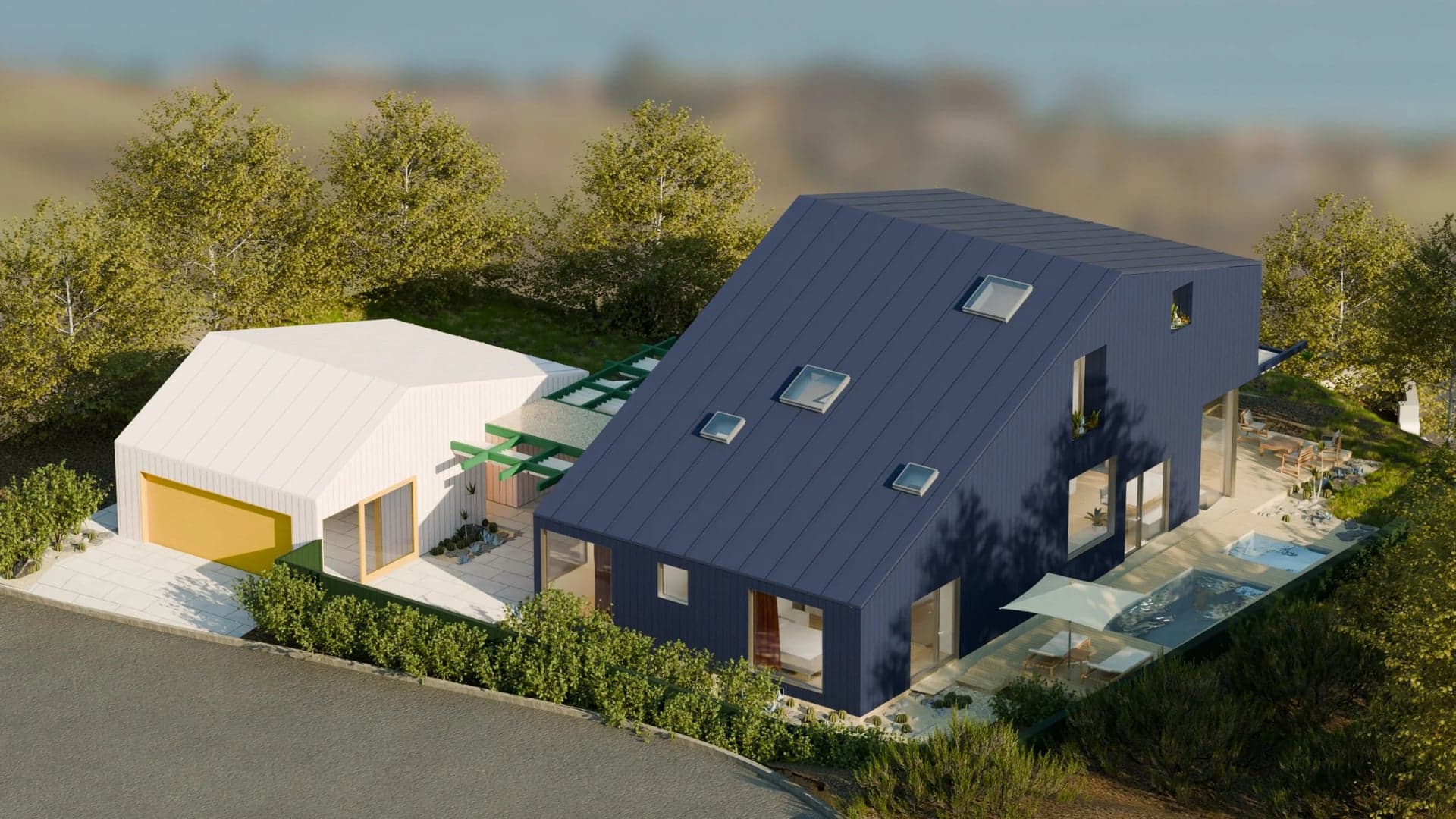
The plan is what I would point to first. The main residence sits at the back of the lot, which gives the family defensible space toward the street and pulls the living rooms toward the canyon views. A detached garage and ADU sit forward, and a flat outdoor terrace stitches the two volumes into one daily room — a real outdoor living space rather than a leftover patio. Bedrooms tuck into a daylight basement, and that move is quietly brilliant: it lowers the silhouette of the house, it improves the thermal performance year-round, and it dramatically reduces ember exposure during a fire event.
One design decision doing three jobs. That is the discipline I respect most, and honestly it is the kind of conversation I love having with our clients when we are walking their land for the first time. What does this site actually want this home to do? How do we make every move on the plan earn its keep? When those two questions get serious attention up front, the rest of the project becomes easier — for us and for the people who will eventually live in the home.
The Structural Commitment Is the Story
What stops me, though, is the structural commitment. The home is built from RSG-3D insulated concrete panels with a steel frame — a system that comes out of commercial and institutional construction and shows up in residential work only when someone is taking fire and seismic performance unusually seriously. The eaves and decks, which are the two most reliable ignition points in any wildland-urban interface home, are pared back to the minimum the design requires. A non-combustible courtyard water feature does double duty as a passive cooling element, and even small details like that tell you the design team is thinking about the building as a system rather than as a collection of finishes.
None of this is decorative. All of it is the kind of detailing that determines whether a beautiful design actually performs once it is built. This is the part of the project I find most instructive — the integrity of the design holds all the way through to the assemblies. That does not happen by accident. It happens because someone on the team is making sure it does, every step from sketch to closeout, and that someone is usually a small group of very disciplined people.
Why This Conversation Matters in Oregon
People sometimes ask me whether wildfire-resilient detailing is really an Oregon conversation. It absolutely is. I have had it more than once with clients building out in the Chehalem Mountains, in the Eola Hills, on parcels along the foothills of the coast range. The specific threats look different here than they do in the Palisades — wind-driven embers from a forest fire rather than a chaparral burn, dry summers that get drier each year, evacuation zones that did not exist on a map twenty years ago — but the principles that animate the Bramell House translate almost directly.
Defensible space. Non-combustible cladding. Ember-resistant venting. A roof and an envelope designed to survive the day the conditions actually turn against you. We have started having these conversations earlier in the design process than we used to, because the right answer is almost always built into the architecture, not bolted on afterward. The Bramell House is a beautiful demonstration of what that looks like when an architect commits to it from the first sketch.
On Woods + Dangaran, and What's Coming Next
The other thing I want to call out before moving on is who designed this. Woods + Dangaran has been one of the most quietly serious modern residential firms working in Los Angeles for years now. Their portfolio reads like a study in calm — homes that feel composed without feeling cold, materials chosen because they will age well, plans that make sense the first time you walk them.
Bringing that sensibility to a rebuild project, where the design pressure is unusually high and the technical demands are unforgiving, is exactly the kind of work that takes real skill. The Bramell House manages to feel like a sanctuary while functioning as a hardened structure, and that balance is the project's quietly remarkable achievement. I will be back shortly with the next home in the series. If you want to read the project in full, it is on Case Study Adapt: https://www.casestudyadapt.org/houses-in-development/project-six-sz8wl-d64c9.
Frequently Asked Questions
What is the Bramell House and who designed it?
The Bramell House is the first project in the Case Study Adapt series — a 2,900-square-foot rebuild designed by Los Angeles firm Woods + Dangaran for Dustin Bramell and his family after they lost their home in the January 2025 Palisades Fire. It pairs a courtyard plan with a structurally rigorous building system and is meant to demonstrate how serious modern residential design can stand up to the realities of wildfire-prone landscapes.
What is the Case Study Adapt program?
Case Study Adapt is a residential design initiative that follows in the lineage of the original Case Study House Program of the 1940s and 1950s. Sixteen California architecture firms are each rebuilding a home for a family that lost theirs in the January 2025 Palisades Fire, with the brief asking for serious modern architecture that also stands up to wildfire. The program was launched to demonstrate what the next generation of California residential rebuilding can look like when design and resilience are treated as a single problem.
What are RSG-3D insulated concrete panels?
RSG-3D panels are a structural building system made from a rigid foam core sandwiched between welded-wire reinforcement, with concrete shotcreted onto both faces. The result is a load-bearing insulated wall with strong fire resistance and seismic performance. The system originates in commercial and institutional construction; it shows up in residential work, like the Bramell House, when an architect and builder are taking fire and seismic performance unusually seriously.
Are these wildfire-resilient design principles relevant in Oregon?
Yes. While the specific fire behavior is different here than in coastal Southern California — wind-driven embers from forest fires rather than chaparral burns — the underlying principles travel directly. Defensible space, non-combustible cladding, ember-resistant venting, and an envelope designed to survive ember-driven attack are increasingly standard considerations for homes built on rural land in the Willamette Valley, the foothills of the Coast Range, and the Cascade foothills.
Why is Andrew Burton writing about the Case Study Adapt program?
Andrew is the founder of Creekside Homes, a custom home builder based in McMinnville, Oregon. He and his team have studied the original Case Study House Program closely, and the new Case Study Adapt initiative is an extension of design ideas they have always cared about. Walking through each project publicly is both a way to study the work seriously and a way to make the lessons accessible to anyone in the Pacific Northwest thinking about a custom home.
The Building Journey
See how we design and build your home, step by step.
Floor Plans
Browse 15 customizable designs from 1,635 to 5,628 sq ft.
Service Area
We build across Yamhill County, Sherwood, Hillsboro, and wine country.
Ready to Talk About Your Project?
Get expert guidance from Oregon's trusted custom home builder.