Fifteen Houses In, the Penultimate Post
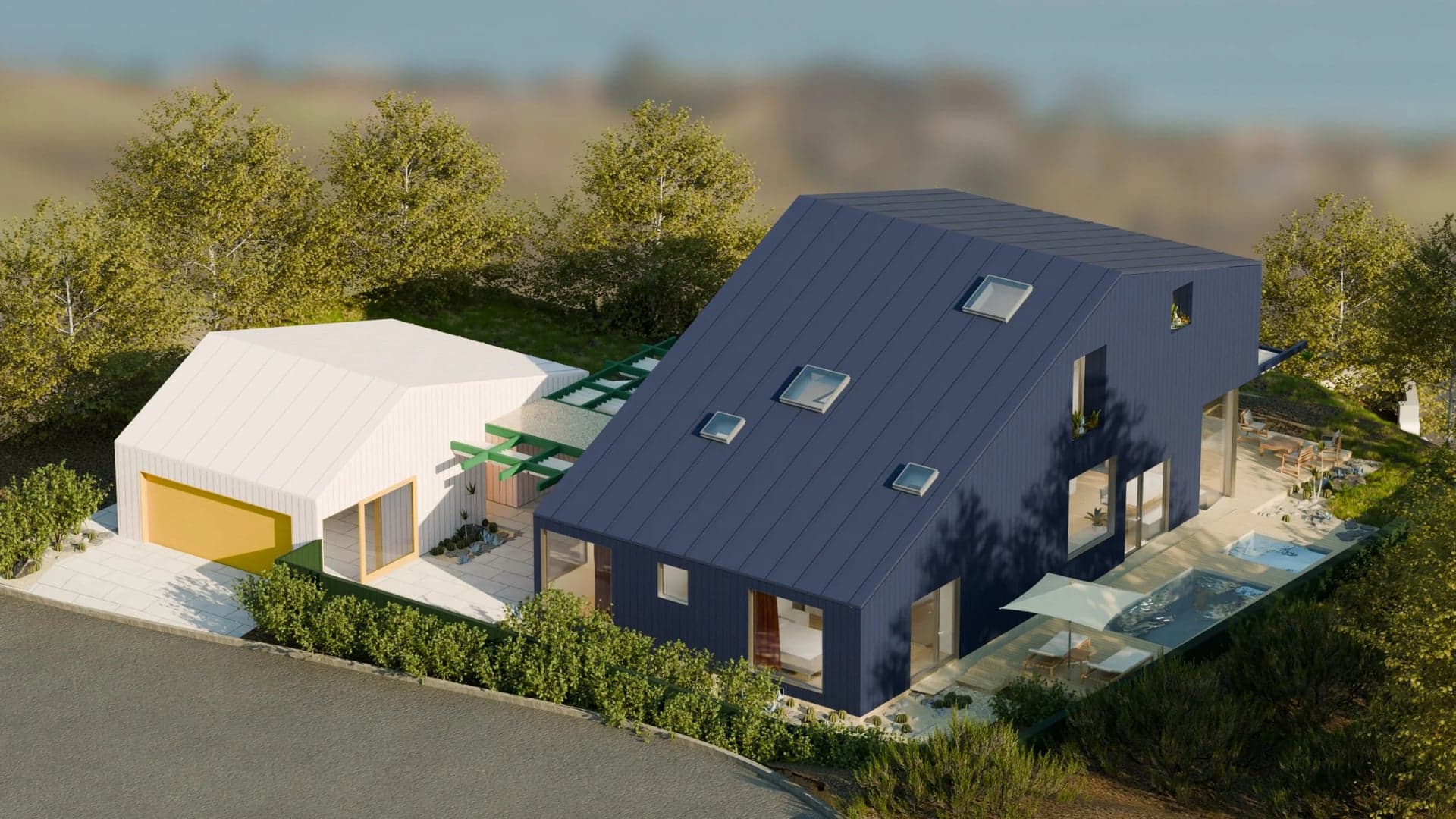
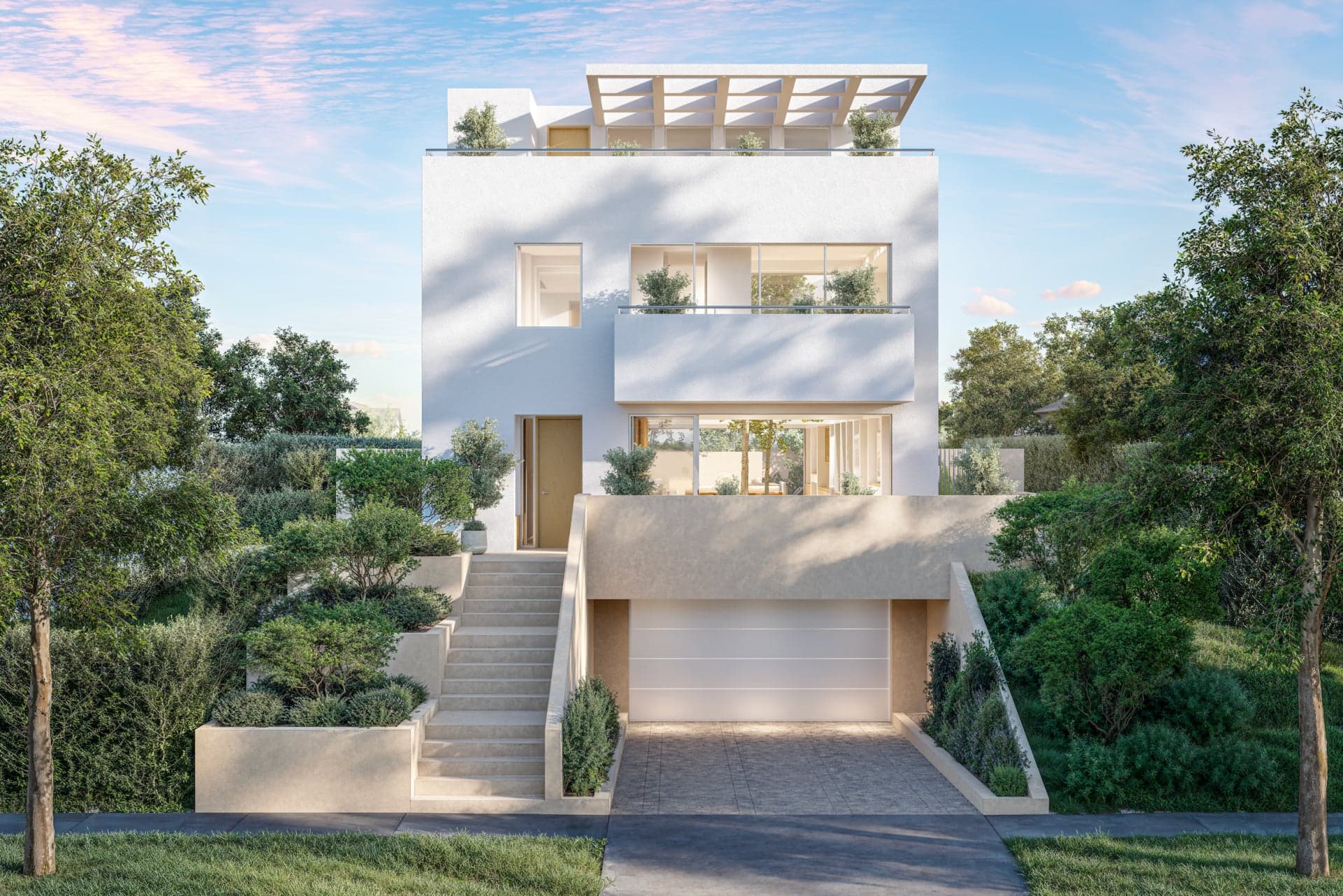
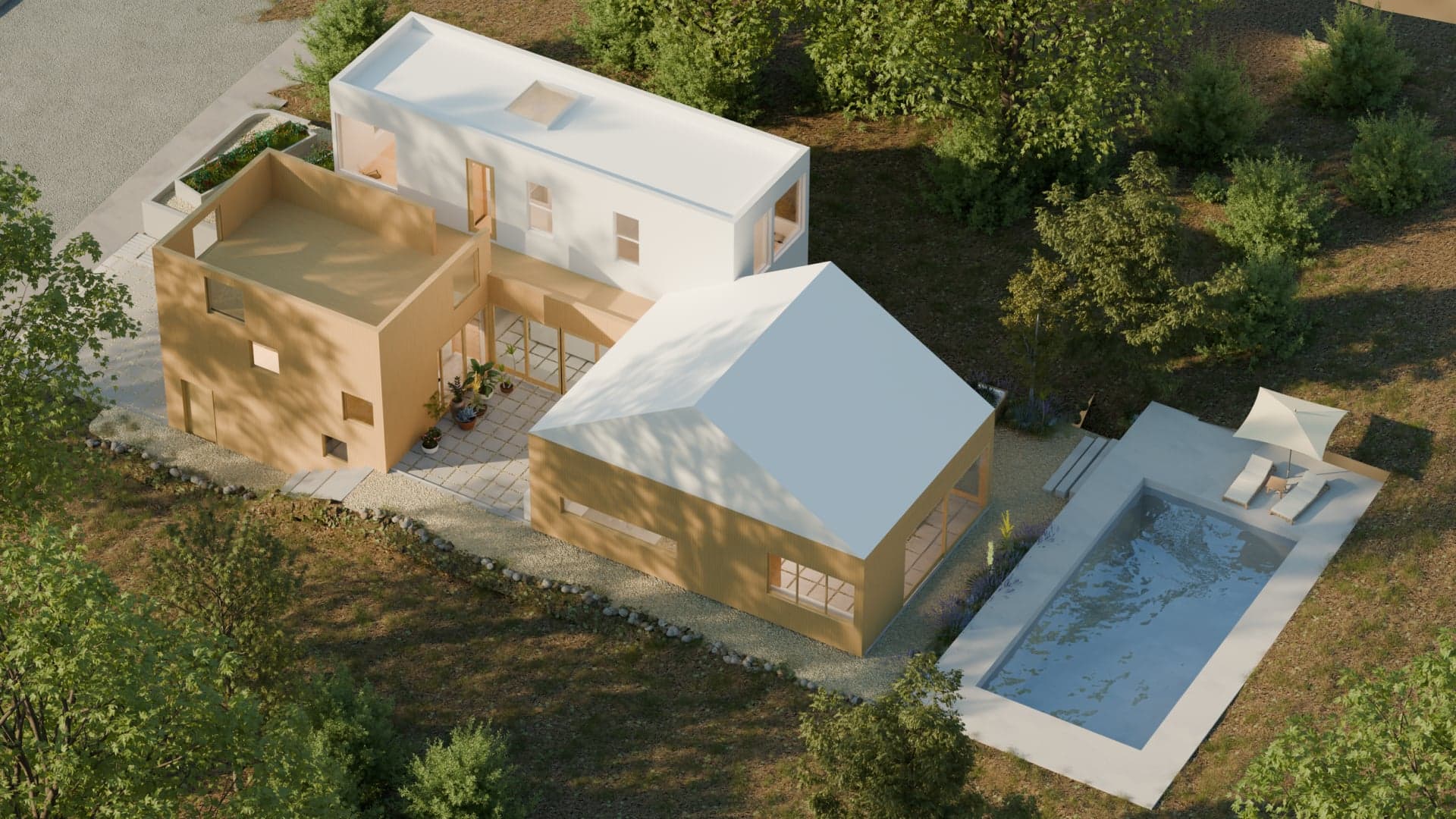
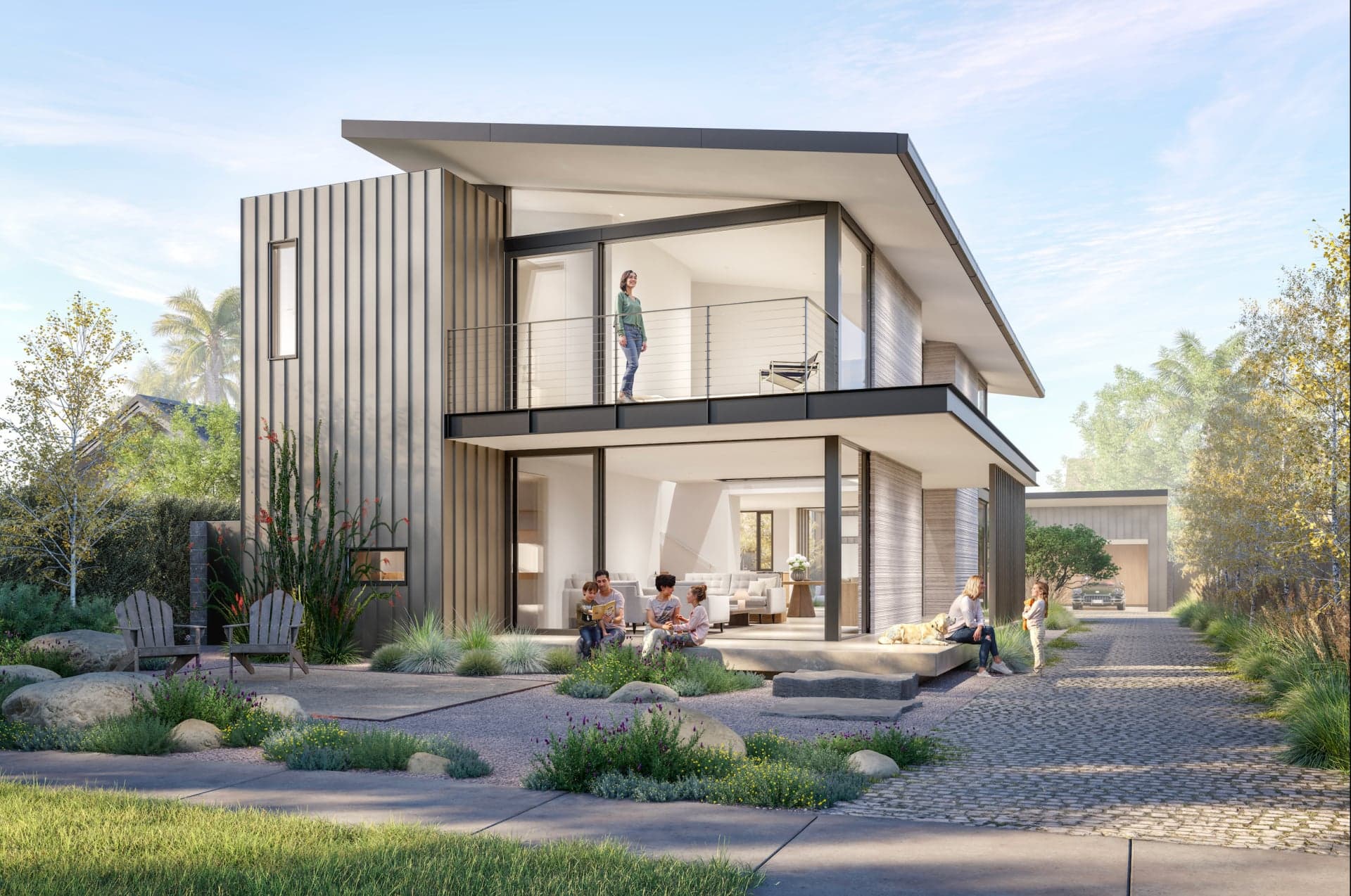
Fifteen houses in. The penultimate post. CSA #15 — the Zweig House by EYRC Architects — is the firm's second contribution to the Case Study Adapt series, and like the Laurence House before it, the project starts from a deeply personal brief. The Zweigs lost the long-time, single-story home they had lived in for years to the January 2025 Palisades fire. Through the Case Study Adapt initiative, they partnered with EYRC to rebuild a residence centered on three commitments: community, modesty, and endurance. As a builder who reads a lot of residential briefs, I find it especially worth pausing on those three words. They are the right ones.
A Porch That Becomes a Room
The design's organizing move is the reinterpretation of the front porch as a flexible social space. It opens to an 18-foot-high outdoor room — an architectural gesture that continues the midcentury tradition of blending architecture and community spirit, scaled up to register on a contemporary block. The porch is no longer a transitional zone. It is a room of its own, and it belongs to the street as much as to the family. EYRC's attention to the social life of the home — visible in both their Case Study Adapt projects — is one of the things I most respect about their residential practice.
Doing the Work Without the Machine
The environmental strategy is grounded in moves that California residential architecture has always done well — natural ventilation, solar-shading roof overhangs, and thermal-mass concrete floors that absorb and release heat across the day. Photovoltaic panels do double duty as energy generators and air-cooling devices. The home is built to keep working comfortably with as little mechanical intervention as possible, which is what real environmental ambition looks like at the building scale. We talk about this constantly with our own clients: the most resilient homes are the ones that perform best when the systems around them stop working.
An Envelope, Not a Fortress
On the resilience side, EYRC has used metal-and-stucco exterior cladding, a five-foot defensible perimeter, and a courtyard configured as a fire-safe refuge. The intent is not to make a fortress — it is to design an envelope that the family can shelter inside if conditions ever demand it. That distinction matters more than people generally appreciate. Fortification turns homes inhospitable. The Zweig House stays warm and open while still standing up to what it needs to stand up to. That is exactly the right ambition.
Modesty as Posture, Endurance as Result
EYRC Architects' track record across its two Case Study Adapt entries shows a particular kind of architectural ethic at work: rebuilding is not just an exercise in structural performance, but an exercise in honoring what people lost and what they want to bring forward. The Zweig House makes that ethic legible. Modesty is the design's posture. Endurance is the result. That is a combination I want to see more of in residential architecture generally — including in our own region, where the temptation toward larger and more elaborate is constant and often unhelpful.
One More to Go
Fifteen houses in, the program is rounding out beautifully. One more to go. Read the full project on Case Study Adapt: https://www.casestudyadapt.org/houses-in-development/project-six-sz8wl-d64c9-gb95m-ndyde-rmlbl-zh6t4-n4bst-wphdx-mepn5-4f7az-je5hs-ay946-h5c6b-f2c6k-k5ks4.
Frequently Asked Questions
What is the Zweig House?
The Zweig House is the fifteenth project in the Case Study Adapt series — a residence by EYRC Architects designed for the Zweigs, who lost the long-time single-story home they had lived in for years to the January 2025 Palisades Fire. The design centers on a reinterpreted front porch that opens to an 18-foot-high outdoor room, with metal-and-stucco exterior cladding, a five-foot defensible perimeter, photovoltaic panels that double as air-cooling devices, and thermal-mass concrete floors.
What does it mean for photovoltaic panels to also serve as cooling devices?
When solar panels are mounted with an air gap above the roof, the gap acts as a ventilated buffer that reduces heat transfer into the building. The panels themselves shade the roof surface and lower its peak temperature, while the airflow underneath carries heat away. The result is double-duty hardware — energy generation plus passive cooling — for the same installation cost. It is exactly the kind of integrated thinking serious residential design rewards.
What is a thermal-mass concrete floor?
A thermal-mass concrete floor uses the heat storage capacity of a concrete slab to absorb solar energy during the day and release it slowly into the home as the air temperature drops. In a properly oriented home with appropriate glazing and overhangs, thermal mass can dramatically smooth out daily temperature swings and reduce mechanical heating and cooling demand year-round.
How does EYRC Architects' attention to social space show up across both their Case Study Adapt projects?
Both the Laurence House and the Zweig House center on a reinterpreted front porch — the part of each previous home the family missed most — designed not as ornament but as a serious social threshold between street and family life. Treating the home as a social instrument rather than just a private retreat is one of the long-running traditions in California modernism, and EYRC carries it forward thoughtfully across both contributions.
Can the Zweig House design language work for a custom home in Oregon wine country?
Many of its moves translate well — particularly the porch-as-room concept, thermal-mass floors, photovoltaic integration, and a defensible-space perimeter. The specific cladding palette would shift to suit Pacific Northwest weather and aesthetic context, but the design conviction (modesty as posture, endurance as result) is exactly the right ambition for serious custom residential work in our region.
The Building Journey
See how we design and build your home, step by step.
Floor Plans
Browse 15 customizable designs from 1,635 to 5,628 sq ft.
Service Area
We build across Yamhill County, Sherwood, Hillsboro, and wine country.
Ready to Talk About Your Project?
Get expert guidance from Oregon's trusted custom home builder.