Fourteen Houses In, Two Elevations and One Argument
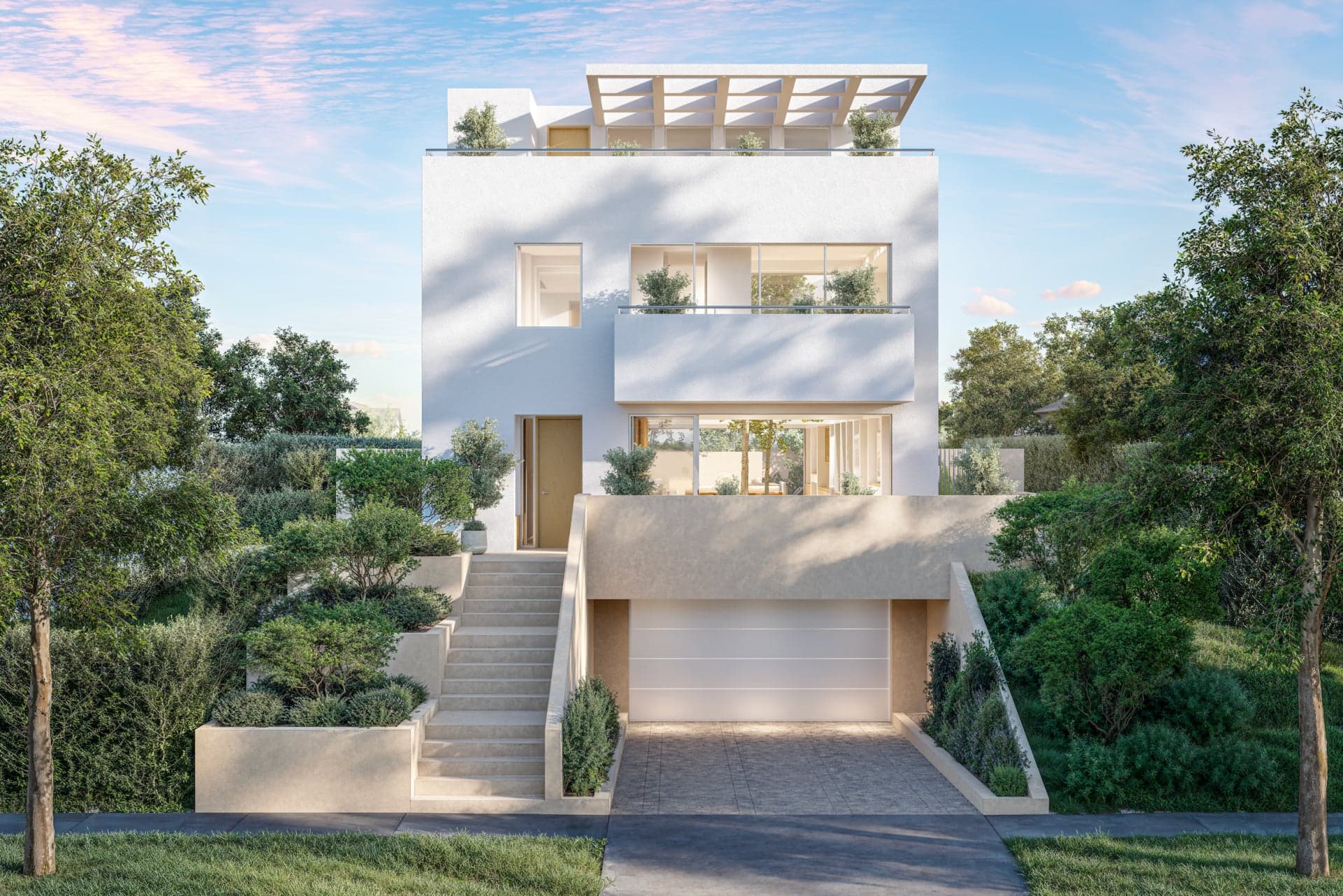
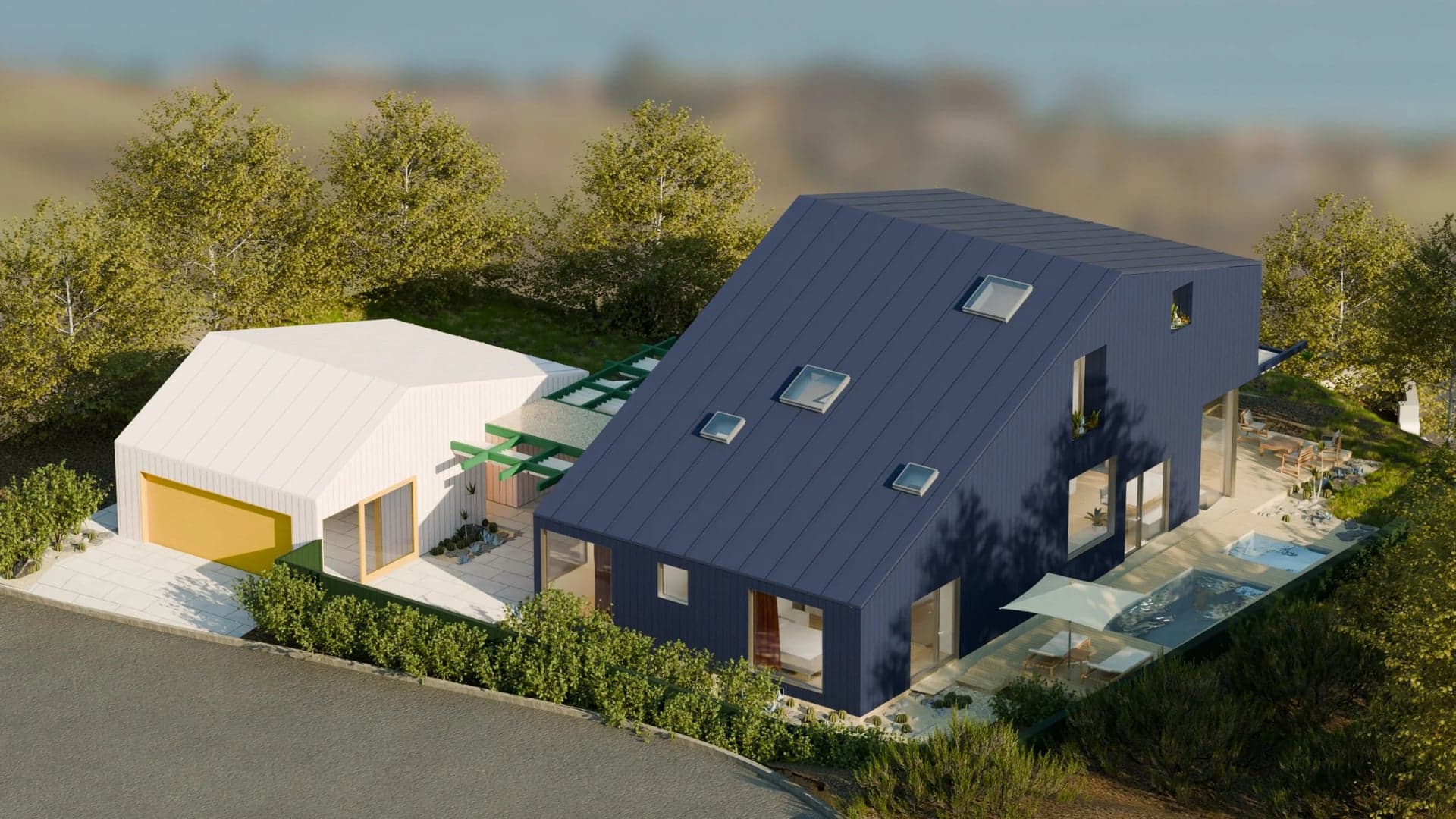
Fourteen houses in. Bestor Architecture's two contributions to the Case Study Adapt series are setting up an interesting dialogue about what midcentury openness looks like when it is forced to absorb twenty-first-century resilience demands. CSA #14 — the Fitzgerald Jones House — is the firm's second project in the program, and it is set into a steep downslope with a street-facing elevation that does what modern fire-zone homes need their public face to do: stay closed. Behind that quiet street wall, the home opens dramatically toward the ocean and the Queen's Necklace view that defines so much of this stretch of coastline. The contrast between the two elevations is the project's animating idea.
A Roof That Carries Three Responsibilities
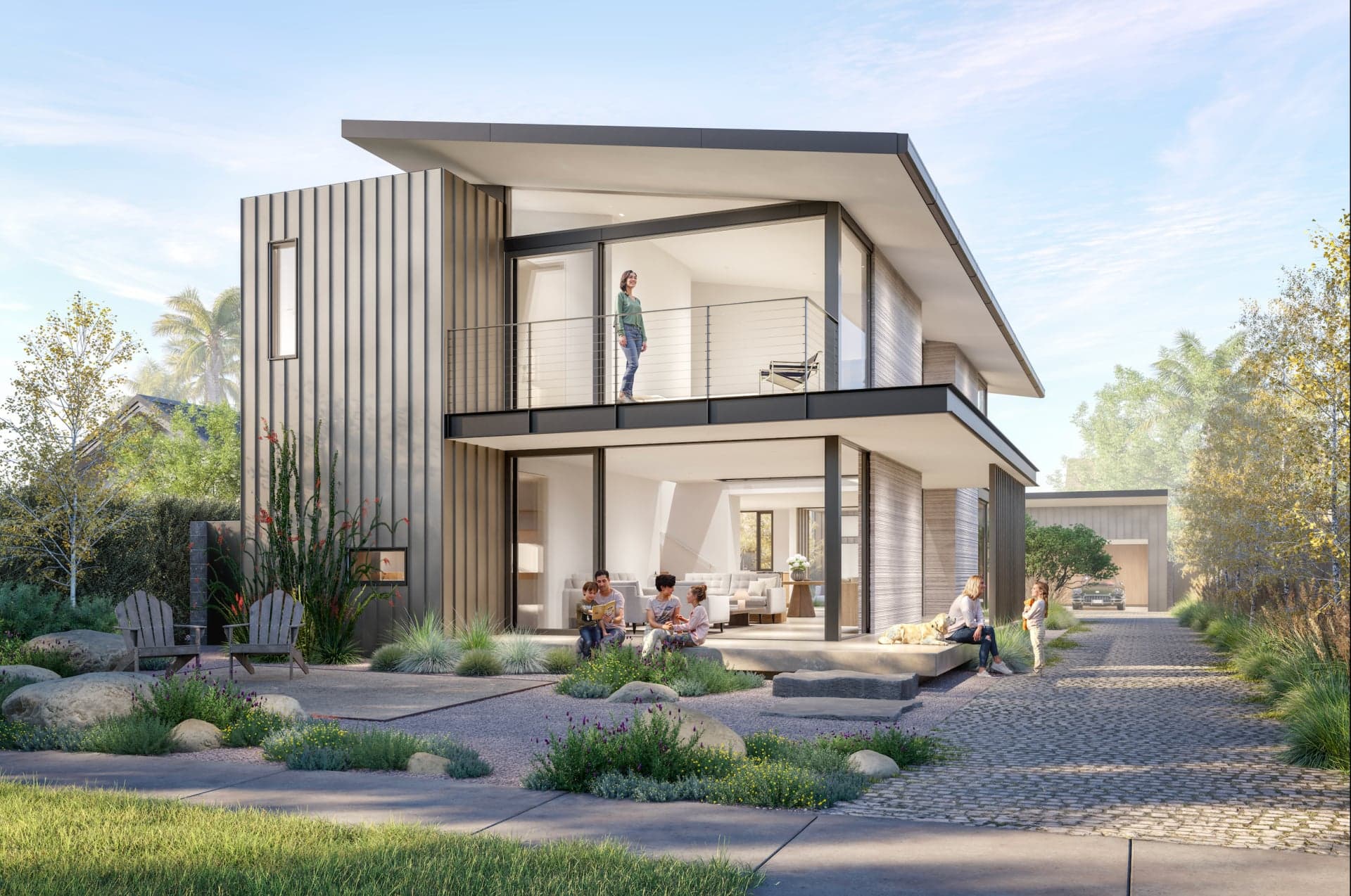
The asymmetric oversize roof is doing more than one job, and it is the kind of architectural element I always look at first because so much of the project's quality flows from it. It provides privacy at the street, fire protection through its overhang and material, and orientation — pulling the living spaces toward the views the site exists for. An entry sequence between twin courtyards creates layered transparency from front to back, while a sunken living room steps down with the terrain to merge with garden terraces and patios that frame the coastline. The geometry reads as confident, almost sculptural, but every piece of it is earning its keep.
Doing as Little Mechanical Work as Possible
Resilience underpins the home's environmental and material strategy. A high-SRI metal roof reduces heat absorption and supports an integrated solar array. Dual-pane low-E glazing handles thermal performance while maximizing daylight. Operable openings let ocean breezes flow through the plan, reducing cooling demand. The home cools, lights, and powers itself with as little mechanical intervention as possible, which is exactly the right environmental ambition for this site. That same ambition translates almost directly to the high-end work we are taking on in our own region — homes designed to perform comfortably year-round with minimum dependence on the systems that fail first when conditions get extreme.
Rigorous Fire Detailing, Quietly
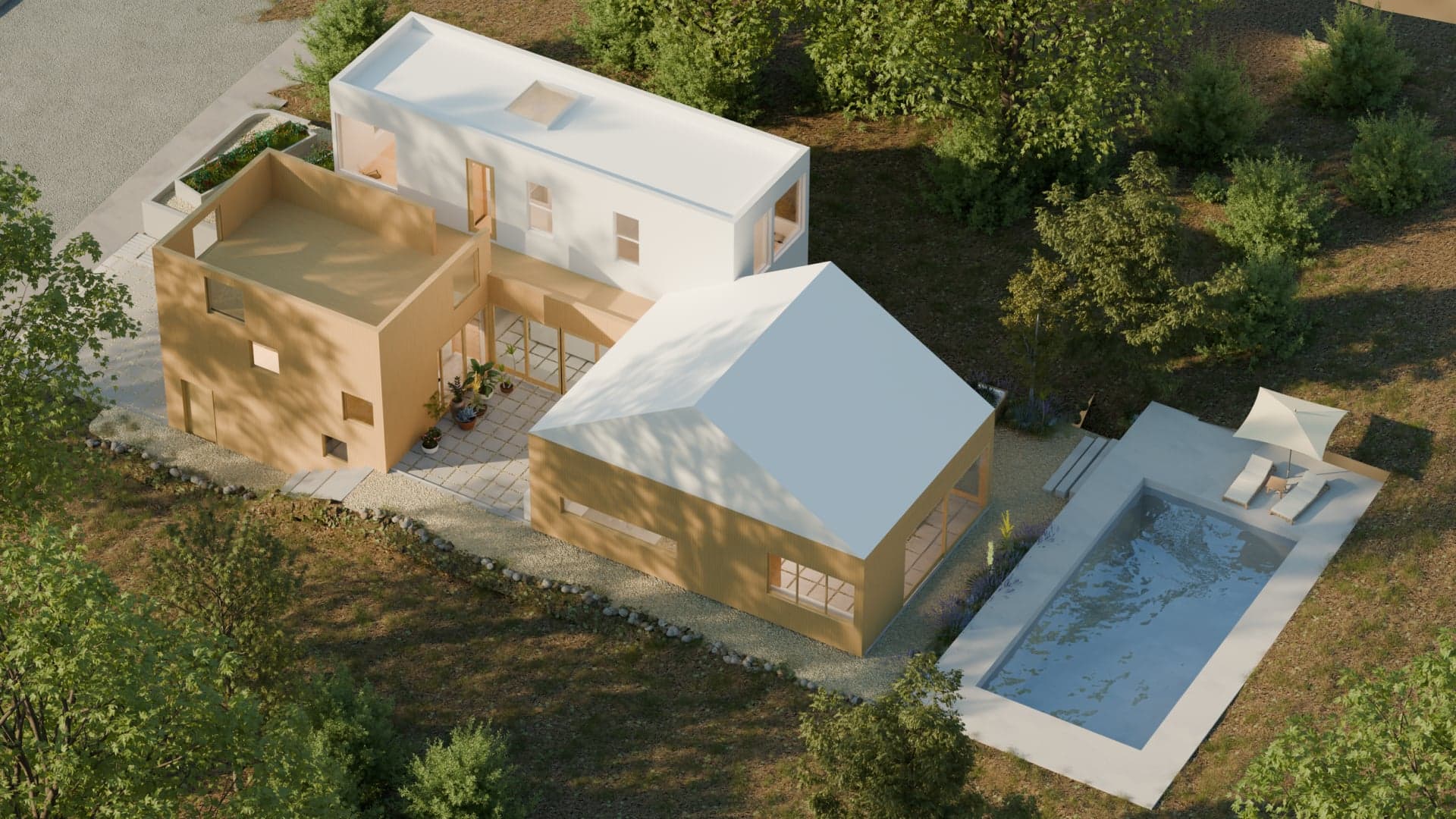
The fire-protection layer is rigorous. Pool-fed sprinklers can suppress an active event. Hardened exterior insulation and ember-resistant detailing reduce the structure's vulnerability during a wind-driven attack. Native, drought-tolerant landscaping completes the defensible-space picture without sacrificing the kind of landscape life the homeowners moved here for in the first place. None of these moves is dramatic in isolation. All of them, together, define the standard we should be holding ourselves to.
Optimism and Hardening, Reconciled
What Bestor Architecture has done across its two Case Study Adapt entries is establish a clear conviction: midcentury ideals of openness and contemporary imperatives of safety, sustainability, and site-sensitivity are not in conflict. They can be merged, and the result can still feel optimistic and humane rather than fortified and grim. The Fitzgerald Jones House is that conviction made into a building. As we get closer to the end of the series, this is the through-line that has emerged most clearly across the program: optimism and hardening, reconciled in the same architecture.
The Through-Line of the Program
Fourteen houses in, the Case Study Adapt program is giving us the kind of architectural answer the post-fire era requires. The Fitzgerald Jones House is one of its strongest. Read the full project on Case Study Adapt: https://www.casestudyadapt.org/houses-in-development/project-six-sz8wl-d64c9-gb95m-ndyde-rmlbl-zh6t4-n4bst-wphdx-mepn5-4f7az-je5hs-ay946-h5c6b-f2c6k.
Frequently Asked Questions
What is the Fitzgerald Jones House?
The Fitzgerald Jones House is the fourteenth project in the Case Study Adapt series — a downslope residence by Los Angeles firm Bestor Architecture with a closed, privacy-driven street elevation and a dramatically open ocean side facing the Queen's Necklace view. An asymmetric oversize roof carries privacy, fire protection, and view orientation simultaneously, while pool-fed sprinklers, a high-SRI metal roof, and integrated solar make the home largely self-cooling and self-powering.
What is a high-SRI roof?
SRI stands for Solar Reflectance Index, a measure of how well a roofing material reflects solar energy and emits absorbed heat. A high-SRI roof stays significantly cooler in direct sun than a dark or non-reflective roof, which reduces cooling load, slows roof deterioration, and helps a building perform better during heat events. In wildfire-prone regions, high-SRI metal roofing also typically carries Class A fire ratings.
Why does the Fitzgerald Jones House have two such different elevations?
It is a deliberate design strategy. Modern fire-zone homes increasingly need their public-facing street elevation to read as protective and defensive, while their landscape-facing elevation can open generously to the view, the climate, and the family's life. The contrast between the two elevations is the project's animating idea — fortified at the street, expressive at the back — and it is becoming a useful pattern for serious residential design in fire-prone landscapes.
How do Bestor Architecture's two Case Study Adapt projects relate to each other?
The Childers House and the Fitzgerald Jones House together establish a clear design conviction: midcentury ideals of openness and contemporary imperatives of safety, sustainability, and site sensitivity are not in conflict, and the result of merging them can still feel optimistic and humane rather than fortified and grim. That through-line is one of the most important arguments the Case Study Adapt program is making across all sixteen projects.
Can a custom home in Oregon perform without much mechanical heating or cooling?
Yes, when the architecture is designed for it. Deep overhangs sized to the site's solar geometry, operable windows for cross-ventilation, thermal mass in floor and wall assemblies, high-SRI roofing, and high-performance glazing can dramatically reduce HVAC dependence year-round. The most resilient homes are the ones that perform comfortably with minimum dependence on the systems that fail first when conditions get extreme.
The Building Journey
See how we design and build your home, step by step.
Floor Plans
Browse 15 customizable designs from 1,635 to 5,628 sq ft.
Service Area
We build across Yamhill County, Sherwood, Hillsboro, and wine country.
Ready to Talk About Your Project?
Get expert guidance from Oregon's trusted custom home builder.