Sixteen Houses In, the Closing Project
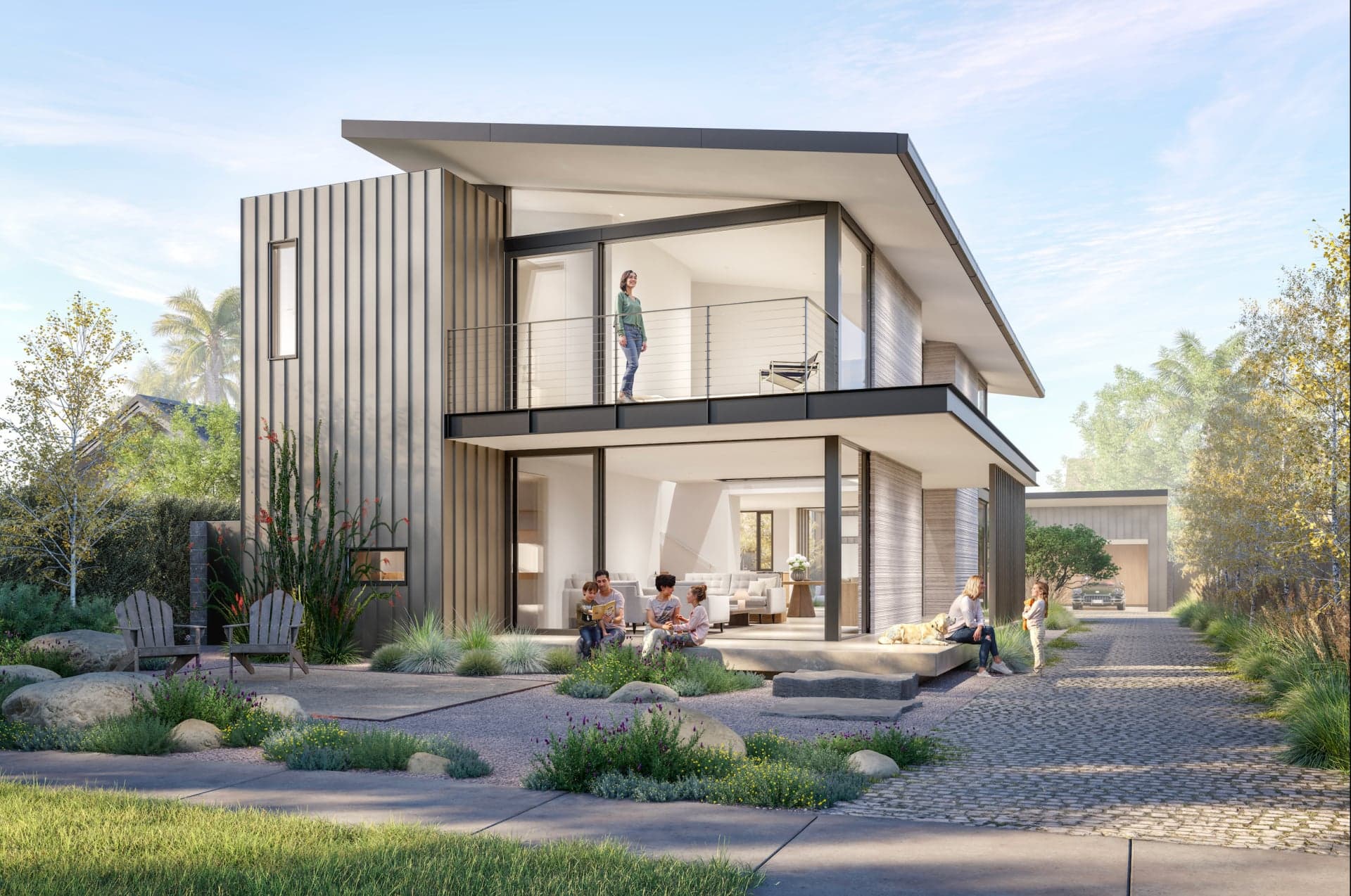
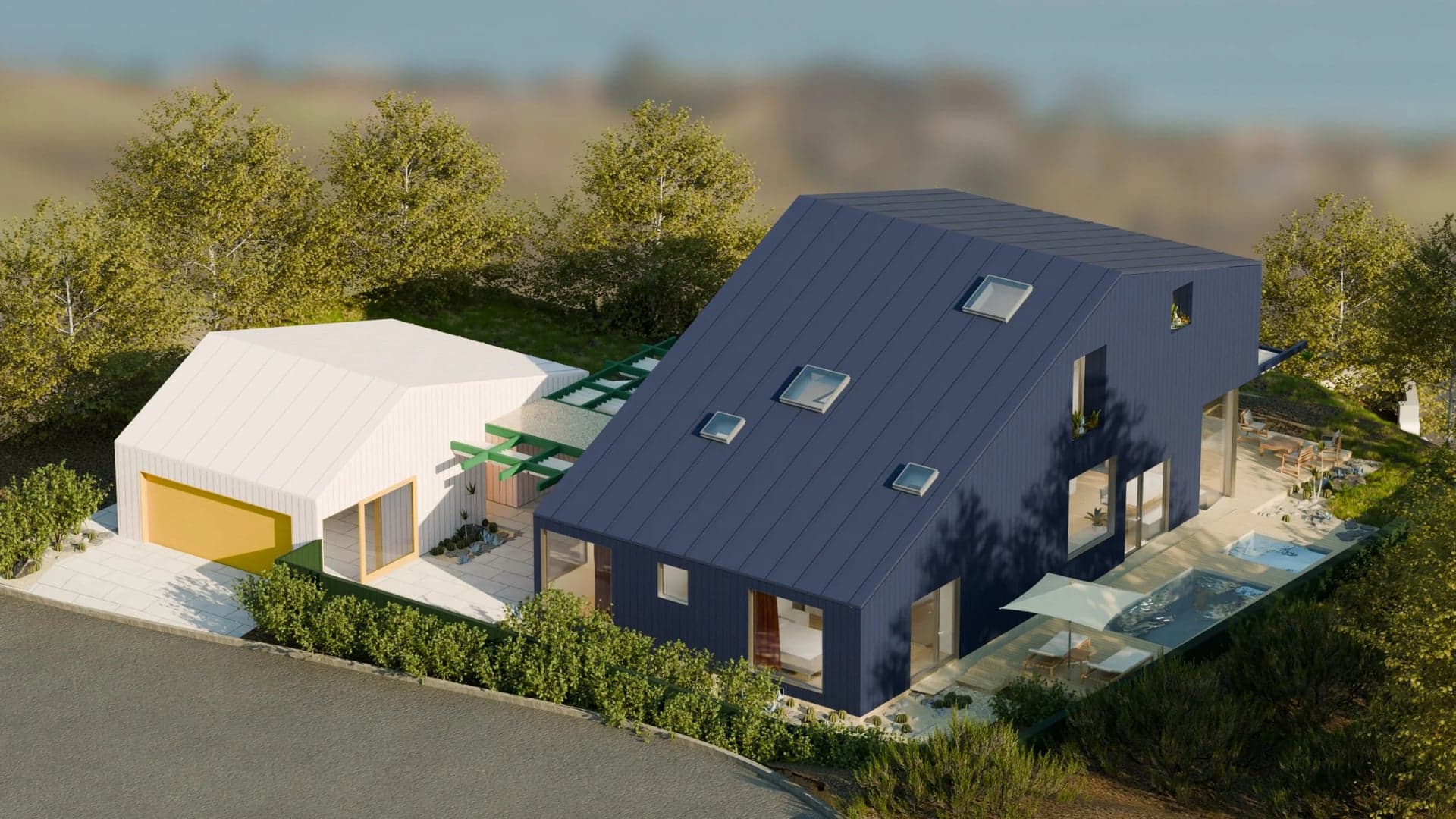
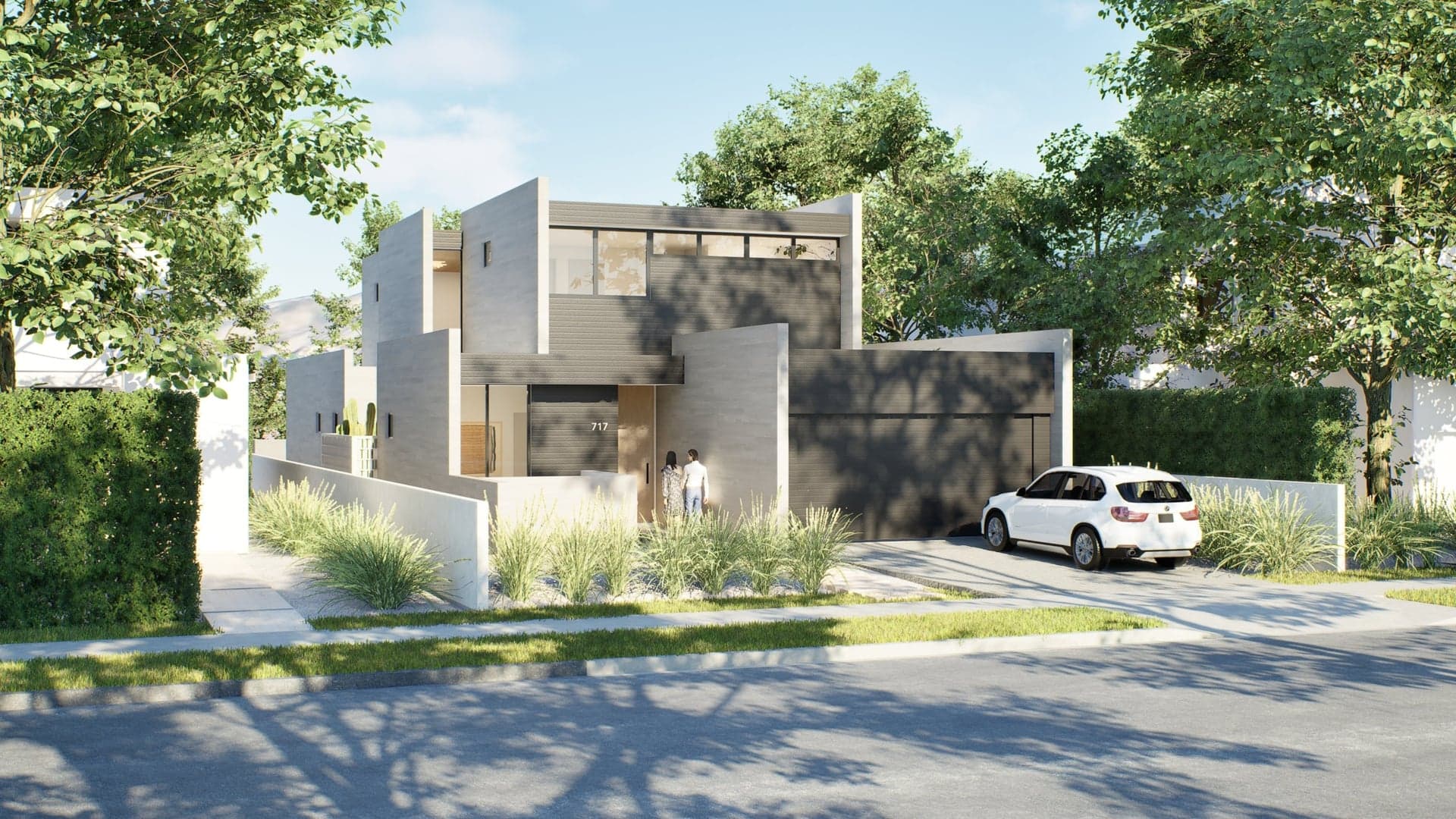
Sixteen houses in. The Case Study Adapt program has reached its closing project. CSA #16 — the Wallach Kleinman House by Standard Architecture — is the firm's second contribution to the series, and the project takes on what may be the hardest brief in the entire program: design a home that resists wind-driven wildfire while maintaining the natural light and openness that California residential design has always been about. The firm's response is precise, and it is the right note for the program to close on.
Site Context, Translated into Detailing
Site context shapes the strategy. With neighboring properties as close as ten feet away, the design increases fire-resistance ratings on the side walls and restricts window openings near the property lines. Two-hour-rated walls extend beyond the building envelope to shield the outdoor patios from wind-borne embers. Larger openings are protected by non-combustible block walls. Fiber-cement siding and aluminum windows complete the fire-safe enclosure. Every move on the side elevations is a move against ember intrusion. That is exactly the kind of context-specific design discipline I find most useful — the architecture is shaped by what the site actually demands rather than by any preconceived formal idea.
Hardened Perimeter, Open Center
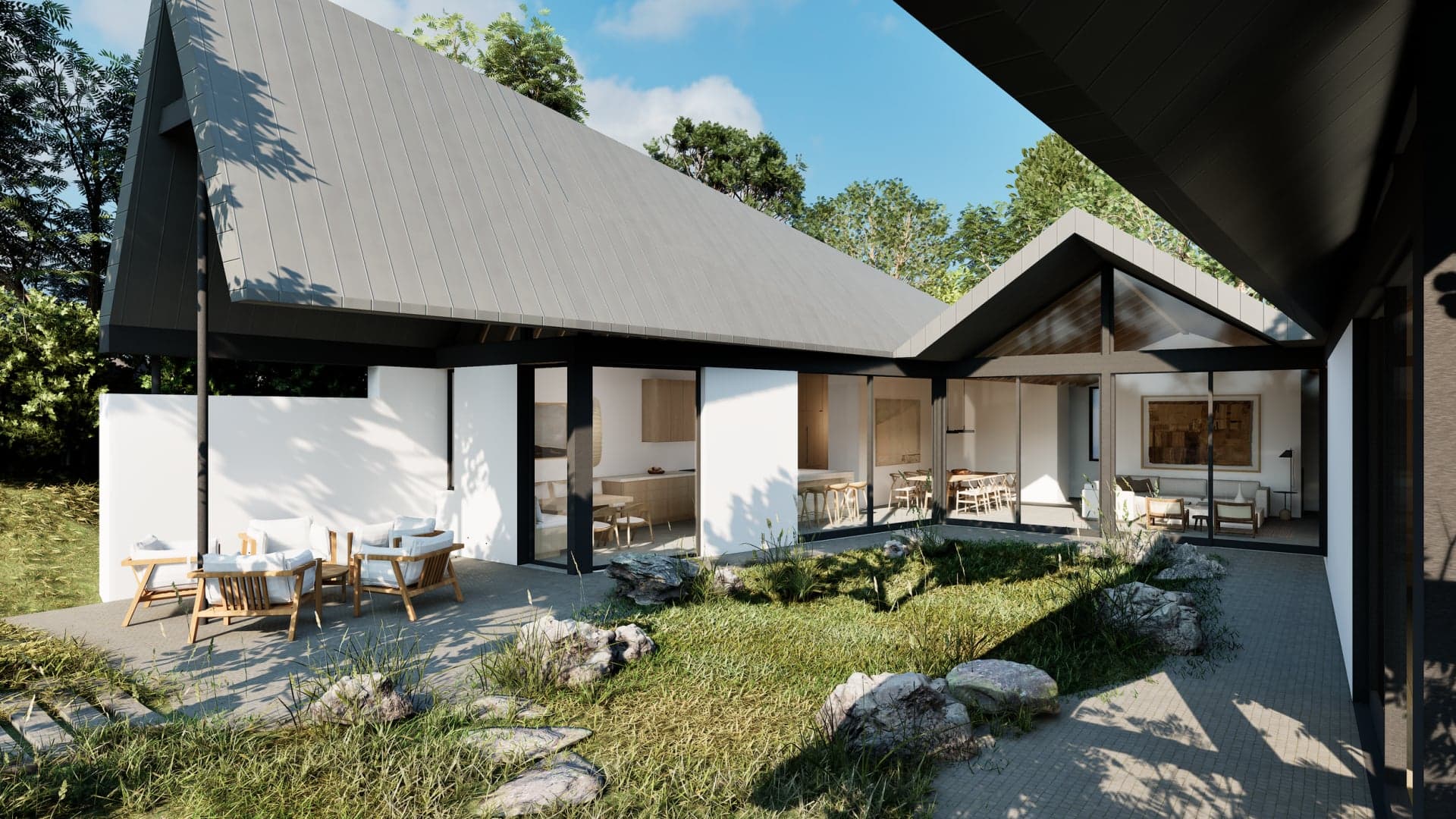
Inside, the architecture refuses to feel fortified. A central double-height space and skylights pull daylight deep into the interior, defeating the dim, defensive feeling that hardened homes can fall into. The home opens generously at both ends — particularly toward the rear yard — where pivot doors connect the main living area to a covered patio and a small pool. The protection is on the perimeter; the experience is at the center. That diagram is a beautifully clean answer to the entire question the Case Study Adapt program has been asking.
Adaptability Built In
A flexible junior suite adjacent to the living space adds adaptability. It can serve as a guest room, a home office, or a multi-generational space, and it has direct outdoor access. Small program decisions like this — adaptability built in from the design phase — are what allow a custom home to keep working as a family changes over time. They are also exactly the kind of detail that distinguishes serious residential architecture from styling exercises, and they are the kind of conversation we are constantly trying to start with our own clients early in the design process. The home you are designing today has to also be the home that serves your family in fifteen years.
Refusing the Trade-Off
Standard Architecture's two Case Study Adapt entries — the Takeuchi House and now the Wallach Kleinman House — read as a pair of demonstrations of the same conviction: fire-resilient detailing belongs in clean, generous, materially honest residential design. As the closing project of the series, CSA #16 makes that conviction explicit. The lesson is not that we have to choose between safety and openness. The lesson is that real design refuses the trade-off. That refusal is the entire point of the Case Study Adapt program, and it is the entire point of writing about it.
Sixteen Houses In, That Is the Series
Sixteen houses in, that is the series. Spending the last two months walking through the Case Study Adapt program one project at a time has been one of the more rewarding writing exercises I have done in years. It has also sharpened how our team is thinking about the resilience-focused work in front of us right now. The principles travel. The discipline travels. And the conviction that beautiful design and serious performance can live in the same home has never been more important. Thanks for reading along. Read the closing project's full description on Case Study Adapt: https://www.casestudyadapt.org/houses-in-development/project-six-sz8wl-d64c9-gb95m-ndyde-rmlbl-zh6t4-n4bst-wphdx-mepn5-4f7az-je5hs-ay946-h5c6b-f2c6k-k5ks4-6hndb.
Frequently Asked Questions
What is the Wallach Kleinman House?
The Wallach Kleinman House is the sixteenth and closing project in the Case Study Adapt series — a residence by Standard Architecture designed to resist wind-driven wildfire while maintaining the natural light and openness of California residential design. It uses two-hour-rated walls extending beyond the building envelope to shield outdoor patios, fiber-cement siding, aluminum windows, non-combustible block walls protecting larger openings, and a central double-height interior with skylights.
What is a wind-driven wildfire and why does it matter for design?
A wind-driven wildfire is a fire event where strong winds carry burning embers ahead of the fire front, often for miles, igniting structures well before any visible flame arrives. Defending a home against wind-driven embers requires different detailing than defending against radiant heat or flame contact — focused on closing every entry point an ember could find, hardening side walls and venting, and shielding outdoor spaces that would otherwise act as ember collectors.
What is a non-combustible block wall in fire-resilient design?
A non-combustible block wall is a wall assembly built from concrete masonry units, structural concrete, or similar materials that contribute no fuel to a fire and resist heat transmission. In wildfire-resilient residential design, block walls are often used to shield larger openings (sliding doors, full-height glazing) from wind-driven embers and radiant heat without giving up the indoor-outdoor flow those openings provide.
Why does the closing project of the Case Study Adapt series matter?
The Wallach Kleinman House makes the program's central conviction explicit: serious residential design and serious wildfire resilience are not in conflict. Real architecture refuses the trade-off between safety and openness, and the closing project demonstrates that conviction in a small, modest, light-filled, technically rigorous home. It is the right note for the program to close on.
What is the most important takeaway from the Case Study Adapt program for someone planning a custom home?
That the resilience strategy and the architecture are the same set of decisions, made together, from the very first sketch. Defensible space, non-combustible materials, ember-resistant venting, energy and water resilience, and thoughtful plan geometry should not be added on top of a finished design. They should shape the design from the beginning. The principles travel — to Oregon, to coastal builds, to acreage in wine country — and they belong in serious residential work everywhere a family plans to live in the home for a long time.
The Building Journey
See how we design and build your home, step by step.
Floor Plans
Browse 15 customizable designs from 1,635 to 5,628 sq ft.
Service Area
We build across Yamhill County, Sherwood, Hillsboro, and wine country.
Ready to Talk About Your Project?
Get expert guidance from Oregon's trusted custom home builder.